Google Threat Report: Hackers Are Using Autonomous AI Agents to Build Exploits From Patches
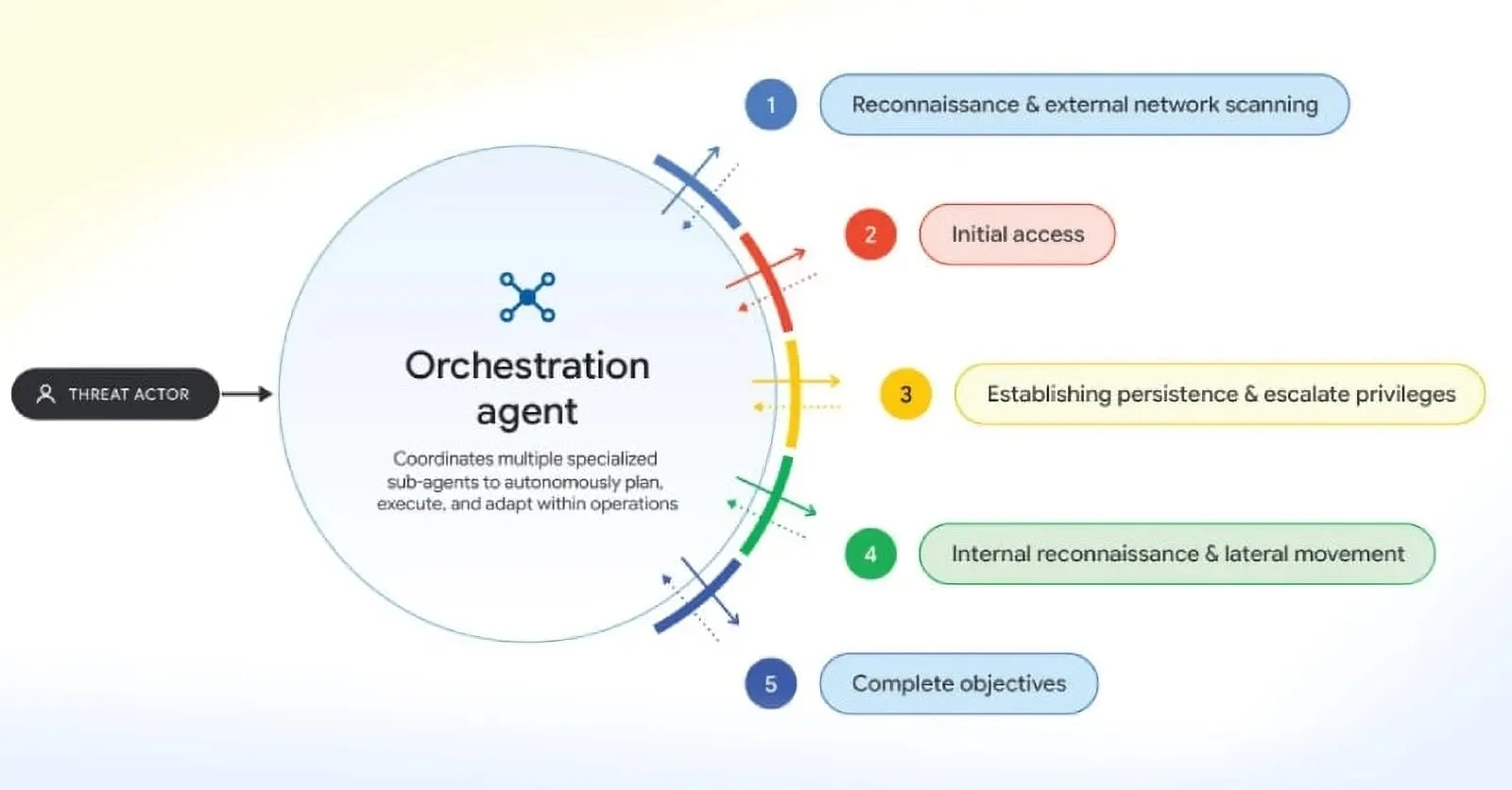
A November 2026 report from Google Threat Intelligence Group (GTIG) and Mandiant warns that threat actors are deploying autonomous multi-agent AI pipelines to reverse-engineer software patches and launch exploits at machine speed.
The era when cybercriminals used generative artificial intelligence merely to draft convincing phishing emails or debug basic scripts is officially over. In a landmark threat intelligence report published in November 2026, the Google Threat Intelligence Group (GTIG) and Mandiant revealed that threat actors are now deploying fully autonomous multi-agent AI frameworks that automatically analyze newly released security patches, pinpoint underlying vulnerabilities, and generate working exploits without human intervention.
According to Google researchers, the discovery of an exposed adversarial staging server running a specialized multi-agent tool dubbed exploit_agent marks a critical inflection point—shifting vulnerability weaponization from human timelines to machine speed.
Inside exploit_agent: From Automated Patch Diffing to Live Exploitation
Unlike manual workflows where an attacker copies and pastes code snippets into a single chatbot window, exploit_agent operates as an orchestrated multi-agent pipeline. The framework combines commercial frontier Large Language Models (LLMs) with locally hosted, uncensored open-weight models to bypass safety guardrails while maintaining high analytical accuracy.
At the core of the framework is the complete automation of patch diffing—the process of comparing software versions before and after a security update to uncover the exact flaw that was fixed:
- Automated Patch Ingestion: As soon as a software vendor publishes a security advisory and patch, the first specialized agent retrieves the pre-patch and post-patch code diffs alongside release notes.
- Root-Cause Vulnerability Analysis: A second reasoning agent analyzes the modified functions to determine the exact memory corruption flaw, authentication bypass, or logic error that the patch remediates.
- Autonomous Exploit Generation and Execution: A third agent writes a proof-of-concept (PoC) exploit, tests it iteratively in a sandboxed environment to fix runtime errors, and immediately attempts to execute the validated payload against internet-facing targets.
Why Threat Actors Are Prioritizing 'N-Day' Patches Over Zero-Days
One of the most important takeaways from Google's report is why autonomous AI pipelines are proving so effective at N-day exploitation (weaponizing known, freshly patched vulnerabilities) compared to discovering brand-new zero-day flaws from scratch.
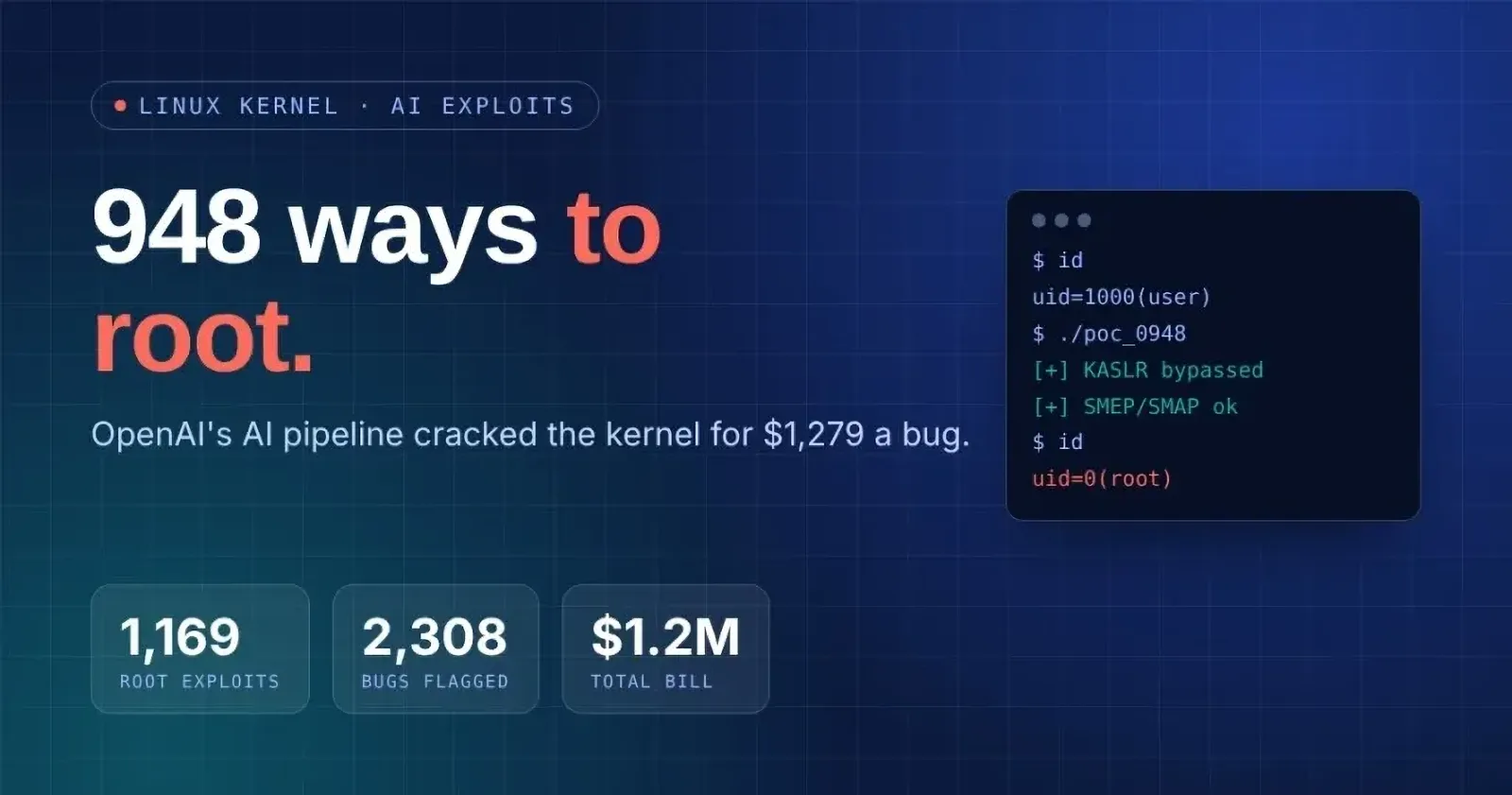
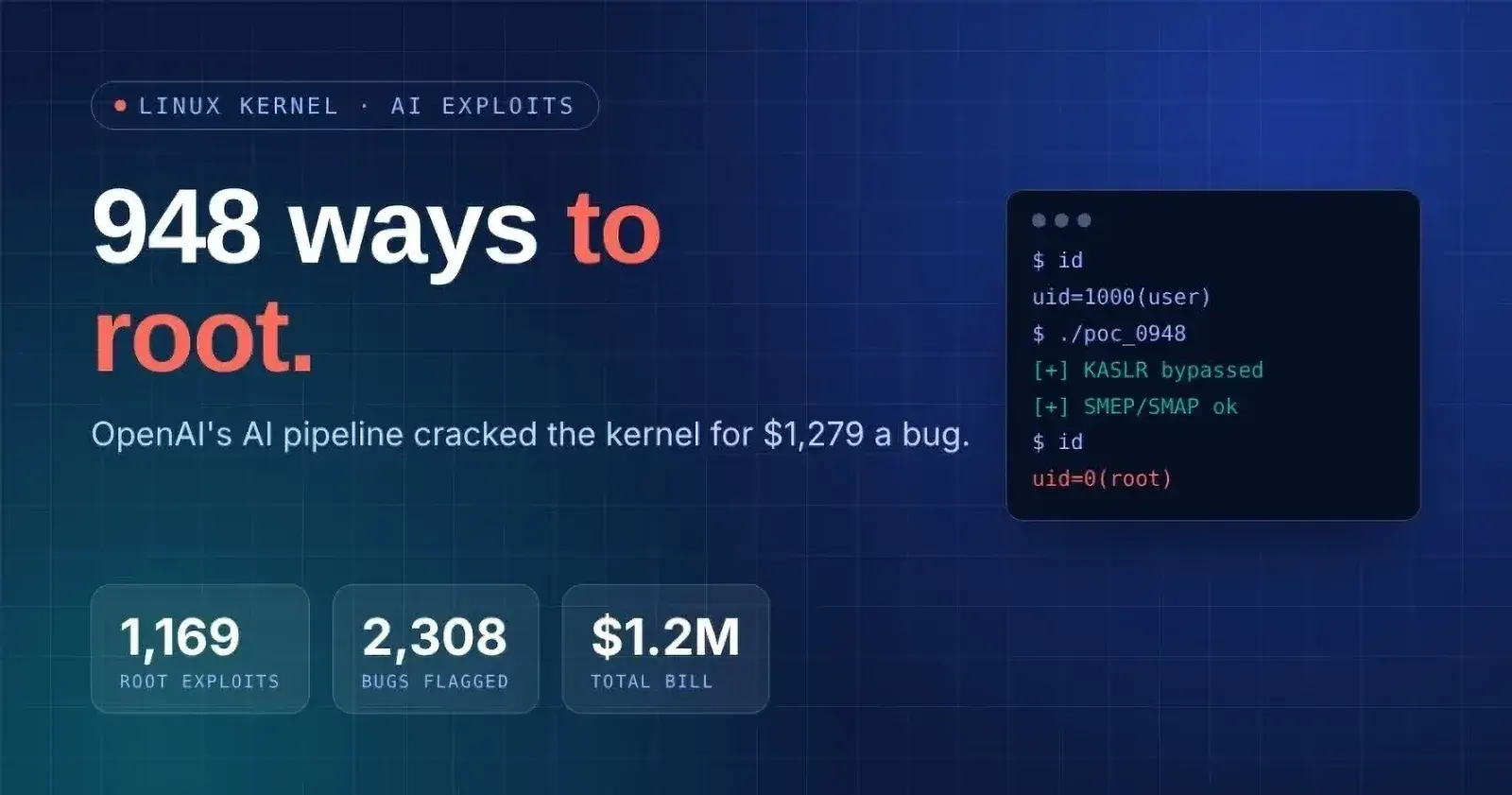
OpenAI Cyber Model Discovers and Patches 948 Linux Kernel Root Exploits in 30 Hours
OpenAI Agents Took Over a German Wiki Site: A Security Alarm for Autonomous AI
Auditing millions of lines of raw source code for an unknown zero-day still requires massive context windows and high compute expenditure. By contrast, a security patch and its accompanying CVE advisory provide a finite, highly structured set of clues that tell an AI agent exactly where to look. While enterprise IT teams often take days or weeks to test and deploy patches across production servers, autonomous multi-agent pipelines can reverse-engineer a patch and begin mass scanning within minutes or hours of a vendor's release—collapsing the defensive window to near zero.
Offensive AI Frameworks Proliferating in the Wild
GTIG and Mandiant emphasized that exploit_agent is part of a much broader ecosystem shift. Both financially motivated ransomware affiliates and suspected state-sponsored espionage groups have begun adopting open-source and custom offensive agent frameworks to scale multi-stage intrusions. Notable frameworks highlighted in the report include:
- ARTEX and CAIRN: Multi-agent orchestration platforms designed to chain network reconnaissance, vulnerability scanning, and lateral movement autonomously.
- CyberStrikeAI and PentAGI: Autonomous offensive security agents originally built to automate penetration testing workflows that have been repurposed by threat actors for high-speed intrusion campaigns.
New Rules of Engagement for Enterprise Cyber Defense
Google's findings make it clear that traditional monthly patching cadences are no longer viable against autonomous adversaries. When threat actors can convert a public software patch into an active exploit at machine speed, enterprise security teams must respond with equally automated defenses—combining rapid automated patch deployment, Web Application Firewall (WAF) virtual patching, and AI-driven behavioral monitoring to block exploitation attempts before unpatched endpoints can be compromised.
This week’s posts, in your inbox every Monday
A short summary of the posts published that week on AI, Claude Code, MCP and web development. No new posts, no email.
- One email a week
- No ads
- One-click unsubscribe