Google Gemini 4 Hydrogen Replaces Gemini 3.8 Flash: Pricing and Migration Guide
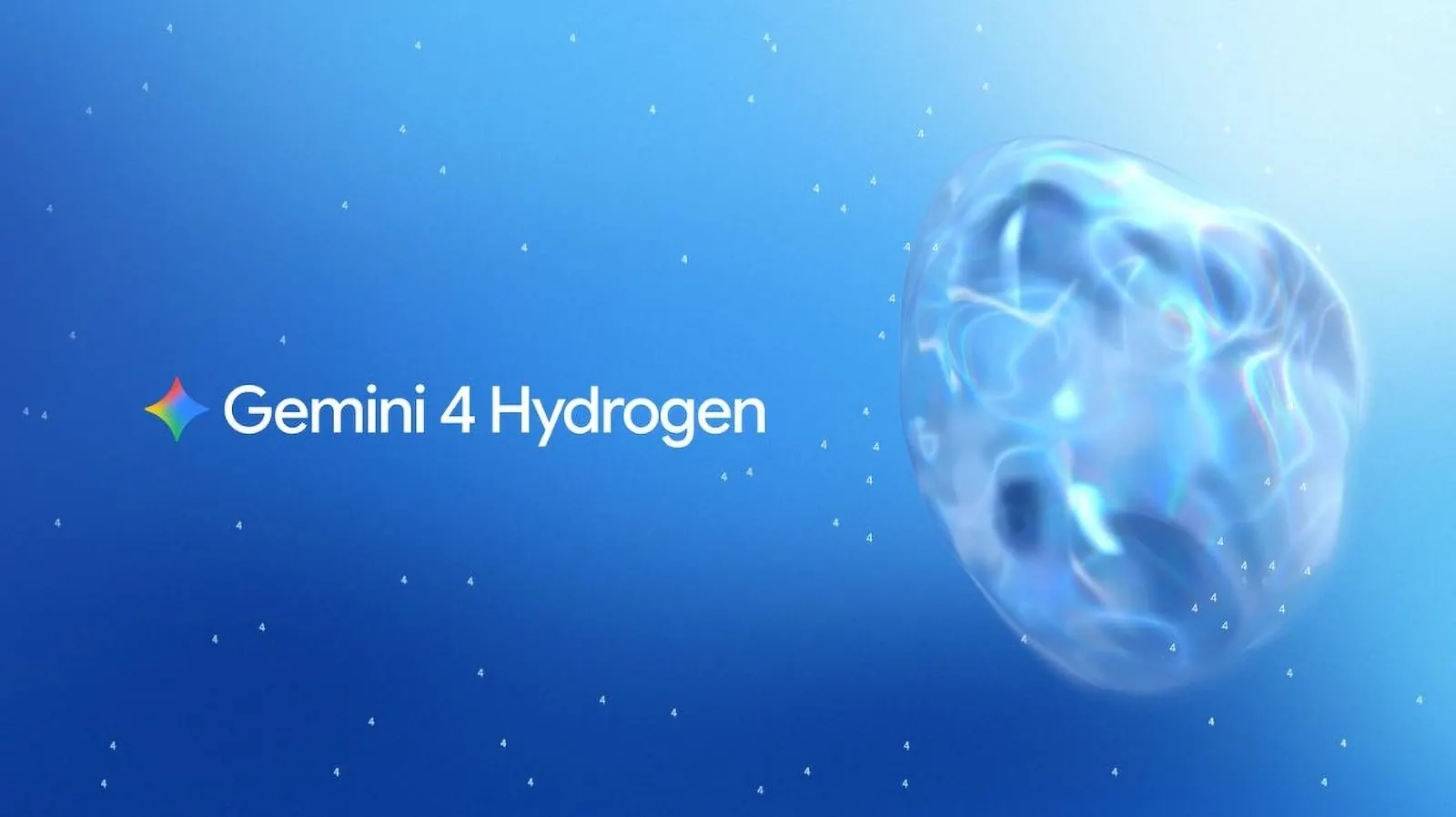
Google positions Gemini 4 Hydrogen as the direct successor to Gemini 3.8 Flash, combining flat 1M-token pricing with 2.5x faster agentic performance and updated caching.
Google DeepMind is positioning Gemini 4 Hydrogen, the most agile and efficiency-focused member of the Gemini 4 lineup, not merely as a new model release but as the new baseline for its high-speed developer tier. Stepping in to replace Gemini 3.8 Flash, Hydrogen marks a structural shift that goes far beyond a branding update, reshaping architecture, API pricing, and autonomous agent economics. For engineering teams running high-volume production traffic, the decision metric is moving away from raw per-token rates toward total cost per completed task and wall-clock execution speed.
This transition is the clearest signal yet of Google retiring the "Flash" label in favor of chemical-element naming tied directly to workload profiles. For developers, the central question is how Hydrogen's substantial performance gains balance against its list pricing and technical migration requirements.
Moving From the Gemini 3.8 Flash Era to Hydrogen Architecture
Although Gemini 4 Hydrogen replaces Gemini 3.8 Flash in Google's product lineup, it is not a minor incremental refresh of the older Flash architecture. Instead, Hydrogen is adapted from Gemini 4 Carbon, Google's deeper reasoning architecture built for complex, long-horizon engineering tasks. That heritage allows Hydrogen to bridge low-latency daily operations and multi-step coding or agentic workflows within a single model.
Benchmark data highlights the scale of this architectural leap. At default settings, Gemini 4 Hydrogen completes tasks roughly 2.5x faster than Gemini 3.8 Flash. On Terminal-Bench 4.1, which evaluates command-line execution and software engineering reliability, Hydrogen jumps to 57%, up sharply from Gemini 3.8 Flash's 18.2%. On the Artificial Analysis Intelligence Index, Hydrogen scores 51 at its default high thinking level and reaches 54 at xhigh, closing the gap with heavier flagship models while maintaining rapid throughput.
API Pricing and Token Economics Comparison
On paper, the headline token rates appear to double compared to Gemini 3.8 Flash's introductory tier. Gemini 3.8 Flash launched with promotional pricing at $0.75 per million input tokens and $3.75 per million output tokens, though Google's roadmap had already scheduled its standard pricing to converge toward the $1.50 / $7.50 band.
Gemini 4 Hydrogen introduces a flat, predictable pricing structure across its entire 1-million-token (1,048,576 tokens) unified context window:
- Standard Input Pricing: $1.50 per million tokens with no tiered surcharge past 200k tokens.
- Standard Output Pricing (including thinking tokens): $7.50 per million tokens.
- Batch and Flex Tiers: Asynchronous and flexible workloads cut standard rates in half to $0.75 per million input tokens and $3.75 per million output tokens.
Despite the higher nominal rate compared to legacy promotional pricing, real-world task economics frequently favor Hydrogen. Because it resolves complex agent loops with far fewer shortcut errors and retries—and finishes in a fraction of the wall-clock time—the effective cost per successful outcome often matches or undercuts Gemini 3.8 Flash.
Google Announces Gemini 4 Hydrogen: Fast, Affordable AI Model Features and Pricing
Google Gemini 3.8 Flash and Flash Cyber Announced: Everything New
Thinking Levels and Mandatory Reasoning Configuration
One of the most consequential behavioral changes between Gemini 3.8 Flash and Gemini 4 Hydrogen lies in thinking_level configuration. Whereas Gemini 3.8 Flash defaulted to medium, Gemini 4 Hydrogen defaults to high out of the box. Developers can tune reasoning depth across four supported levels: low, medium, high, and the newly introduced xhigh setting.
Crucially, reasoning cannot be disabled on Gemini 4 Hydrogen. Attempting to pass minimal or zero-thinking configurations returns an API error, as some degree of internal reasoning is structurally enforced. Teams running lightweight classification or ultra-short response endpoints should explicitly set thinking_level to low and account for internal thinking tokens within their output token budgets.
Context Windows and Caching Differences
Production teams currently running Gemini 3.8 Flash should avoid blindly swapping model IDs without reviewing their context-management code, particularly around caching:
- Unified Context Window: Hydrogen manages prompt inputs, internal thinking tokens, and generated outputs inside a single dynamic 1,048,576-token window.
- Implicit Caching Only: While Gemini 3.8 Flash supported explicit context caching with persistent storage management, Gemini 4 Hydrogen shifts entirely to implicit caching.
Any application relying on explicit cache-creation API calls or manual cache references must refactor that integration logic before routing live production traffic to Hydrogen.
Practical Migration Strategy for Developers
The smoothest path from Gemini 3.8 Flash to Gemini 4 Hydrogen starts by segmenting workloads according to latency and reasoning demands. For code generation, tool calling, and multi-step agent loops, adopting Hydrogen on the standard API with medium or high thinking delivers immediate gains in accuracy and completion speed. Meanwhile, routing background data pipelines, document processing, and bulk summarization through Batch or Flex execution modes preserves the $0.75 / $3.75 cost profile of the earlier Flash era while unlocking Gemini 4 intelligence.
This week’s posts, in your inbox every Monday
A short summary of the posts published that week on AI, Claude Code, MCP and web development. No new posts, no email.
- One email a week
- No ads
- One-click unsubscribe