Alibaba Unveils Qwen4-Max: AI That Builds Games and Discovers Molecules
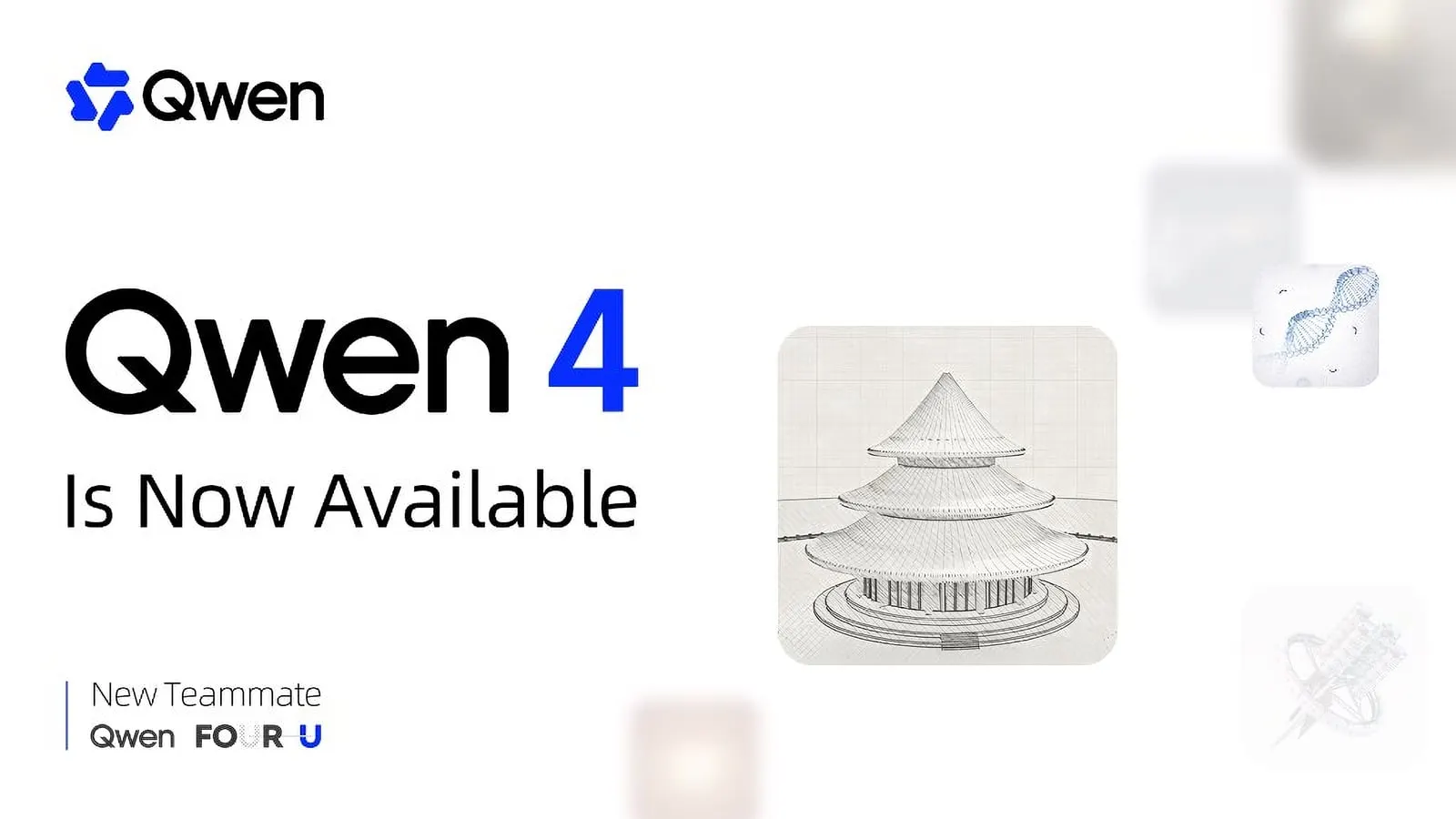
Alibaba's new 2.4-trillion-parameter Qwen4-Max model combines a 1M token context window, native Unreal Engine and Blender control, and 48-hour autonomous molecule discovery while cutting task costs by over 60%.
In the global artificial intelligence race, frontier models are rapidly evolving beyond conversational chatbots that merely generate text or answer prompts into autonomous teammates capable of directly operating complex engineering software. Chinese technology giant Alibaba has officially launched its next-generation Qwen 4 model family and its flagship Qwen4-Max under the "New Teammate" vision. Built on a massive 2.4-trillion-parameter backbone, the new flagship model sets a remarkable industry benchmark by building playable video games from scratch using Unreal Engine and Blender, discovering a novel semiconductor cooling molecule during a 48-hour nonstop research run, and slashing end-to-end task costs by more than 60 percent.
2.4-Trillion-Parameter MoE Architecture and 62% Cost Reduction
As large language models scale in size, rising inference costs and latency have remained major hurdles for enterprise-wide adoption. To overcome this bottleneck, Alibaba engineered Qwen4-Max around a highly refined Mixture of Experts (MoE) architecture. While the model encompasses a total knowledge backbone of 2.4 trillion parameters, it selectively activates only 71 billion parameters per token during inference.
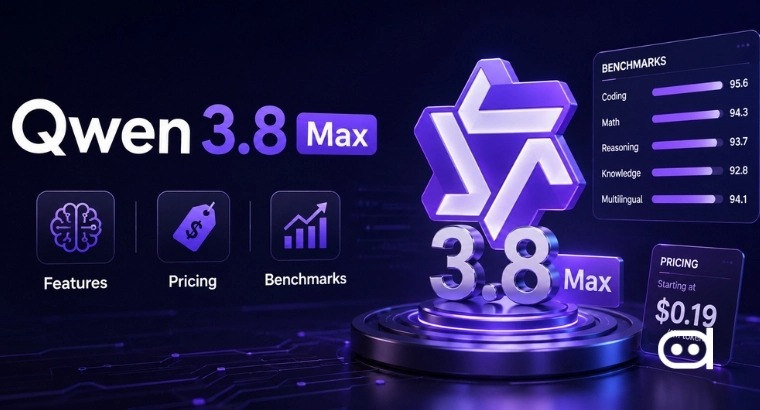
Furthermore, the architecture incorporates a dedicated 328-billion-parameter optimization layer designed to process recurring reasoning and coding patterns with ultra-low latency. Thanks to this hybrid sparse design, Qwen4-Max reduces overall task completion costs by more than 60 percent (approximately 62 percent) compared to its predecessor, Qwen3.8-Max. Combined with an expansive 1-million-token context window, the model can ingest and analyze hundreds of pages of technical documentation, massive enterprise repositories, or multi-year financial datasets in a single uninterrupted session.
From a Single Prompt to Playable Games with Unreal Engine and Blender
One of the most striking breakthroughs in Qwen4-Max is its native agentic ability to directly manipulate three-dimensional creation suites and modern game engines. Whereas previous language models were largely confined to generating isolated code snippets, Qwen4-Max steps directly into the production pipeline:
- 3D Modeling and Scene Assembly in Blender: Operating directly inside Blender, the model can construct complex 3D geometries from scratch, apply materials and textures, configure scene lighting and camera angles, and execute final renders autonomously.
- Native Game Engine Integration: Interfacing seamlessly with industry-standard engines including Unreal Engine, Unity, and Godot, Qwen4-Max can take a single natural-language prompt, design core gameplay mechanics, assemble scenes, define physics rules, and compile a fully playable prototype.
- Autonomous Debugging and Playtesting: When compilation errors or runtime glitches arise during the build phase, the model detects the issues on its own, runs automated in-engine tests, and resolves performance bottlenecks or logic bugs without requiring human intervention.
Discovering a Novel Chip-Cooling Molecule in 48 Hours Nonstop
Alibaba demonstrated that Qwen4-Max excels not only in digital content creation and software engineering, but also in deep scientific discovery through a compelling real-world stress test. Tasked with addressing thermal dissipation—one of the most critical bottlenecks in next-generation high-density AI semiconductor chips—the model was deployed as an autonomous scientific researcher.
Qwen 3.8-Max Unveiled: Autonomous Coding, Long-Horizon Agents and 2.4 Trillion Parameters
Qwen 4 Release Date and Everything We Know: The Stealth Qoduck Model, a 1M Context Window and a New Architecture
Running nonstop for 48 hours, Qwen4-Max combed through scientific literature, executed quantum chemistry simulations, and screened millions of candidate compounds against strict criteria for thermal conductivity, chemical stability, and environmental safety. At the end of the two-day autonomous run, the model synthesized a blueprint for an entirely new cooling molecule previously undocumented in scientific literature. Subsequent laboratory synthesis and physical testing confirmed that the AI-discovered compound delivers high thermal efficiency for cooling next-generation processors.
Industrial Manufacturing, Financial Analysis, and Engineering Automation
Introduced under the "Qwen FOUR U" banner, the new model lineup spans use cases ranging from desktop software engineering to heavy industrial manufacturing. According to industrial deployment metrics shared by Alibaba, Qwen4-Max dramatically compresses robotic programming and workflow optimization timelines on automotive assembly lines. Production line calibration and automation scripting tasks that previously required weeks of manual engineering effort can now be completed within hours through the model's multi-step planning capabilities.
On the corporate strategy and finance front, the 1-million-token context window unlocks autonomous auditing across global supply chain risk assessments, algorithmic portfolio modeling, and multinational regulatory compliance. Rather than merely summarizing spreadsheets, Qwen4-Max spins up Python-based analytical environments on its own to produce verified visualizations, Monte Carlo simulations, quantitative models, and actionable financial projections. Enterprise teams can unify unstructured data streams from hundreds of disparate sources into a single automated decision-support pipeline.
Crucially, common failure modes in long-horizon agentic workflows—such as context drift and tool-calling hallucinations—have been substantially mitigated through Qwen4-Max's upgraded reinforcement learning post-training pipeline. When interacting with external APIs or local desktop engineering suites, the model inspects unexpected error codes, formulates alternative execution paths on the fly, and completes complex assignments without stalling mid-task.
The Era of the Autonomous AI Teammate
Arriving in the final quarter of 2026 alongside major frontier releases from US laboratories such as OpenAI, Google, and Anthropic, Alibaba's Qwen4-Max underscores the engineering depth of China's enterprise and open AI ecosystem. Expanding far beyond conversational text generation, this next-generation architecture embeds itself directly into real-world production pipelines—spanning 3D game development studios, semiconductor materials science laboratories, smart manufacturing plants, and institutional trading desks.
By moving beyond text generation to directly operate professional 3D and engineering tools, sustaining multi-day scientific discovery workflows, and cutting inference costs by nearly two-thirds, Qwen4-Max marks a pivotal milestone in the transition of artificial intelligence from a passive assistant into a true autonomous teammate. As game studios, R&D centers, and enterprise engineering teams integrate high-capacity multimodal agents into their daily operations, both software development lifecycles and scientific discovery timelines are poised to accelerate dramatically.
This week’s posts, in your inbox every Monday
A short summary of the posts published that week on AI, Claude Code, MCP and web development. No new posts, no email.
- One email a week
- No ads
- One-click unsubscribe