Google.org Grants Clalit $2 Million to Build Multilingual Voice AI for Healthcare Access

Google.org granted $2 million over two years to Clalit Health Services to launch a Gemini-powered voice AI healthcare assistant accessible via ordinary landlines and basic phones.
Most healthcare AI tools assume patients own modern smartphones, enjoy fast broadband, and feel comfortable navigating digital portals. A newly announced grant from Google.org aims to challenge that assumption by bringing frontier conversational AI to the most basic communication channels. Google's philanthropic arm has awarded a $2 million, two-year grant to Clalit Health Services, which serves roughly 5 million members, to develop a voice-driven AI "Digital Front Door" for healthcare access.
Bridging the Digital Divide Beyond Smartphones
A central goal of the initiative is reaching vulnerable populations often left behind by mobile-first health apps. Older adults, low-income households, and communities without reliable internet access frequently struggle with app-based triage or online scheduling.
To solve this, Clalit is engineering its voice assistant to operate seamlessly not just on smartphones, but also over ordinary landlines and basic mobile phones—including restricted feature phones without internet access. By removing the requirement to download an app or navigate web menus, patients can simply place a phone call and interact through natural spoken conversation.
Powered by Google Cloud and Gemini Dialect Understanding
Under the hood, the conversational platform runs on Google Cloud infrastructure and Google Gemini models. Because misunderstandings in medical communication carry serious consequences, the system is being tailored to recognize regional dialects, local spoken languages, and cultural nuances rather than relying solely on formal textbook phrasing.
This linguistic adaptability ensures that patients can describe symptoms or ask care questions naturally in their native tongue while the backend translates that dialogue into structured information for clinical teams.
Appointment Scheduling, Pre-Visit Intake, and Triage
Across Clalit's five-million-member network, the voice AI assistant is designed to streamline three high-friction patient journeys:
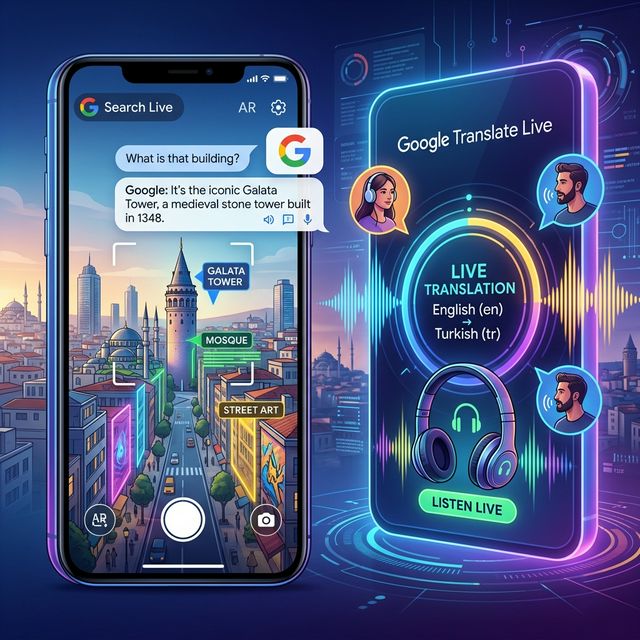
Google Search Live Launches in Turkey: The Era of Searching by Talking to Your Camera Begins

Google Unveils Gemini 4 Argon: 1 Million Token Output and Cyber Defense
- Natural Appointment Scheduling: Patients can book, reschedule, or cancel clinic visits through spoken dialogue instead of navigating rigid keypad-driven phone trees.
- Pre-Visit Intake and Preliminary Triage: Before an appointment, the assistant gathers symptom histories and helps route patients toward the appropriate care setting or specialist.
- Follow-Up Care Management: Post-visit instructions, medication reminders, and routine check-ins can be delivered automatically in the patient's preferred language and dialect.
Automating these workflows is expected to cut call-center wait times while reducing administrative overhead for physicians and nurses.
Open-Source Framework for Global Public Health
Importantly, Google.org and Clalit designed the initiative with broader global impact in mind. Clalit plans to release key components of its technical architecture and cultural-adaptation frameworks as open-source tools.
Making those building blocks public will allow public health systems and nonprofit clinics worldwide to adapt voice-first, landline-compatible AI assistants to their own languages and telecommunications infrastructure without starting from scratch. Over the next two years, the rollout will serve as a real-world test of how generative voice AI can expand equitable healthcare access at population scale.
This week’s posts, in your inbox every Monday
A short summary of the posts published that week on AI, Claude Code, MCP and web development. No new posts, no email.
- One email a week
- No ads
- One-click unsubscribe