Gemini 2.5 Pro: What Google's Thinking Model Means for Frontend Developers
Google's Gemini 2.5 Pro is a reasoning-first model aimed squarely at rich web applications. Its architecture, context window, multimodal input, Google's hardware advantage, practical frontend uses and how it compares on speed, quality and price.
Google built Gemini 2.5 Pro with rich web applications in mind, and for many frontend developers that focus has pushed it to the top of their personal rankings. Google markets it as a "thinking model" with strong math and coding skills, and in everyday use it holds its own against OpenAI's GPT-4o. This article looks at what the reasoning features actually are, why Google is well placed to compete, how the model handles real frontend tasks and how it stacks up against rivals.
Why Gemini 2.5 Pro Matters for Frontend Work
Frontend work rarely involves a single isolated function. A realistic task spans components, styles, routing, state and assets spread over many files. A model that can hold all of that in view, reason about how the pieces fit and produce a working page in one go is far more useful than one that writes good snippets. That is the niche Gemini 2.5 Pro is trying to own.
Reasoning Built Into the Model
Earlier models could be coaxed into step-by-step thinking with careful prompting. With Gemini 2.5 Pro, that behavior is part of the design rather than a trick. The model breaks complex problems into smaller steps and works through them before answering, which is a clear step up from its predecessors.
How It Processes a Request
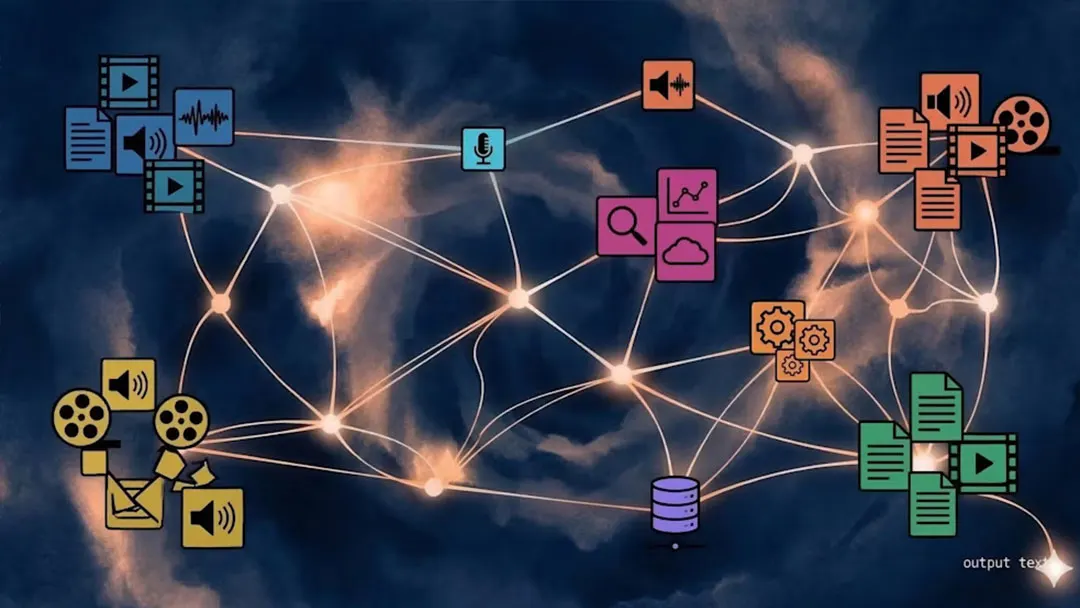
Google describes the processing in three stages:
1. Ingestion – the model takes in many kinds of input through a wide intake channel, including text, images, code, audio and video. 2. Connecting information – its core identifies patterns and applies step-by-step reasoning, backed by extensive training. 3. Output – it produces a coherent, logically structured response.
In tools such as Google AI Studio, you can watch this happen: the model appears to reason out loud before committing to an answer. That visible reasoning is what helps it with demanding work such as complex code, mathematical problems and scientific questions.
Strengths That Stand Out
Leaderboard Results
Gemini 2.5 Pro shows strong reasoning and coding across a wide range of tasks and quickly took first place on the WebDev Arena leaderboard, which ranks models on building web applications, by a comfortable margin.
A Very Large Context Window
Officially the model accepts up to one million input tokens, and it has been tested in practice on inputs of around 71,000 tokens with good results. That capacity means it can take in an entire codebase, long documents, or audio and video material in a single request.
Native Multimodal Input
Multimodality is native, so one prompt can combine text, images, audio, video and PDFs. It can also read charts and diagrams, which is handy when a design mockup or analytics screenshot is part of the brief.
Grounding and the Wider Google Ecosystem
Gemini 2.5 Pro can ground answers in Google Search, returning more current information along with links to sources. The model itself outputs text, but it sits inside a broader ecosystem that includes Imagen 3 for images and Veo 2 for video.
Google's Structural Advantage
Research, Data and Hardware Under One Roof
Most AI competitors specialize. OpenAI and Anthropic focus on models, Scale AI on training data, and companies such as Groq and SambaNova on inference hardware. Google is unusual in covering all three: it has vast data resources, a long record in machine learning research and its own custom silicon.
Why TPUs Matter for Pricing
The tight link between Google's research and hardware teams is a real strategic edge. Models can be optimized to run efficiently on Google's Tensor Processing Units, which allows tuning that is not possible when targeting general-purpose GPUs. Because Google does not rely on Nvidia for chips, it also has more room to price aggressively.
Google Gemini CLI: A Groundbreaking AI Tool for Developer Productivity

Google's New Image Generation Model: Nano Banana 2.1 Unveiled
Putting Gemini 2.5 Pro to Work
Where to Access It
The model is available through several routes:
- Google AI Studio, a web-based playground for experimenting with Google's models
- Vertex AI for production workloads on Google Cloud
- The Gemini app and website
- Google products that integrate Gemini
Working With Whole Codebases
The large context window shines when you feed in an entire repository. A tool such as gitingest can flatten a repository into a single text file that fits into a prompt. From there you can ask the model to extract a specific piece of logic or to port the whole project to a different framework. For frontend developers, that turns work usually done file by file into a single request.
Generating Games and Interactive Scenes
Gemini handles 3D scenes with surprising accuracy. In one hands-on test, the model was asked for a stylized low-poly flight game in a single HTML file, with a chase camera, dynamic lighting, smooth animation and player controls for dodging buildings. The first attempt did not run, but a few rounds of follow-up prompts produced a working game.
Recreating Familiar Web Interfaces
The same test also tried short, one-sentence prompts asking for desktop home pages modeled on well-known sites, each in a single HTML file. A Facebook-style layout came together quickly. An X-style page, which also asked for realistic images and a light and dark theme toggle, needed more iterations but ended in a convincing result. A LinkedIn-style page also worked well. For a model available free of charge in AI Studio, that is a strong showing.
Prompting Tips
Gemini 2.5 Pro rewards precise prompts. Spell out the layout, components, interactions, constraints and output format you expect. A detailed brief gets you to a usable result in fewer rounds than a vague one, and asking for a single self-contained file makes the output easy to test straight away.
How It Compares
At the time of writing, Gemini 2.5 Pro stands out as one of the strongest models for web development and competes directly with offerings from OpenAI, Microsoft, Anthropic and others. The figures below come from a third-party comparison published around launch. Treat them as a snapshot and check current official pricing before relying on them.
Output speed
| Provider | Model | Output speed (tokens/s) |
|---|---|---|
| Gemini 2.5 Pro | 147 | |
| OpenAI | GPT-4o | 142 |
| xAI | Grok 3 | 95 |
| DeepSeek | R1 | 23 |
| Provider | Model | Math (GSM8K / MATH) | Coding |
|---|---|---|---|
| Gemini 2.5 Pro | 67 | 55 | |
| OpenAI | GPT-4o | 70 | 63 |
| Anthropic | Claude 3.5 Sonnet | 57 | 49 |
| xAI | Grok 3 | 67 | 55 |
| DeepSeek | R1 | 60 | 44 |
| Provider | Model | Input ($/M) | Output ($/M) |
|---|---|---|---|
| Gemini 2.5 Flash | 0.35 | 0.35 | |
| Gemini 2.5 Pro | 1.50 | 1.50 | |
| OpenAI | GPT-4o | 5.00 | 15.00 |
| Anthropic | Claude 3.5 Sonnet | 3.00 | 15.00 |
| xAI | Grok 3 | 2.00 | 2.00 |
| DeepSeek | R1 | 0.30 | 0.30 |
Reading the Benchmarks Carefully
Benchmarks can mislead, so trust them only up to a point. For agentic coding, Claude 3.5 still ranks near the top. Gemini 2.5 Pro is now a serious rival, though, with two practical advantages: cheaper API pricing and a much larger context window. In the same hands-on testing, Claude could not produce the flight game in one or even two attempts, largely because of its smaller context.
Final Thoughts
One million tokens already covers a lot, and Google has promised a two-million-token window, which should be enough for most codebases. Combined with Google's hardware advantage, its data resources and self-funded research, that lets the company offer competitive AI mainly through its cloud services and an improved AI Studio.
For frontend developers, the practical gains are clear: working across large codebases, rapid prototyping and building complex web interfaces from a well-written prompt. Gemini 2.5 Pro looks less like an incremental update and more like the start of a new phase for AI-assisted frontend development.
This week’s posts, in your inbox every Monday
A short summary of the posts published that week on AI, Claude Code, MCP and web development. No new posts, no email.
- One email a week
- No ads
- One-click unsubscribe