Google Gives AI a 'Shared Map of Meaning': Gemini Embedding 2
Originally published in Turkish. Read the original →
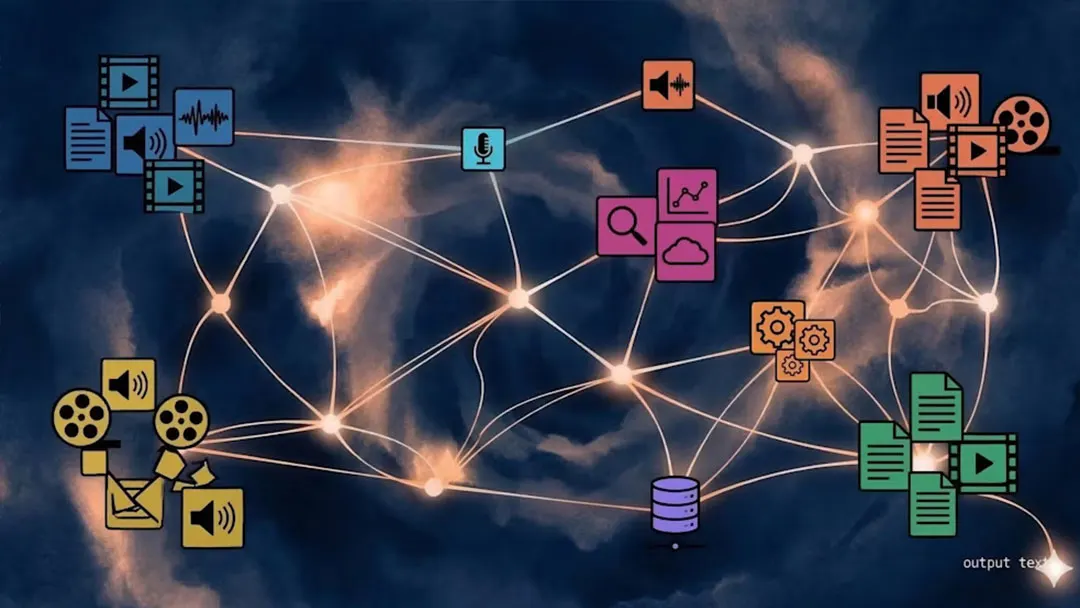
Google's new multimodal AI model Gemini Embedding 2 unifies text, images, video, audio and PDF documents in a single semantic vector space, revolutionizing data analysis and search.
In today's rapidly evolving AI world, innovations that will fundamentally change information processing and data analysis keep coming one after another. The latest big leap in this area came from Google. The tech giant announced Gemini Embedding 2, its first natively multimodal AI model that can make sense of data in different formats within the same space. Bringing together not only text but also images, video, audio frequencies and PDF documents in a shared "map of meaning," this model opens entirely new doors for AI developers.
This huge development brings the way digital infrastructure perceives the world one step closer to the human mind. Just as a person can conceptually match similar feelings or images in their mind when reading a sentence, listening to a piece of music or looking at a painting, Gemini Embedding 2 reaches a similar level of perception by positioning different data modalities on a shared mathematical model.
What Is an Embedding (Semantic Vector Representation)?
"Embedding," a technical but vital concept we come across often in the AI literature, is in its simplest form the conversion of information into mathematical coordinates, that is, numerical vectors. This is how AI grasps the essence and context of words and data.
We can think of this structure as placing information in a kind of infinite-dimensional space library. But in this library, books are not sorted into physical categories by author name or publication year. Instead, they are positioned according to the "semantic depth" of their content. So a photo of a space observatory and a scientific article about the expansion of the universe stand side by side in this library, because they share the same "meaning cluster" and very similar spatial coordinates.
The importance of embedding models comes from how invisible they are in our daily lives. The songs recommended to you on Spotify, the films similar to one you watched showing up on Netflix, or Google returning results by reading your intent rather than the exact words you typed are all made possible by calculating these vector proximities.
A Full Move to Multimodality: The Boundaries Come Down
The embedding models that had become the industry standard until now were largely one-dimensional: they were text-focused. Even gemini-embedding-001, the previous-generation model Google developed itself and released in 2025, could only convert words and sentences into vectors.
Although Gemini Embedding 2 rests on the same engineering foundations as the previous generation, it carries a huge difference in vision. The new model can map visual material (PNG, JPEG), moving video clips, complex audio files and even PDF documents spanning many pages into exactly the same "semantic vector space" as text.
This eliminates the need to match different media manually. A developer can scan thousands of videos and audio files in a database and identify, within seconds, the content closest to a text the user entered or to another reference image.
Analyzing Audio Directly: Removing the Middle Step
Perhaps one of the most exciting and disruptive features of Gemini Embedding 2 is the direct link it establishes with auditory data. When earlier AI models wanted to process audio, they first had to transcribe the data using a "speech-to-text" conversion tool. This laborious process not only wasted time but also caused vital details to be lost, such as the tone of the voice, its emotional timbre, the speaker's emphasis or contextual ambient sounds in the background.
Gemini Embedding 2 removes this intermediate step entirely. It analyzes audio directly through its frequency waves, and video through the time and motion information it contains. This way, meaning can be drawn even from the tone of a laugh or the howl of the wind, and placed at the right position on the vector map.
Google also makes this process even more flexible with a method it calls "interleaved input." Developers can send an image, a PDF file and an audio recording explaining them all at once in a single API request. The model blends all these different media within their own contexts and can produce a unified embedding output.
Pushing the Technological Limits and Increasing Capacity
Naturally, processing so many data types at once required pushing the limits of technical capacity as well. Google stretched these limits considerably with its new model. For text data, the model's maximum context (token) limit was raised from 2,048 to 8,192. That is a full 4x increase and allows much longer texts to be understood in one pass without being split up.
Capacities for other media are also quite generous: * Images: 6 high-resolution images can be processed in a single analysis request. * Video: Videos up to 120 seconds long can be fully analyzed and vectorized. * PDF: PDF documents of up to 6 pages can initially be included while preserving their visual and textual integrity.
The Matryoshka Doll (MRL) Approach: Balancing Performance and Cost
In the technical world, the size of a vector usually indicates the model's expressive richness. The higher the dimension, the greater the depth of meaning. Gemini Embedding 2 produces a 3,072-dimensional output. However, searching databases with vectors this large brings very high hardware and storage costs.
This is exactly where the model, like its predecessor, brings in an ingenious technique called Matryoshka Representation Learning (MRL). Named after the traditional Russian matryoshka dolls, this feature ensures that the most important information is arranged at the beginning of the vectors (in the small doll at the center). If they wish, developers can take and use only the first 1,536 or 768 dimensions of these vectors. This structure gives developers a great deal of flexibility in their cost and speed calculations and lets them scale huge data projects while sacrificing relatively little of the maximum accuracy. On top of that, all of this comes with support for more than 100 languages and accents.
Open Access and Pricing
To consolidate its strength in the AI ecosystem, Google has made the Gemini Embedding 2 model available to developers as a Public Preview through the Gemini API platform and Vertex AI.
To get developers used to the system, there is a free tier that allows free usage of up to 60 requests per minute. Pricing on the paid tier is quite competitive. Text, image and video processing is charged at $0.25 per 1 million tokens. However, due to the complexity of audio data and the intensive server compute it requires, the figure for native audio analysis is set at $0.50 per 1 million tokens.
Able to work integrated with popular frameworks such as LangChain and LlamaIndex in today's data-driven world, Gemini Embedding 2 is seen as a threshold that will redefine the logic of search, recommendation and information access. The ability of AI systems to build "bridges" between data in different formats is already laying the groundwork for entirely new applications to flourish in the technology world.




