Legendary Racing Game Need for Speed Underground 2 Is Now Playable Directly in the Web Browser
Originally published in Turkish. Read the original →
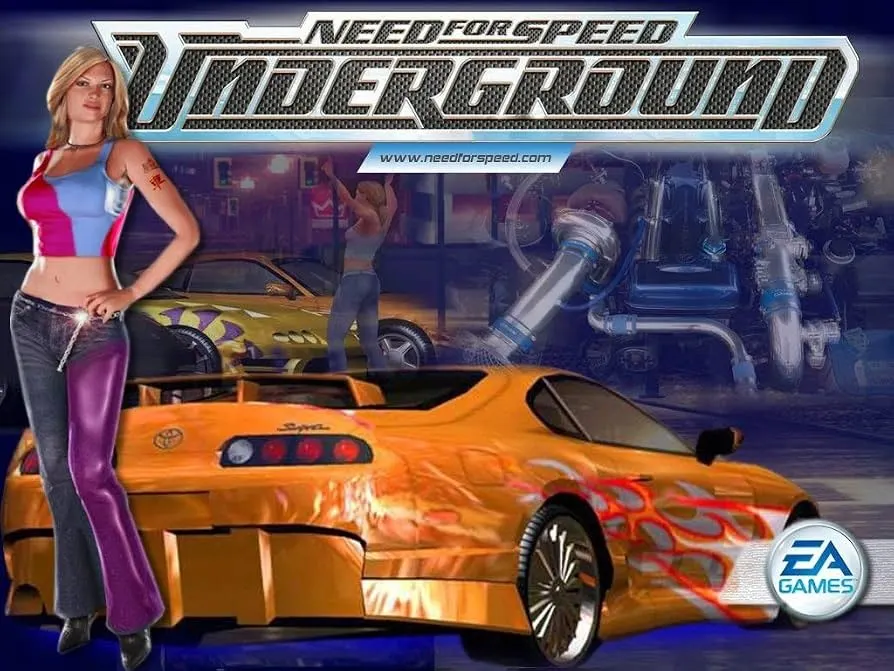
Need for Speed Underground 2, one of gaming's cult classics, is now playable in modern browsers with no installation, at 120 FPS and with multiplayer support, thanks to its x86 code being compiled to WebAssembly and its Direct3D 9 graphics running on WebGPU.
Need for Speed Underground 2, which symbolizes the golden age of gaming and took street racing culture to a whole new level when it was released in 2004, has come back to life more than twenty years later through the power of modern web technologies. As a result of extensive reverse engineering and recompilation work carried out by community-driven open source developers, the legendary title can now be played directly in web browsers, without any installation, emulator or external client.
By bringing the neon-lit wet asphalt of Bayview, its detailed tuning garages and its unforgettable soundtrack straight into a browser tab, this project does more than offer a nostalgic comeback; it also stands out as an impressive engineering achievement that showcases the hardware acceleration capabilities today's browsers have reached.
The Engineering Behind Bringing a Classic PC Game to the Browser: WebAssembly and WebGPU
In the past, classic games played in the browser usually meant 16-bit or early 32-bit titles from the MS-DOS era running through software emulators. But running Need for Speed Underground 2, a Windows-based 3D open-world game built on the DirectX 9 architecture, smoothly in a browser requires a very different approach from classic emulation methods.
The architecture the development team built relies on static recompilation instead of emulation. The x86 machine code of the game's original PC version is first converted into C with the help of special tools, and then compiled into WebAssembly (Wasm), a format modern browsers can execute at near-native speed. This completely eliminates CPU-side bottlenecks and the performance losses that traditional emulators create.
The graphics and audio layers take advantage of the latest capabilities of modern web standards:
- Direct GPU Access with WebGPU: The game's original Direct3D 9 graphics calls are translated into the WebGPU API, which lets browsers access the graphics card at a low level and with high efficiency. As a result, car reflections, neon lighting, rain effects and city textures are rendered with hardware acceleration.
- Web Audio API Integration: Engine sounds, turbo whistles, ambient sound effects and the game's iconic music are synchronized with no latency through the Web Audio API and delivered to the player.
- Asset Streaming: You don't have to download all of the original game files, about 2 GB in size, in one go. On first launch, only a core data package of about 70 MB is loaded. As the player moves through the streets of Bayview or picks new parts in the garage, the needed map and model data are downloaded dynamically in the background and stored in the browser cache.
120 FPS Support, Widescreen Compatibility and Modern Improvements
For years, players who wanted to run the original version of Need for Speed Underground 2 on current operating systems faced chronic problems such as resolution limits, crashes and a physics engine that broke at high frame rates. The new browser-based version keeps the original atmosphere while shipping with built-in critical patches that bring the game up to modern hardware standards.
High Frame Rate and Physics Engine Fixes
In old game engines, physics calculations usually run tied directly to the frame rate (FPS), and when the frame rate is raised, the game speed or the cars' handling dynamics break. In this project, the timing and physics loops were decoupled from the frame rate, delivering a smooth driving experience up to 120 FPS. Even on high refresh rate monitors, car physics and suspension responses work with flawless stability.
Native Widescreen and Controller Support
The user interface and camera angles, designed for the 4:3 aspect ratio of 2004, have been made fully compatible with today's 16:9 and ultrawide monitors. HUD elements and menus are displayed crisply at native resolution without being stretched across the screen. Modern gamepads (Xbox, PlayStation and other controllers via the Gamepad API) are also recognized directly on a plug-and-play basis.
An MMO Experience on the Streets of Bayview: Multiplayer Free Roam
One of the most exciting aspects of the project is its online multiplayer infrastructure that goes beyond the limits of the original game. Thanks to the online mode offered alongside the single-player career mode, players from all over the world can meet on the streets of Bayview at the same time.
Running on a central server architecture, this system turns the free roam map into something like a massively multiplayer (MMO) car meet. While cruising the city in cars they have tuned themselves, players can run into other real players, start instant street races or settle scores in drift and drag events. And all this interaction happens in the browser within seconds, just by sharing a link.
The Future of Web-Based Gaming and the Legal Side
Running smoothly in Google Chrome, Mozilla Firefox and other Chromium-based browsers that support WebGPU, this initiative proves that web browsers have become a powerful runtime not only for simple applications but also for complex 3D game engines. Unlike cloud gaming services, which stream the picture as video from a remote server, this approach runs the game directly on the user's own hardware inside the browser, which brings big advantages such as zero latency and low server costs.
On the other hand, the sustainability of community-developed reverse engineering projects like this always brings copyright debates with it. While recompiling the source code is technically an open source effort, the idea of serving the game's graphics, audio and model files (assets) directly through the browser via streaming sits in a gray area in terms of intellectual property rights. For Underground 2, which Electronic Arts (EA) has not sold in digital stores for years and has never released an official Remastered version of, this work by the community has already made history both for game preservation culture and for modern web engineering.




