Neuralink Connects the Human Brain to AI: Grok Can Now Be Controlled by Thought
Originally published in Turkish. Read the original →
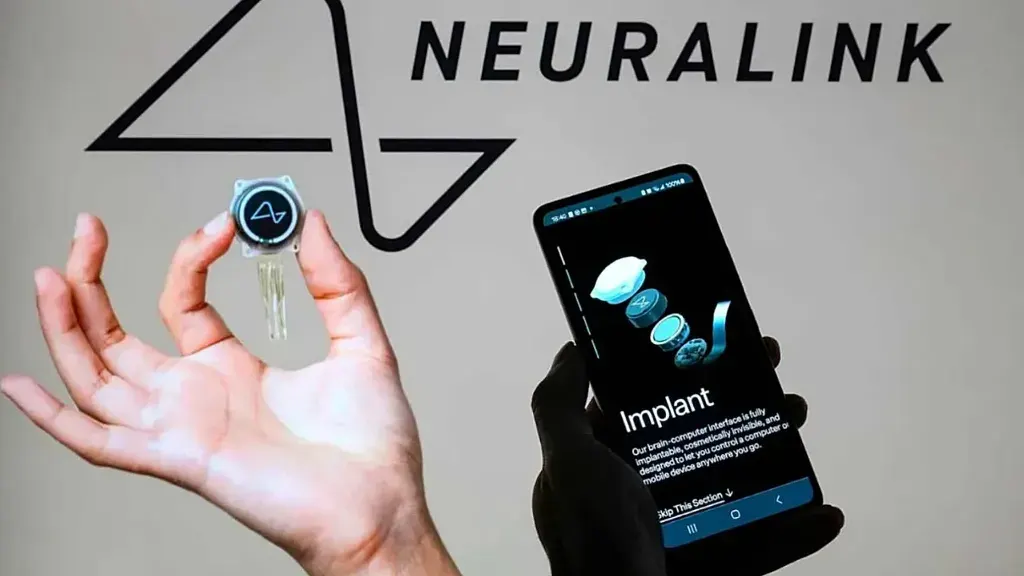
Neuralink has crossed a historic threshold in brain-computer interface technology by connecting the human brain directly to AI. Patients in its clinical studies can command the Grok AI with the 'Hey Neuralink' mental command and can text and make phone calls on an iPhone by thought.
Neuralink, the neurotechnology company led by Elon Musk, has delivered a historic technology demonstration that connects the human brain directly to generative AI systems. According to the latest clinical study data and live demonstrations shared by the company, patients carrying a brain-computer interface (BCI) implant can now control the Grok AI assistant developed by xAI using only the power of thought, without any physical movement or voice command. The journey, which began in its early stages with moving a cursor on a screen or playing digital games, has now entered a brand new phase in which the human mind can directly manage autonomous AI agents.
This development is revolutionary especially for people who have completely or partially lost the ability to speak and move due to severe neurological conditions such as ALS (amyotrophic lateral sclerosis), spinal cord injuries or stroke. Decoding neural signals from the human brain in real time and feeding them into a large language model removes the physical barriers between biological intelligence and digital artificial intelligence.
The "Hey Neuralink" Mental Command and Direct Grok Integration
The most striking part of the demonstration was a clinical trial participant with a Neuralink implant directing the Grok AI assistant entirely through mental commands. In the new system, designed much like the wake words used by traditional voice assistants, users can activate the system by passing the phrase "Hey Neuralink" through their mind or by imagining saying it.
As soon as the system detects this mental trigger, Grok kicks in. The speech intent and commands the user imagines are read through ultra-thin electrode threads implanted in the brain's cortex and instantly turned into text or action instructions. The Grok AI agent then takes over these complex requests from the user's mind and can carry out independent research on the computer, generate text or change system settings.
From Cursor Control to Autonomous Agent Management
In Neuralink's first human trials, the main focus was reading movement intent in the motor cortex to move the computer mouse (cursor) around the screen and select letters one by one on a virtual keyboard. But writing long texts by picking letters or moving a cursor, however fast, ran into a certain physical interface bottleneck.
With the Grok integration and the neural speech decoding architecture, this bottleneck is overcome entirely:
* Intent-Driven Interaction: Instead of clicking letters one by one, the user composes the sentence they want to say directly in their mind, and the AI turns this intent into a complete command. * Multi-Step Computer Automation: Grok works not just as a chatbot that answers questions but as an AI agent that can take actions on the computer. * Minimal Cognitive Load: The deep learning models that decode brain signals adapt better to the user's neural activity patterns over time, minimizing the margin of error.
Neural Speech Detection: Farewell to Physical Buttons
One of the most critical infrastructure innovations Neuralink engineers introduced in this historic demonstration was automatic neural speech detection technology. In earlier versions of the system, the user had to click a button on the screen with the cursor or use an external trigger to start or stop the speech decoding module.
The newly developed neural architecture instead monitors activity in the brain's speech center continuously and passively, and can detect on its own the moment the person actually imagines speaking. This way, without any preparation or button interaction, the user can communicate with the digital world in a natural flow, just as a healthy person voices a thought that crosses their mind. The system works with enough precision to tell random thoughts apart from the "speech intent" the person wants to express.
iPhone Integration and Phone Calls by Thought
The innovations Neuralink announced were not limited to desktop computers and AI agents. The company built a deep integration with the iOS ecosystem, allowing signals from the brain implant to be turned directly into text input in iPhone apps. As a result, patients can write just by thinking in every mobile tool, from messaging apps to social media platforms and email clients.
In addition, the Bloom mobile app, developed to make everyday communication easier for people with speech impairments, received a major update:
* Phone Calls from the Lock Screen: Users can now answer incoming calls even from the iPhone lock screen and deliver the text they compose by thought to the other party as live speech through synthetic voice technology. * Personalized Voice Cloning: Thanks to AI-powered voice synthesis, patients can make phone calls in their own natural voice, generated from recordings made before their illness. * Fast Word Correction: Words or suffixes misrecognized during neural decoding can be fixed within seconds through the app's smart prediction and quick correction interface.
The Future Vision in the Telepathy and Blindsight Projects
The vision Elon Musk has championed for years, "building a high-bandwidth symbiosis between the human brain and AI", is becoming a tangible reality with these new capabilities of the Telepathy product family. The hardware reliability proven by the first patients playing games such as World of Warcraft or chess by thought is now combining with generative AI models to raise patients' cognitive productivity to the level of healthy individuals, and in some automation scenarios even beyond.
Meanwhile, Neuralink is not stopping at restoring movement and speech; it is also accelerating its work on the Blindsight implant developed for blind people. The engineering preparations for the Blindsight project, which aims to send signals directly to the visual cortex and give even people blind from birth low-resolution vision at first and high-clarity vision in later stages, are reported to be complete, with regulatory approval processes now pending.
Connecting the human brain directly to an advanced AI model like Grok is redefining neurological rehabilitation standards in medicine, while in the tech world it officially opens the door to an era of "neuro-digital interaction" that goes beyond keyboards, mice and touchscreens.




