Idle GPUs Could Soon Pay Off: Inside Microsoft's Patent for Crowd-Sourced AI Training
Microsoft has filed a patent for a distributed computing platform that pools idle graphics cards from personal computers to train artificial intelligence models, rewarding users with cash, store credits, or subscriptions.
As generative artificial intelligence and large language models (LLMs) grow exponentially in complexity, global technology companies are confronting an unprecedented compute bottleneck. Even with hyperscale data centers running thousands of enterprise accelerators around the clock, demand for raw processing power continues to outstrip supply. To bridge this hardware gap, Microsoft is exploring an unconventional source of compute. A newly published patent application filed with the United States Patent and Trademark Office (USPTO) reveals a distributed computing architecture designed to let millions of PC users and gamers rent out their idle graphics cards (GPUs) for AI workloads in exchange for financial compensation or digital rewards.
Solving the Data Center Bottleneck with a Distributed GPU Pool
Training foundation models, running fine-tuning pipelines, and serving high-volume inference requests require multi-billion-dollar data center investments. However, skyrocketing capital expenditures, semiconductor supply chain constraints, and regional power grid limitations are pushing cloud providers to look beyond traditional server farms. Microsoft's patent outlines a framework that aggregates the untapped graphics processing power sitting inside millions of consumer desktops and laptops worldwide into a unified, virtualized supercomputer.
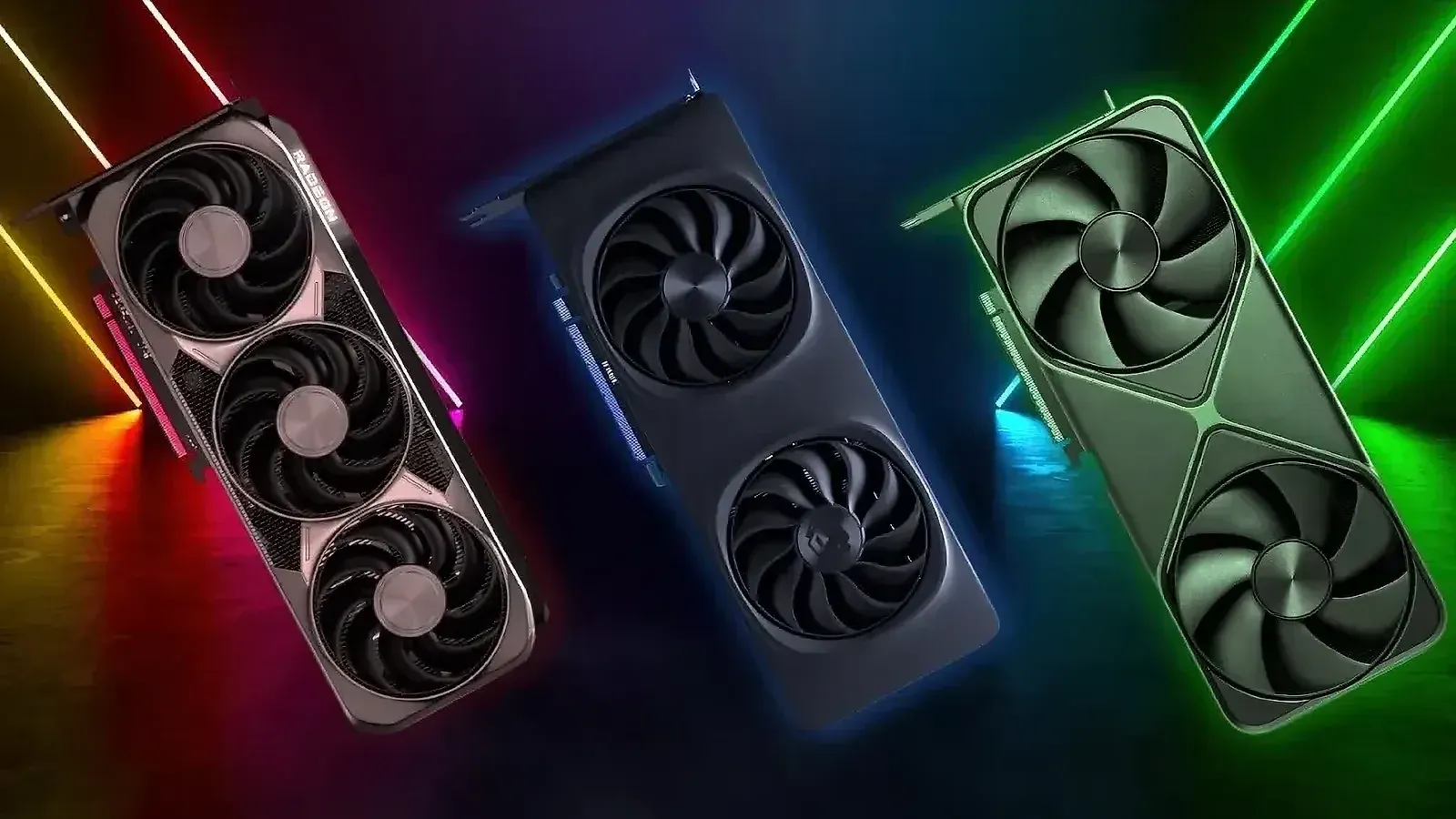
Modern gaming PCs equipped with NVIDIA GeForce RTX, AMD Radeon, and Intel Arc graphics cards already pack dedicated tensor cores and matrix multiplication units capable of accelerating deep learning workloads. Yet for most of the day, while users browse the web, edit documents, or leave their machines unattended, nearly all of that silicon sits completely idle. By securely linking these dormant consumer GPUs to its cloud fabric, Microsoft aims to offload suitable AI training and data processing tasks from congested enterprise clusters.
How the System Protects Daily Performance and User Experience
Whenever distributed hardware sharing is proposed, the primary concern among PC owners is system slowdown and interrupted workflows. Microsoft's patent addresses this directly by describing an operating-system-level resource scheduler paired with a behavioral analysis engine that prioritizes the local user at all times. The architecture relies on four core mechanisms:
- Usage Pattern Analysis: A lightweight background agent learns when the user typically plays games or runs demanding software versus when the computer is left idle, scheduling compute jobs during predictable downtime windows.
- Strict Idle-Only Execution: AI calculations are dispatched to the graphics card only when the machine is genuinely idle and no graphics-intensive application, game, or video rendering task is active.
- Instantaneous Resource Reclamation: The moment a user launches a game or opens a GPU-accelerated application, the background AI workload is paused or migrated to another node on the network within milliseconds, returning 100 percent of hardware performance without frame drops or UI stutter.
- Fragmented Workload Distribution: Rather than loading an entire model onto a single home PC, training batches and inference layers are split into compact, encrypted micro-tasks that thousands of consumer devices can process in parallel before sending results back to a central coordinator.
Reward Models and Monetization for PC Owners
One of the most compelling aspects of Microsoft's proposed ecosystem is the incentive structure for contributors. According to the patent filing, participants would be credited transparently based on the compute power they contribute, total uptime, and the number of completed work units. Microsoft envisions several reward channels for users who opt into the network:
- Direct Cash Payouts: Periodic financial transfers corresponding to the market value of the GPU cycles provided to the network.
- Digital Store Credits and Gaming Rewards: Balance redeemable across the Microsoft Store, the Xbox ecosystem, or in-game marketplaces.
- Subscription Offsets: Free or discounted access to recurring services such as PC Game Pass, Microsoft 365, or Copilot Pro in exchange for monthly hardware contributions.
For enthusiasts who invest heavily in high-end graphics cards, such a program could help offset the rising cost of PC hardware during the hours their systems would otherwise sit unused.
Sam Altman: Keeping RAM in Personal Computers Is a Global Waste of Resources
Google's TPU Sales Are Growing Fast: A New Era in the Chip Race
From Crypto Mining to Productive AI Compute
In the past, monetizing an idle graphics card was almost synonymous with cryptocurrency mining. However, Proof-of-Work mining pushed GPUs to run at maximum thermal capacity twenty-four hours a day, driving up residential electricity bills and accelerating hardware degradation. Following Ethereum's transition to Proof-of-Stake, consumer GPU mining largely lost its economic viability.
Distributed AI computing differs fundamentally from crypto mining because the hardware is not burning energy on arbitrary cryptographic hashes. Instead, every compute cycle contributes to tangible workloads such as training machine learning models, running scientific simulations, or powering cloud-based generative tools. Furthermore, because Microsoft develops Windows itself, an official OS-integrated client could enforce strict thermal ceilings, power envelopes, and security boundaries that third-party mining tools never offered.
Power Costs, Hardware Longevity, and Data Security Challenges
While turning an idle gaming rig into a source of passive income sounds appealing, several engineering and economic hurdles must be cleared before such a patent could become a commercial product. The most immediate factor is the balance between electricity consumption and user payouts. While a modern GPU draws only 15 to 30 watts at idle on the desktop, spinning up tensor and shader cores for AI workloads can raise power draw to between 150 and 400 watts depending on the card. For users to participate, Microsoft's rewards must comfortably exceed the added cost on their utility bills.
Another critical consideration is hardware wear and thermal management. Sustained high temperatures affect thermal paste longevity, VRAM modules, and cooling fan bearings. Any production implementation would need to run GPUs within an efficiency-optimized voltage and frequency curve—similar to a conservative undervolt profile—rather than pushing clocks to their absolute limits. Equally important is end-to-end encryption and sandboxed execution: enterprise training data sent to home PCs must remain completely opaque to the host machine, while the user's personal files and operating system remain strictly isolated from external compute tasks.
Although the concept currently exists as a patent filing rather than an announced commercial service, its potential impact is clear. If Microsoft turns distributed GPU sharing into a native Windows or Xbox feature, millions of personal computers could form a planetary-scale AI compute grid—lowering infrastructure costs for cloud providers while giving hardware owners a practical way to monetize their idle silicon.
This week’s posts, in your inbox every Monday
A short summary of the posts published that week on AI, Claude Code, MCP and web development. No new posts, no email.
- One email a week
- No ads
- One-click unsubscribe