What Is a Technical Lead and What Does the Role Involve?
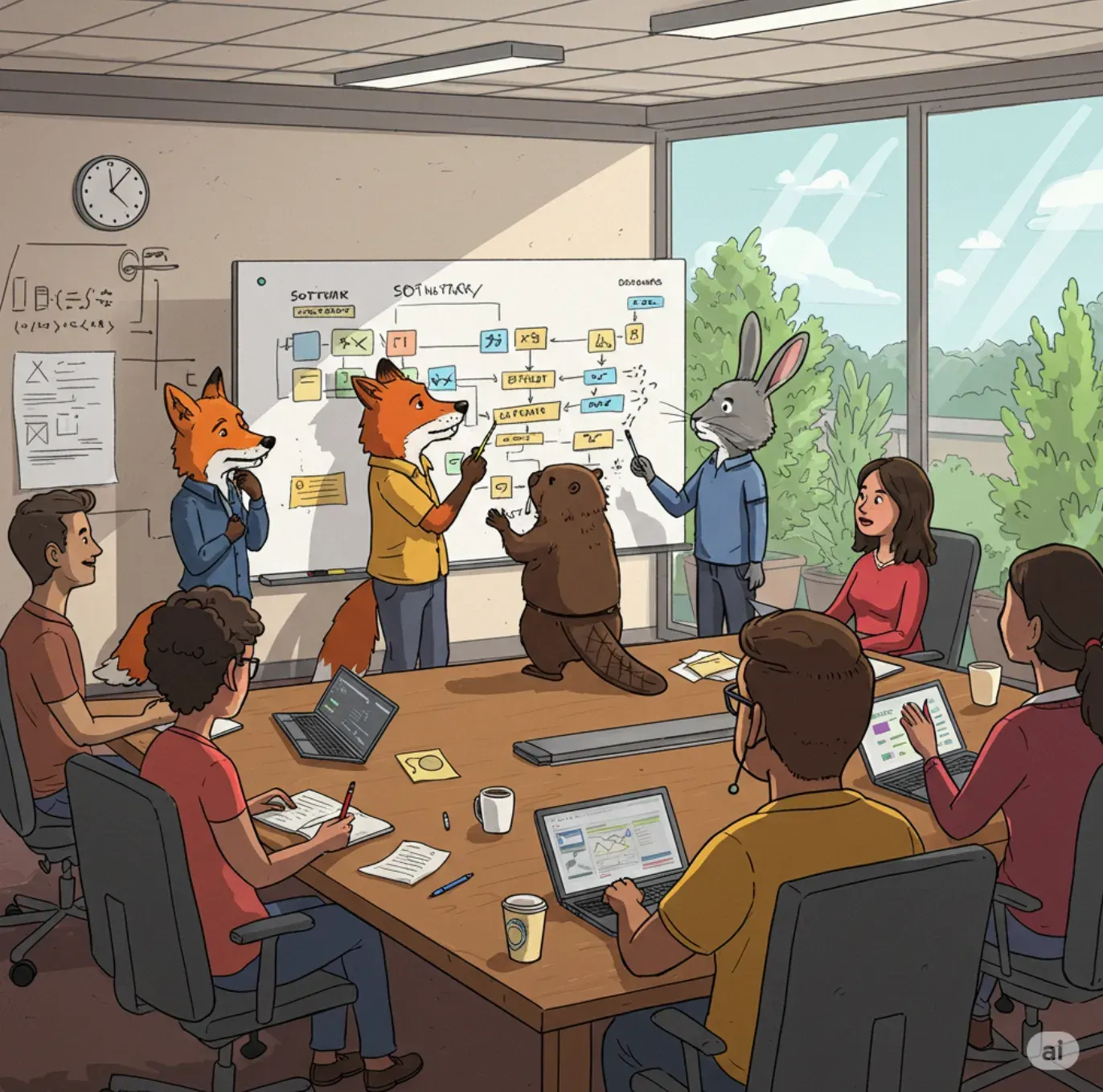
Tech Lead is one of the most important roles in software engineering and one of the least clearly defined. This guide breaks down what TLs own, from technical direction and mentoring to execution, cross-team communication, coding and process, and how the role scales into leads of leads.
Ask a dozen engineering organizations what a Technical Lead (TL) is expected to do and you will get a dozen slightly different answers. Senior engineers asked to write down those expectations often discover that nobody has done it properly. There are plenty of talks about how to be a better tech lead, and career ladders touch on the subject, usually with heavy overlap between TL expectations and those for Staff Engineers. Job descriptions rarely go into detail. Yet the role sits at the center of how software actually gets built, especially in organizations with hundreds or thousands of engineers.
This article sets out what a TL does, area by area, drawing on how the role works in large engineering organizations, with Google's leveling as a common reference point.
A role everyone does and few define
Tech Lead is a role engineers are expected to learn on the job. Many take on some or all of its responsibilities informally, without ever being asked. Organizations often lack a clear record of who the TL is for each project. Unlike "Staff Engineer" or "Engineering Manager," it is usually not a job title. Companies may not know how many TLs they have, or how many they need, in contrast to managers, directors and VPs, whose numbers follow at least partly from headcount.
A typical one-line definition, the kind an AI chatbot will happily produce, describes the tech lead as the person responsible for guiding the technical direction of a team or project, blending software engineering expertise with leadership and coordination. That is a reasonable start with two adjustments. First, "guiding" should often mean "driving." Second, at a company that runs online services, the TL may also be responsible for the production service behind the software, depending on the size of the organization. That can include being on call when outages happen.
In practice, the role breaks down into six areas.
Owning the technical direction
- Decides where the architecture is heading and makes the major design calls.
- Answers for quality, scalability, performance and security.
- Reviews code and holds the team to agreed standards.
This is the responsibility most people associate with the title. The TL should be the technical owner of the project. They design, approve or evolve the core architecture of the solution or product, along with other significant design decisions.
TLs do not need to have every good idea on the team. What matters is that the Engineering Manager and Product Manager can rely on the TL's technical judgment to decide whether, when and how to pursue an idea, whether that is a product feature or an internal improvement such as an architectural change to improve scalability. To exercise that judgment credibly, the TL needs to be, or become, a subject-matter expert in the core domain.
Guiding and growing the team
- Is the first stop for hard technical questions.
- Helps less experienced engineers develop.
- Unblocks teammates on difficult problems.
The "go-to person" phrasing could come straight out of Google's description of a Staff Engineer. If the TL made the major design decisions for a system, they should understand how it works in depth, and they will often be called in to help implement complex new features or debug unexpected behavior. That said, other experts on the team may fill the same role for particular parts of the system.
Mentoring should not be the TL's exclusive job either. More senior or experienced members of the team, and anyone who knows a specific area of the code especially well, will regularly need to advise and guide others. A healthy team spreads mentoring widely; the TL sets the tone rather than holding a monopoly on it.
Driving execution with the engineering manager
- Splits large efforts into workable pieces.
- Shapes estimates and keeps delivery on track.
- Keeps engineering work tied to business outcomes.
This is the other area people most often associate with the role. In partnership with the Engineering Manager, the TL should act as the development and operational lead. Together they can decide on the team's development approach, such as sprint cadence, and prioritize and assign work.
The Engineering Manager, in turn, removes obstacles and handles issues outside the TL's scope: team performance problems, conflicts between teams, shortages of certain resources and similar matters. Beyond that, a Staff-level-or-above TL should have the breadth and depth to drive a software project or product from start to finish and deliver it successfully with minimal supervision. That is exactly the kind of engineer usually chosen to lead a new high-priority effort. In larger organizations, a project or program manager may help track deliverables and dependencies across teams, but often there is none and the TL fills that gap.
Bridging teams and disciplines
- Works closely with product and other stakeholders.
- Connects engineering with design, product and neighboring teams.
- Translates technical trade-offs for non-technical audiences.
In large organizations, a TL may interface with a long list of cross-functional roles: project and product managers, product designers, documentation writers, solution architects, SREs, test engineers and more. In smaller organizations, the TL may take on parts of those roles directly or support them. Either way, the TL has the technical expertise and the awareness of project priorities and status needed to help. If the TL does not fill the gaps, the Engineering Manager or Product Manager may. That gap-filling tends to require a generalist: someone who may not be a master of every discipline but can operate competently across many of them.
Becoming a CTO in 5 Years: A Comprehensive Guide to Technology Leadership

AI Starts Hitting Jobs: 80,000 People Laid Off in the Tech Sector in 2026
Staying hands-on with code
- Still contributes code, often on the most critical parts.
- Codes less than teammates but stays close to the implementation.
The more senior the TL, whether staff, senior staff, principal or distinguished engineer, the larger the scope, again scaled to company size, from a single two-pizza team to dozens or hundreds of engineers. The amount of code a TL writes is inversely related to scope and also depends on personal preference. Coding is rarely the highest-impact thing a TL can do, but many keep doing it to stay connected to the technical details, to maintain credibility with the team or simply because they enjoy the immediate satisfaction of building something that works.
A common pattern among experienced TLs is to code most heavily early in a project, when the team is small and the shape of the system or the approach to the problem is not yet clear to others. At that stage, working code is often the best way to communicate the vision and principles of a product. Later, as the team grows, the TL codes when needed but spends most of their time on higher-leverage activities. Design reviews, code reviews, reading code and troubleshooting are usually enough to stay on top of the technical details.
Guarding quality and process
- Establishes and maintains review, testing and CI/CD practices.
- Pushes for automation and DevOps habits where they pay off.
These are the foundations of software development beyond writing the product code itself. Based on organizational standards, conventions and tools, the TL may be the one who decides, documents and enforces practices for code health, technical debt management, code review, design documentation, release procedures, testing, production operations, on-call rotations, postmortems, security, privacy and compliance. In a large, mature organization, much of this will already exist. In a smaller or younger one, it will not, and it will need to be built over time.
These foundations can also be missing in small, overloaded teams. It may fall to the TL to recognize that the basics need strengthening before new goals can realistically be met. A good Engineering Manager is a partner here, making sure the team has the capacity to invest in these areas.
In short, the tech lead ensures the team builds the right things, builds them the right way and works together effectively. Clearly, no TL can give equal time to all six areas at once. They act on each as needed and as time allows, depending on the gaps in their team and organization, its maturity and the size of their scope. A strong Staff+ TL can do all of these things and, just as importantly, can tell when each one is needed.
Leads of leads: the Uber Tech Lead
Parts of Google, and by now other companies too, use the term "Uber Tech Lead" (UTL). It usually means a TL of TLs, typically an engineer above Staff level, such as an L7 Senior Staff or L8 Principal Engineer in Google's ladder. UTLs generally do not have management responsibilities, so they are not "Tech Lead Managers."
The term can also describe someone responsible for a concern that cuts across many projects or teams, such as privacy or customer-facing API standards, rather than for whole projects. That variant is sometimes called a "horizontal TL." Some organizations use the title "Architect" for this, while others avoid it because of its negative associations with ivory-tower design.
In both cases, UTLs should drive the efforts in their area, not merely consult, advise, review or connect people. Like the TL of a smaller effort, they are the technical owner and execution lead, accountable for successful delivery.
The role is more strategic than tactical. UTLs co-own and co-lead the technical vision, strategy and roadmap with TLs, Product Managers and Engineering Managers, and they co-own the user experience with TLs, PMs and UX. They help ensure that the technical and product goals of sub-projects support the broader goals of the organization. For developer-facing products in particular, a UTL may spend more time with Product Managers on strategy and roadmaps than with other TLs.
UTLs operate at a higher level than the TLs of individual teams, for example by making architecture and technology decisions that span components. They make sure the designs of the components in their scope fit together coherently, act as the technical tie-breaker when TLs disagree, and serve as the final approver for significant technical decisions.
The larger a UTL's scope, however, the more they need to set up the right outcome through principles, standards, specifications, processes, best practices and direction, rather than sitting on the critical path to approve every pull request or design document. Wherever possible, UTLs should provide frameworks that let teams move faster instead of becoming bottlenecks that slow them down. Large open source governance groups, such as the architecture special interest group in the Kubernetes project, have tried to work this way.
As with TLs, this is a lot of responsibility, and no UTL can give all of it equal attention at the same time. Progress is hard when attention is spread thin. A practical approach is to pick one or a few important areas at a time, work with the relevant TLs, Engineering Managers and Product Managers to resolve them, hand them off, and then move on to the next highest priority or most urgent fire.
This week’s posts, in your inbox every Monday
A short summary of the posts published that week on AI, Claude Code, MCP and web development. No new posts, no email.
- One email a week
- No ads
- One-click unsubscribe