Google Labs Introduces Stitch Loop: An Autonomous 24/7 Product Optimization Agent
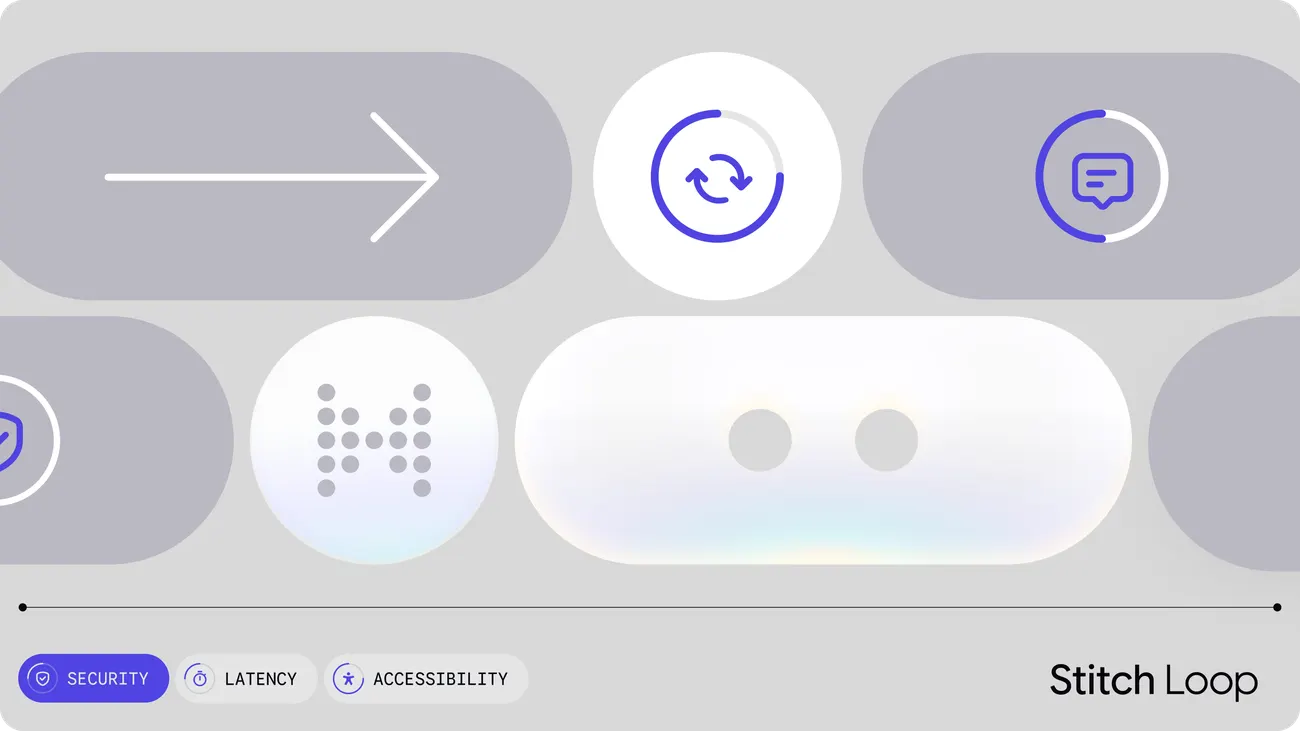
Google Labs unveiled Stitch Loop, a 24/7 autonomous product agent built on Google Stitch that monitors live telemetry and opens human-reviewed GitHub PRs for continuous optimization.
Most AI coding assistants and UI design tools still revolve around a single-shot prompt box: a developer describes a feature, the model generates code or mockups, and the workflow ends as soon as a pull request is merged. With Stitch Loop, an experimental product agent introduced by Google Labs in November 2026, Google aims to move AI development beyond initial creation and into continuous post-production evolution.
Built as a major expansion of Google Stitch—Google's AI-native UI/UX design and code generation platform—Stitch Loop operates as a persistent, 24/7 autonomous agent connected directly to a team's codebase and live product metrics. Rather than waiting idly for prompts, it continuously identifies friction points and drives measurable software improvements.
From One-Off Prompts to Outcome-Driven Optimization
At its core, Stitch Loop shifts the focus from task execution to goal-driven product outcomes. Instead of asking an assistant to tweak a single component, engineering and product teams define high-level objectives—such as reducing signup drop-off, lowering latency, patching security flaws, or raising accessibility compliance.
To maintain shared context, the agent continuously evaluates a refreshed, centralized product.md document that synthesizes codebase insights, runtime logs, analytics, and user feedback. That living context lets Stitch Loop understand not only how the application is written, but how real users experience it in production.
Inside the Four-Step Autonomous Loop
Google Labs structures Stitch Loop's continuous optimization engine around four repeatable stages:
- Suggestions: Continuously scans
product.md, logs, and analytics to surface actionable issues, bottlenecks, and UX opportunities. - Solutions: Proposes concrete fixes complete with scope definitions, engineering trade-offs, and interactive Stitch UI previews when visual changes are involved.
- Build: Implements the proposed change inside an isolated cloud sandbox and automatically opens a GitHub pull request enriched with screenshots or short video walkthroughs.
- Reflect: Treats every shipped change as a testable hypothesis, monitoring live post-release telemetry to verify whether the target metric actually moved in the right direction.
By closing the loop between code changes and live product telemetry, Stitch Loop automates the post-launch measurement and iteration cycle that many busy teams struggle to sustain manually.
Google Gemini 3.8 Flash and Flash Cyber Announced: Everything New
Google AI Studio Is Preparing a New 'Managed Agents' Hub for Autonomous Workflows
Built-In Engineering Loops and Custom Business Metrics
Out of the box, Stitch Loop ships with ready-made templates targeting core engineering priorities. Its Cybersecurity loop integrates tools such as Google DeepMind's CodeMender alongside advanced Gemini security capabilities to surface vulnerabilities and draft patches. Additional built-in templates address Speed/Latency and Accessibility improvements.
Beyond technical hygiene, teams can configure custom loops aligned directly with business KPIs—such as improving checkout conversion rates or streamlining onboarding flows.
Strict Human-in-the-Loop Guardrails
Allowing an always-on agent near production repositories naturally raises governance and safety questions. Google Labs addresses this with strict human-in-the-loop boundaries: Stitch Loop cannot push or merge code directly into production. Every proposed change arrives as a standard pull request that requires explicit human review and manual approval before deployment.
Final Takeaway
Stitch Loop signals a broader transition in developer tooling—from reactive code generators toward persistent, outcome-oriented product agents. By uniting UI design, sandboxed coding, and post-deployment telemetry verification under human oversight, Google Labs is sketching out what continuous AI-assisted software engineering may look like next.
This week’s posts, in your inbox every Monday
A short summary of the posts published that week on AI, Claude Code, MCP and web development. No new posts, no email.
- One email a week
- No ads
- One-click unsubscribe