The Future of AI: Export Controls and Global Access Inequality
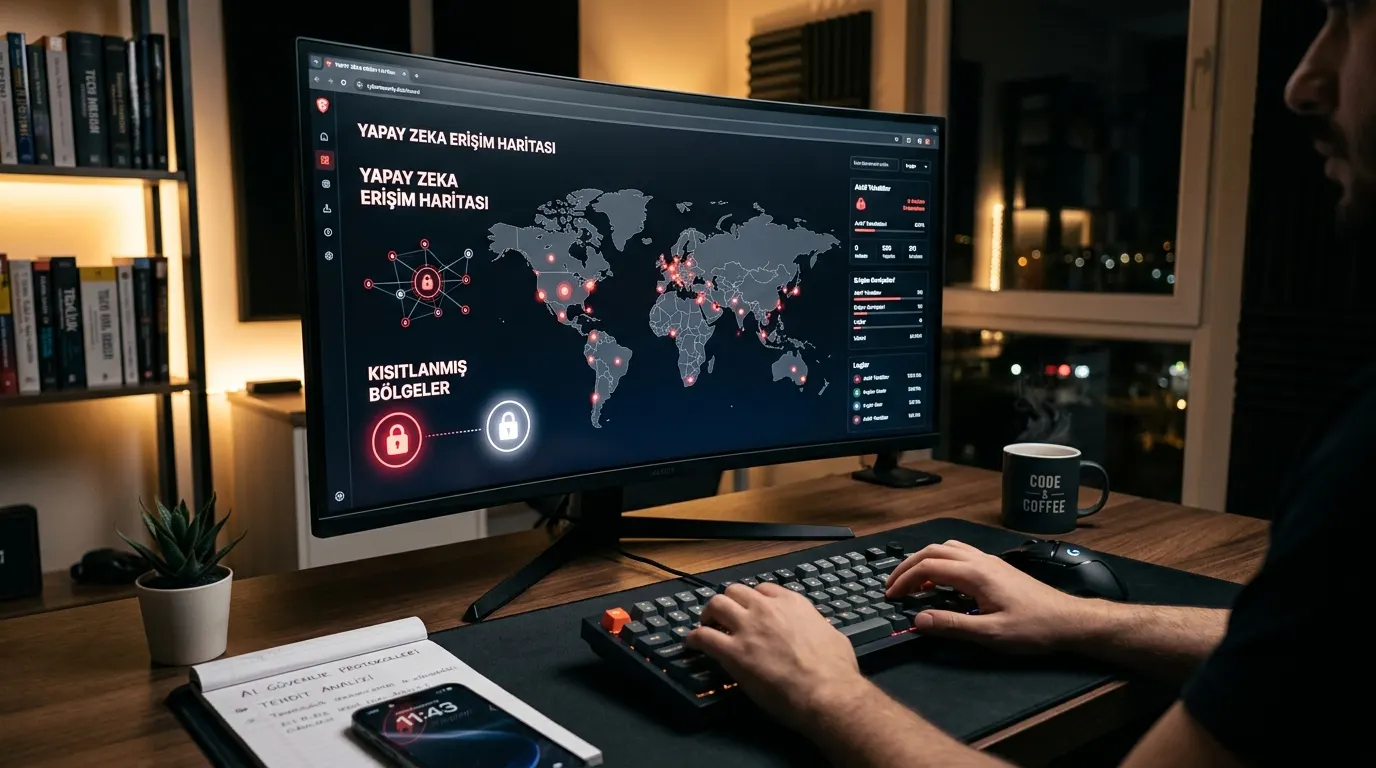
The biggest change in AI is no longer the pace of model releases but who is allowed to use them. Restrictions around Anthropic's Mythos and Fable models and OpenAI's GPT-5.6 are undermining open access to AI. Where does that leave developers in a new geopolitical order?
For most of the past few years, the central question about AI has been how fast it improves. That question has not gone away, but a different one is now crowding it out: who gets to use the best models at all. The technology has not suddenly slowed down. The rules around it are changing, and they are changing faster than most developers expected.
The debate around the newest frontier models has become impossible to ignore. Restrictions on Anthropic's Mythos 5 and Fable 5 and on OpenAI's GPT-5.6 have pushed questions about access, geography and national security into everyday conversations among engineers. To make sense of where this is heading, it helps to start with how quickly the ground has moved.
Four years that rewrote expectations
Generative AI went mainstream on November 30, 2022, when OpenAI released ChatGPT, built on GPT-3.5. By January 2023 it had reached an estimated 100 million monthly active users, an adoption curve with few precedents. Predictions that AI would soon replace programmers appeared almost immediately.
Less than four years later, GPT-3.5 looks primitive. Only a year or so ago, many experienced engineers still mocked "vibe coding" as something real software engineers did not do. Then autonomous coding agents arrived, and with tools like Claude Code a large share of professional developers started working that way themselves.
These agents still cannot fully replace a good engineer, and companies are integrating them into internal processes more slowly than the hype suggested. But large language models have been part of daily work for less than four years. If agents keep improving at this pace, the obvious question is what happens in two or four more years, once they write code better than most people do.
The developer's place in the equation
Even in a world dominated by AI, software engineers will be needed. The harder question is how many. A company that once employed 500 engineers might, in principle, run with a core team of five people who supervise, integrate and fine-tune models.
Senior engineers often point to skills beyond writing code as their insurance: talking to the business, understanding customers and translating needs into systems. The industry genuinely needs those skills. Other engineers specialize in deep technical work, such as low-level optimization to make models run faster or long benchmarking sessions, and that profile is valuable but different. If models keep improving rapidly, though, it is not clear that "speaking the language of the business" will remain a durable advantage on its own. Some developers are already wondering whether roles like developer advocacy, which sit between technology and people, will prove more resilient than pure engineering.
Token economics push back
Then the economics started to shift. Token costs rose significantly, and companies began to notice that paying for large agent budgets on simple tasks could cost more than employing an intern or a junior developer. There has not yet been a broad wave of junior hiring, but instructions to "use smaller, cheaper models for simple tasks" have become standard practice in many organizations. Model selection is now a cost-control discipline, not just a quality decision.
When frontier models become controlled exports
On top of rising costs came restrictions. The first round centered on Anthropic's Mythos 5 and Fable 5, followed by access limits on OpenAI's GPT-5.6. The process gained momentum in June 2026, when the US Department of Commerce sent Anthropic an urgent "is-informed" letter, a mechanism that can impose licensing requirements on specific exports. The stated concerns were cybersecurity vulnerabilities and threats to critical infrastructure.

Anthropic Announces a New Analytics System to Measure the Return (ROI) on Claude Code Spending
Moonshot Kimi K2.7 Code: Long-Horizon Software Engineering and Token Efficiency
The episode showed how quickly AI can be restricted on national security grounds. The most capable models are no longer simply commercial products available to anyone who pays. Access is increasingly filtered by geography, corporate identity and geopolitical alignment. That removes the assumption of equal access to the technology and creates a new kind of global inequality, in which a developer's country or employer determines which tools they may use.
Governments now treat frontier AI much like advanced semiconductors: as a strategic national asset to be protected, controlled and, when necessary, withheld.
Temporary correction or permanent split?
Is this the end of an open AI market? In the short term, developers are unlikely to face an acute crisis. Even if progress froze at the level of widely available models, there would be years of work in improving infrastructure, optimizing agents and building more stable APIs on top of what already exists.
The long-term picture is less certain. If working with the strongest models becomes the privilege of a few countries and very large companies, independent developers and smaller markets will fall behind in ways that compound over time.
There is a counterweight. Training frontier models costs extraordinary amounts of money, and the companies that build them need revenue. It is hard to imagine them accepting that multibillion-dollar investments stay locked away indefinitely. They have strong incentives to reach customers, which suggests that at least some of today's restrictions may turn out to be a temporary rebalancing rather than a permanent wall.
The new question
Science fiction has long played with the idea that AI might be judged too dangerous for public use and locked away on servers in underground bunkers. A Polish young-adult series written two decades ago explored exactly that scenario. It remains an extreme outcome, but recent events make it feel less far-fetched than it once did.
Until recently, the dominant question was whether AI would replace software developers. A different question now sits on top of it: will the most powerful AI models remain accessible to ordinary people and independent developers at all? How governments, labs and the developer community answer it will shape the software industry at least as much as the next jump in benchmark scores.
This week’s posts, in your inbox every Monday
A short summary of the posts published that week on AI, Claude Code, MCP and web development. No new posts, no email.
- One email a week
- No ads
- One-click unsubscribe