OpenAI Adds a Shopping Research Tool to ChatGPT
Originally published in Turkish. Read the original →
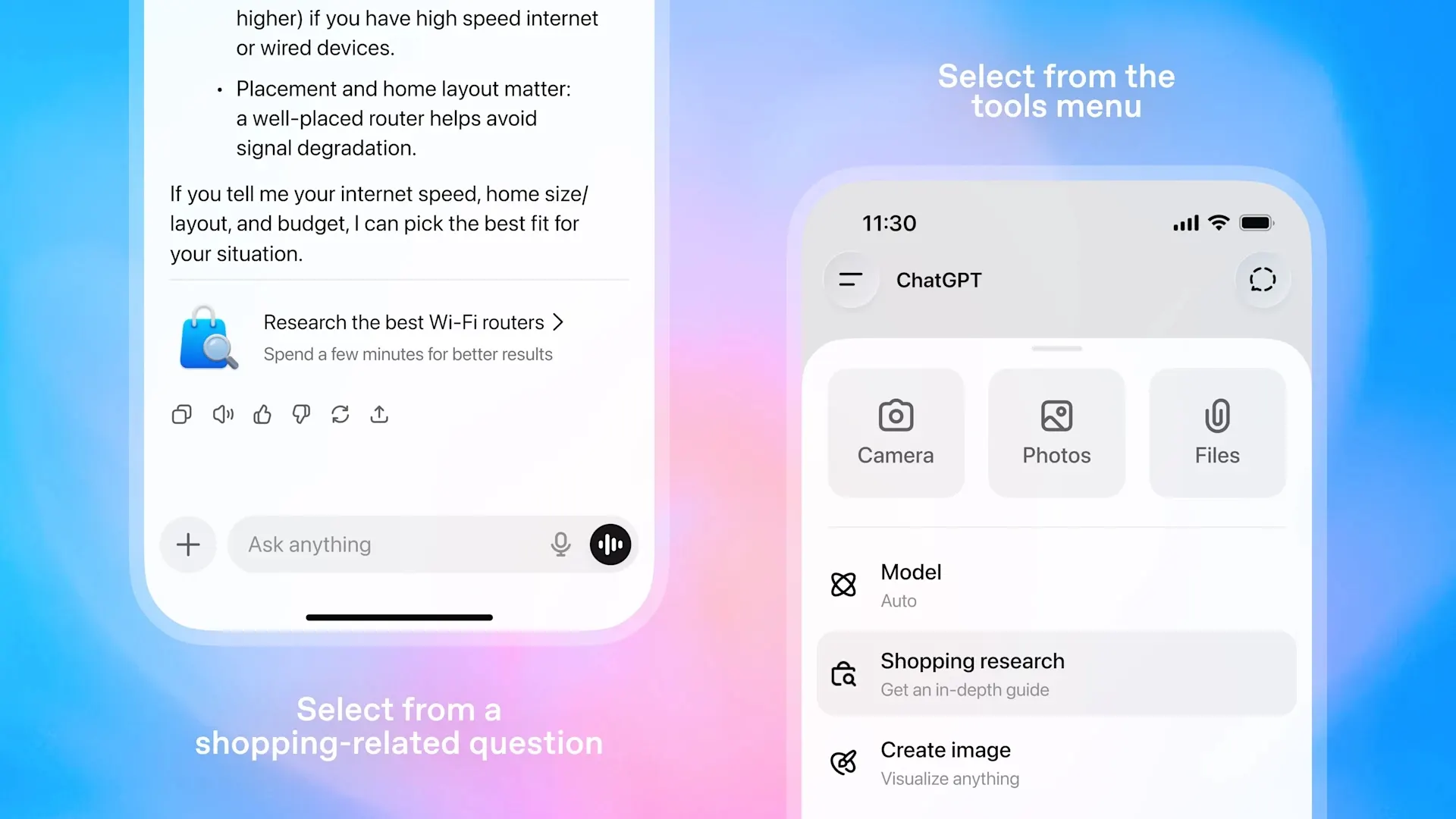
OpenAI has announced 'Shopping Research', a ChatGPT feature that creates personalized shopping guides. The tool runs detailed product comparisons based on users' budgets and preferences, opening a new era in e-commerce.
The integration of AI technologies into our daily lives continues at full speed. With the holiday shopping season (Black Friday, Cyber Monday and New Year) approaching, OpenAI has announced a new feature that will fundamentally change the consumer shopping experience: "Shopping Research". This new tool does not just recommend products to ChatGPT users; it aims to simplify complex purchase decisions by running in-depth analyses based on budget, features and personal preferences.
"Choice paralysis," the inability to decide among too many options and one of the biggest problems we face when shopping online, may become a thing of the past thanks to this AI-powered assistant.
The Era of Consulting ChatGPT When Shopping Begins
In the traditional e-commerce experience, a user searching for a product usually relies on search engines or the search bars of e-commerce sites. But these methods tend to surface SEO-driven content or products promoted by advertisers. OpenAI's "Shopping Research" tool reverses this process and takes on the role of an "advisor" focused on the user's real needs.
How Does It Work?
The system works quite intuitively. Users can ask ChatGPT questions in natural language, as if talking to a store clerk. For example:
"What is the quietest, best-performing stick vacuum for someone who lives in a small studio apartment and has a pet?"* "Suggest gifts under 500 TL that will develop the creativity of my 4-year-old niece, who is into art and loves drawing."* "Compare headphones with long battery life and noise cancellation that I can use both at the office and at the gym."*
When it encounters specific queries like these, the "Shopping Research" tool kicks in automatically. If users want to switch to this mode manually, they can also access it from the menu.
Personalized Guides and Filtering
When the tool is active, instead of a standard text response, ChatGPT presents the user with an interactive "Shopping Guide". This guide includes:
1. Featured Products: The 3-5 products that best match the user's criteria are listed with images, prices and key features. 2. Comparative Analysis: The key differences between products (battery life, material quality, user reviews and so on) are laid out clearly. 3. Dynamic Filtering: Users can revise the results instantly with follow-up commands on the suggestions, such as "Is there something cheaper?", "Does this come in red?" or "Remove brand X from the list." 4. Why This Product?: The AI explains with logical reasons why it recommends a product (e.g., "Since your apartment is small, being cordless and lightweight is an advantage, and since you have a pet I chose this model with a HEPA filter.").
OpenAI notes that this research process can take a few minutes, especially for complex products (electronics, home appliances and so on). However, it adds that for simple price queries ("How much is the iPhone 16?"), standard ChatGPT responses are still the fastest method.
The Future of E-Commerce: "Instant Checkout" Integration
OpenAI's moves in e-commerce are not limited to product research. With the "Instant Checkout" feature announced last September, the company takes the process one step further.
For now, the "Shopping Research" tool sends the user to the relevant retailer's website to make the purchase. But OpenAI's vision is to combine these two features in the future. In other words, after choosing a product in ChatGPT, users will be able to complete their purchase without ever leaving the app, by pressing a "Buy" button with their saved payment details.
When this integration happens, the cards in the e-commerce world may be reshuffled. Removing the need for users to sign up on different sites, enter card details or fill in address forms will significantly increase conversion rates.
Privacy and Data Security: Your Chats Will Not Become Ads
One of users' biggest concerns is whether their shopping conversations with AI will turn into advertising data. OpenAI takes a clear stance on this.
Company officials state that "Shopping Research" results are entirely organic and based on data pulled from publicly available retail sites (the public web). In other words, brands cannot (for now) pay OpenAI to rank higher in this list. They also stress that the content of users' chats with this tool will not be shared with retailers or advertisers.
Still, because of the nature of AI models, the risk of "hallucination" always exists. OpenAI warns users that there may be momentary errors in stock availability and price information. That is why checking the latest status on the seller's site before purchasing is still the user's responsibility.
A New Front Against Google and Amazon
OpenAI's move takes the competition between tech giants to a different level. Google (Google Shopping and the Search Network), which has held a near-monopoly on product search for years, and e-commerce giant Amazon now face a much "smarter" rival.
Although Google is trying to integrate similar features into search results with its own AI model Gemini, the conversation-based, context-focused experience ChatGPT offers can feel more natural and persuasive to users. Amazon, for its part, is trying to offer a similar experience inside its own platform with its AI shopping assistant called "Rufus." But ChatGPT being platform-independent and able to scan the whole internet gives it the advantage of neutrality (or at least of being perceived that way).
Availability and Use in Turkey
The good news is that this feature is also active for users in Turkey. In our tests, it gave quite successful answers to Turkish queries and was able to provide local pricing and stock information by pulling data from popular Turkish e-commerce sites (Hepsiburada, Trendyol, Amazon TR and others).
The feature is currently rolling out gradually to logged-in Free, Plus, Team and Pro ChatGPT users. If you do not see it in your account yet, you can try updating your app or checking the web version.
Conclusion: A Powerful Tool for the Informed Consumer
OpenAI's "Shopping Research" tool has the potential to turn unplanned, impulsive shopping habits into informed, data-driven decisions. Users will be less likely to fall for marketing tricks or misleading discounts, because they will have a digital assistant at their side doing a rational analysis.
This development is also a warning for retailers: from now on, the winner will not be the one who "shouts the loudest" (advertises) but the one who "offers the right product at the best price." Because AI looks at technical specifications and user reviews, not at advertising slogans.
The AI era is changing our shopping habits irreversibly. And it looks like this change will be in the consumer's favor.




