The DRAM Crisis Extends into 2027: Why Is Memory Supply So Tight?
Originally published in Turkish. Read the original →
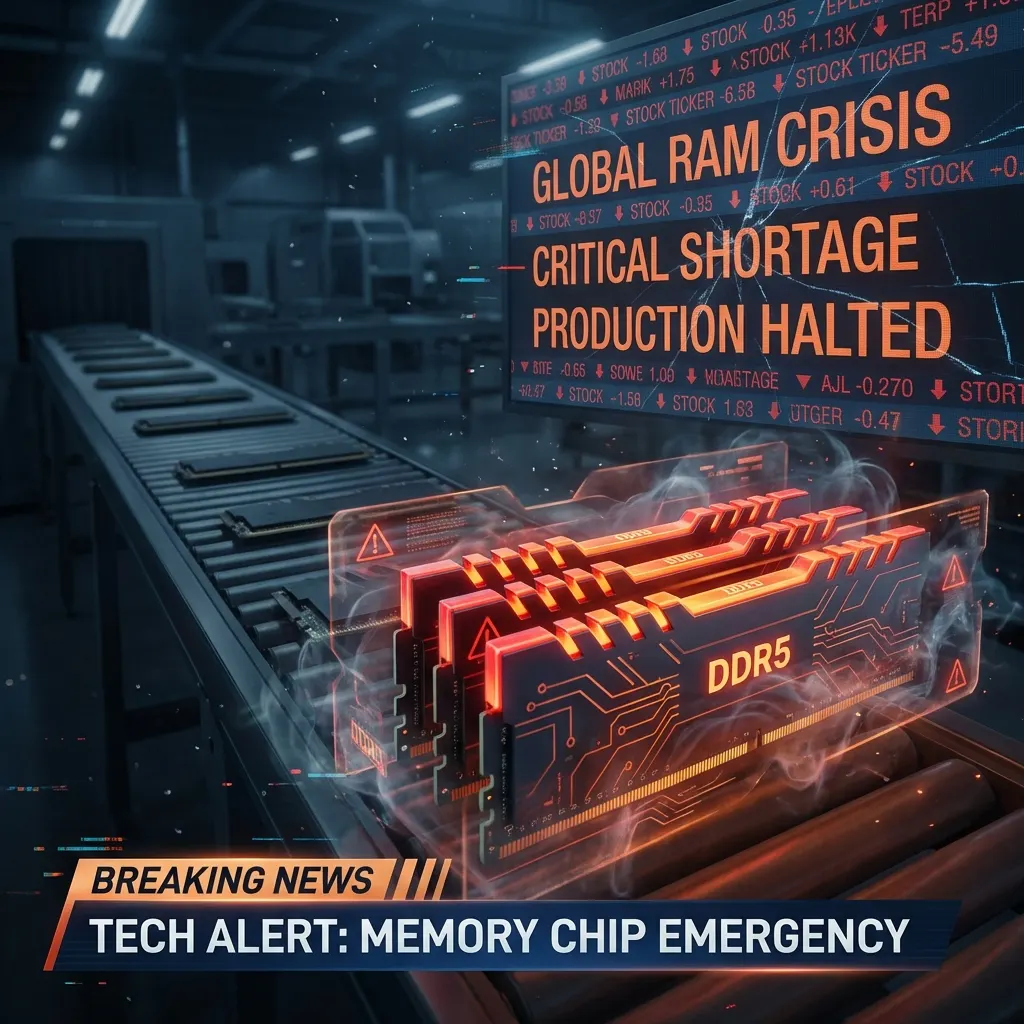
Manufacturers led by Micron shifting capacity to HBM is shrinking the supply of standard DRAM. We look at prices, stock risk and the impact on consumer electronics in 2026-2027.
The transformation the AI storm has triggered in the tech world is causing major breaks not only on the software side but also in hardware supply chains. The DRAM crisis has turned into a bottleneck that will last much longer than expected. The latest news from the industry lays bare how serious the situation is: 2026 production is completely sold out, and companies are already lining up for 2027.
2027 Will Also Be a "Tough" Year
Statements from US memory giant Micron show that the crisis has reached unforeseen proportions. All of the company's memory production capacity for 2026 has already been sold. But what is truly worrying is that customers have also entered an intense ordering race for 2027 inventory.
It is estimated that 70 percent of all memory chips produced in 2026 will go to servers alone (especially AI servers). This leaves very little for personal computers, smartphones and other consumer electronics. It looks like 2027 will also be a very tough year for memory supply.
AI's HBM Priority Has Hit Standard DRAM
At the root of this crisis is the priority given to producing HBM (High Bandwidth Memory), which is vital for running AI systems (e.g. GPUs such as NVIDIA's H100/H200).
Giant manufacturers such as Micron, Samsung and SK Hynix have mobilized their capacity for HBM production, which carries much higher profit margins and whose demand has skyrocketed with the AI boom. This strategic choice is pushing standard DDR4 and DDR5 DRAM production into the background. While factories run at full capacity to make HBM, production lines for standard RAM modules are shrinking.
Investment Is Rising, but the Fix Takes Time
Micron has launched aggressive investment plans to ease the crisis:
* A domestic memory production facility to be acquired for $1.8 billion is planned to be ready for DRAM production only in the second half of 2027. * With a massive $100 billion investment, 4 new facilities with a total size of 40 football fields will be built near New York over the next 20 years.
But these investments do not offer an overnight fix. Building a new semiconductor fab and ramping it to full production takes years. Even though Samsung and SK Hynix are also adding capacity, balancing demand with supply could take until late 2027 in the most optimistic estimate.
What Awaits Consumers?
Unfortunately, this picture holds no good news for end users:
1. Price Increases: A sharp rise in memory prices in the coming period is inevitable. We will see price increases both for RAM modules and for devices that use RAM (laptops, phones, etc.). 2. Stock Problems: Some tech products may see less model variety or become hard to find on the market. 3. Falling Sales: Experts predict that smartphone and PC sales will decline this year because of the cost increases and supply problems caused by the DRAM crisis.
In short, "the memory crisis is not expected to ease not just in 2026 but in 2027 either." The AI revolution in technology is bringing hardware scarcity along with it, and it looks like we will keep paying that bill for a while longer.




