Connecting Your Bank Account to ChatGPT: OpenAI Opens a Personal Finance Preview
Originally published in Turkish. Read the original →
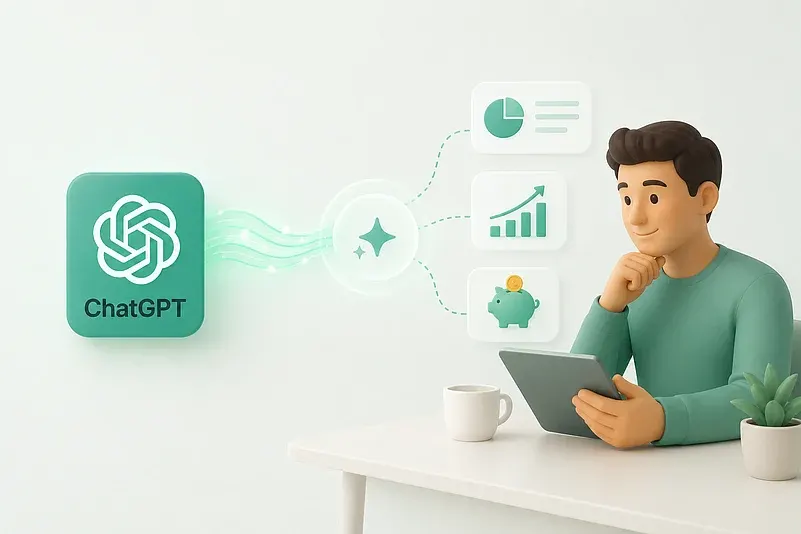
OpenAI opened a preview of a personal finance module that connects bank and investment accounts to ChatGPT via Plaid and offers advice based on real financial data. For now the feature is limited to US Pro subscribers; I look at AI's new frontier in money management along with the privacy promises and the Hiro acquisition.
For a long time, AI chatbots have produced generic answers to the question "how do I organize my budget?". Given without real spending, savings or debt data, this advice was often only as personal as a finance blog post. The personal finance preview OpenAI announced on May 16, 2026 aims to change this equation: ChatGPT can now talk based on data from bank and investment accounts connected with permission.
According to the company, more than 200 million people bring money management questions to ChatGPT every month. This traffic shows the product moving into the finance vertical after ChatGPT Health and app integrations. For OpenAI the logic is simple: if the user is already opening a chat for questions about payday, taxes or investments, seeing the real balance in the same window reduces friction.
What does the preview offer?
The new module has been opened as a preview to ChatGPT Pro subscribers in the US. Users can start the process from the Finance section in the sidebar or with commands like "connect my accounts". Once the connection is complete, the model can read data such as balance summaries, transaction history, investment positions and debts, and interpret them through a visual dashboard.
Concrete commentary becomes possible instead of abstract advice. For example, topics like the ratio of dining spending to income, subscriptions charged twice in the same month or the credit card minimum payment cycle can now be discussed with the user's real transactions rather than a generic template. Budget planning, spending categories and simple savings scenarios sit on top of this data layer.
The usage line OpenAI emphasizes is advice and analysis. The system doesn't transfer money from accounts, initiate payments or place investment orders. Still, the experience approaches a hybrid form that combines the summary screen of classic mobile banking with a conversation with a financial coach. This distinction matters: the product isn't "banking"; it's an AI layer that reads banking data.
Plaid infrastructure and more than 12,000 institutions
The technical backbone is Plaid. This US-based fintech company builds secure data bridges with banks and neobanks to provide apps with a read-only flow of financial information. The ChatGPT integration follows this model: connections are possible to tens of thousands of institutions in Plaid's network, including well-known names such as Chase, Citi, Robinhood and Affirm.
Plaid's place in the ecosystem is critical. Venmo, Robinhood and many budgeting apps have used the same infrastructure for years; once the user verifies their credentials through Plaid, the connected app only sees the authorized scope of data. OpenAI relying on this network instead of negotiating with hundreds of banks from scratch speeds up the launch.
The preview is geographically limited to the US. Users in Turkey can't access it directly for now; the fact that local banks aren't on the Plaid network suggests a global rollout shouldn't be expected in the short term. Even so, the move sets a reference point for how similar integrations will take shape in other markets. PSD2-based open banking infrastructure in Europe, Plaid-like bridges in the US: for AI companies, financial data is now a separate axis of competition.
Privacy boundaries and user control
Sensitive financial data entering an AI chat naturally raises trust concerns. OpenAI says it has drawn several hard lines here:
- Full account numbers aren't passed to the model.
- There's no permission to make transactions on the account; access is read-only.
- Connections can be cut whenever you want; saved memory related to finances can also be deleted separately.
- Existing data control settings also apply to this feature; the use of chats for model training can be turned off optionally.
- In temporary chat mode, financial memory is disabled.
These promises are an unavoidable package in an industry under growing regulatory pressure. Financial data sharing has long been controversial in the US; Plaid has made headlines in the past with lawsuits and settlements over consumer privacy. The "it only reads, it doesn't transact" message is both a technical boundary and a deliberate act of trust-building.
There are two layers users need to distinguish: technical access and how the data is processed inside the company. A read-only API prevents money from being withdrawn from your account; how long your transaction patterns, spending habits and asset allocation are kept in the language model's context is a separate debate. Temporary chat and training opt-out options partly close the gap; anyone considering the finance module needs to read the privacy panel line by line.
Also, the model's outputs aren't investment advice or tax consulting. As on the health side for OpenAI, the "not a substitute for professional advice" line is kept here too. Even if the user experience is appealing, critical decisions should be verified with the bank's official app or a licensed advisor.
The Hiro acquisition and the product roadmap
OpenAI says development began before its recent acquisition of the fintech startup Hiro. It isn't clear yet which capabilities Hiro will bring directly to the ChatGPT finance experience; the acquisition shows the company is acquiring outside talent in this vertical alongside organic growth.
The roadmap plans to open the preview over time to Plus and broader audiences. Starting with Pro is a classic software launch approach, both for collecting feedback and for containing potential errors within a more controlled group. Given infrastructure costs and support load, the expansion is likely to be gradual.
Competition and the "super app" context
ChatGPT moving into finance isn't a standalone story; it's part of the platform race. Google is combining Gmail and photos with Gemini Personal Intelligence. Apple is trying to strengthen its Siri and Apple Intelligence line with on-device data. Rivals such as Perplexity and xAI are also putting multi-step agent tasks front and center.
On OpenAI's side, together with Codex, Atlas and the single desktop app vision, the finance module reinforces the goal of moving ChatGPT from a text-generating tool to the operations center of daily life. Money management is a natural final link in this picture. For the user, writing code, researching on the web and discussing the budget in a single window makes the "super app" rhetoric concrete.
Things to watch out for
When evaluating the feature, a few realistic limits shouldn't be overlooked:
Regulation and liability. ChatGPT isn't a licensed financial advisor. In tax, credit or investment decisions, the model's outputs shouldn't replace professional advice.
Hallucination risk. Even with financial data connected, language models can produce wrong interpretations, missing categories or outdated summaries. Critical figures should always be verified in the bank's official app.
Geographic and subscription access. The preview is limited to US Pro; direct use from Turkey isn't possible at the moment.
A data minimization habit. You don't have to connect all your accounts; selecting only the accounts you want analyzed is a safer start.
From general advice to a personal dashboard
The personal finance preview makes concrete ChatGPT's shift from being an "assistant that gives general information on everything" to an "assistant that talks with your data". The Plaid partnership makes technical sense; privacy boundaries are essential for user trust. The Hiro acquisition and the plan to expand to Plus signal that the feature will be a long-term product line, not an experiment.
Although users in Turkey can't try the module directly for now, the trend is clear: after email and health data, AI platforms are reaching into the financial wallet too. The next question will no longer be "how do I make a budget?"; it will be which data you open to whom and how these suggestions shape your decisions.




