What Is xAI Colossus 2? The AI Supercomputer Targeting 2 GW
Originally published in Turkish. Read the original →
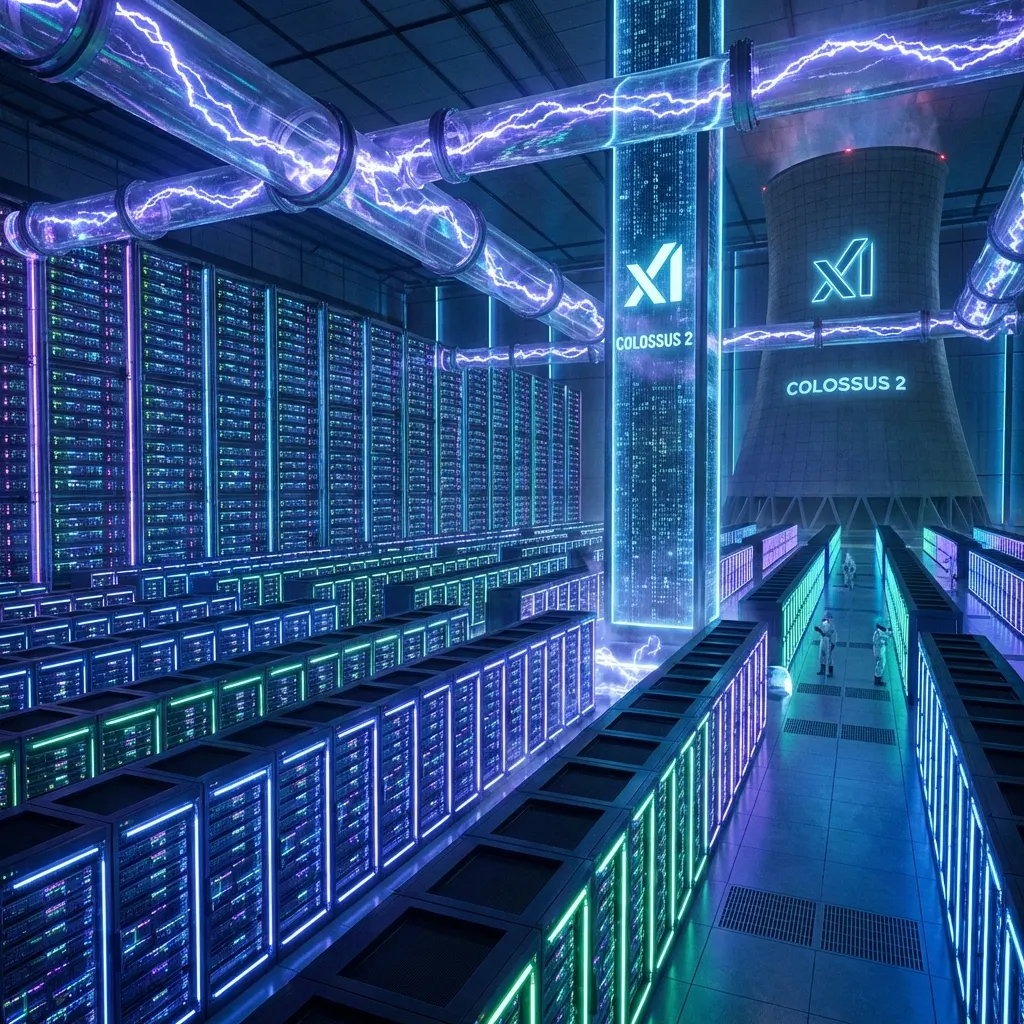
xAI Colossus 2 is the new infrastructure built for gigawatt-scale AI training. We assess what the 2 GW capacity target means for Grok training, energy costs and the race with OpenAI and Anthropic.
Elon Musk's AI company xAI has announced that by bringing online the supercomputer it calls Colossus 2, it has launched the world's first AI training cluster operating at gigawatt (GW) scale. This announcement, which Elon Musk made on X, is set to shift the balance in the AI infrastructure race.
Targeting 2 GW of Compute Power
Colossus 2 will work together with the previous-generation Colossus 1 to train xAI's large language model Grok. While it took 122 days for Colossus 1 to become fully operational, the new Colossus 2 quickly passed the 1 gigawatt (GW) mark as soon as it went live. The company's ultimate goal is to raise total capacity to about 2 GW.
According to Musk, the system is planned to be upgraded to 1.5 GW in April. To put the scale of this enormous power consumption in perspective: 1 GW of continuous power draw exceeds even the peak electricity demand of the city of San Francisco. That is, quite literally, equivalent to the output of a giant power plant or the consumption of a mega industrial zone.
Memphis: An AI Base
The supercomputer project began with xAI buying a massive 1-million-square-meter warehouse in Memphis and the land around it. This strategic move provided the physical infrastructure needed for the supercluster to grow. At the end of December, xAI added a third building called "MACROHARDRR" to its inventory, taking an important step toward bringing its compute power to the 2 GW target.
It Has Overtaken Its Rivals in Compute Power
Industry data and charts published by Epoch AI clearly show that xAI has hit a steep upward curve in compute power. Although the industry's other giants, Anthropic and OpenAI, are also working on projects of similar scale, with Colossus 2 actually up and running, xAI is currently ahead of its rivals in compute capacity.
The most important difference behind this success is infrastructure strategy:
* OpenAI depends heavily on Microsoft for its data center infrastructure. * Anthropic uses Amazon's data centers. * xAI chose to determine its own fate. Instead of off-the-shelf cloud solutions or leased facilities, the company is building its own data centers designed from scratch specifically for AI workloads. This strategy gives xAI a big advantage in both speed and operational independence.
A $20 Billion Investment and Tesla Chips
Colossus 2 came online right after xAI completed a massive Series E funding round that reached $20 billion. Initially targeted at $15 billion but increased due to strong demand, the funds will be used to scale infrastructure and develop new AI products.
The company says it is building the world's largest GPU clusters with the support of strategic partners such as NVIDIA and Cisco. xAI claims that the Colossus 1 and Colossus 2 systems together exceed more than one million H100 GPU equivalents.
This enormous compute power is already bearing fruit. While products such as Grok 4, Grok Voice and Grok Imagine recently reached users, it was also announced that training has already started on Grok 5, the model expected to be the next big leap.
xAI's aggressive growth strategy and its vision of building its own infrastructure prove once again how critical not only software but also hardware and energy infrastructure are in the AI race.




