Samsung Q2 2026 Financial Results: AI Chip Sales Hit a Peak While the Mobile Division Posts a Loss
Originally published in Turkish. Read the original →
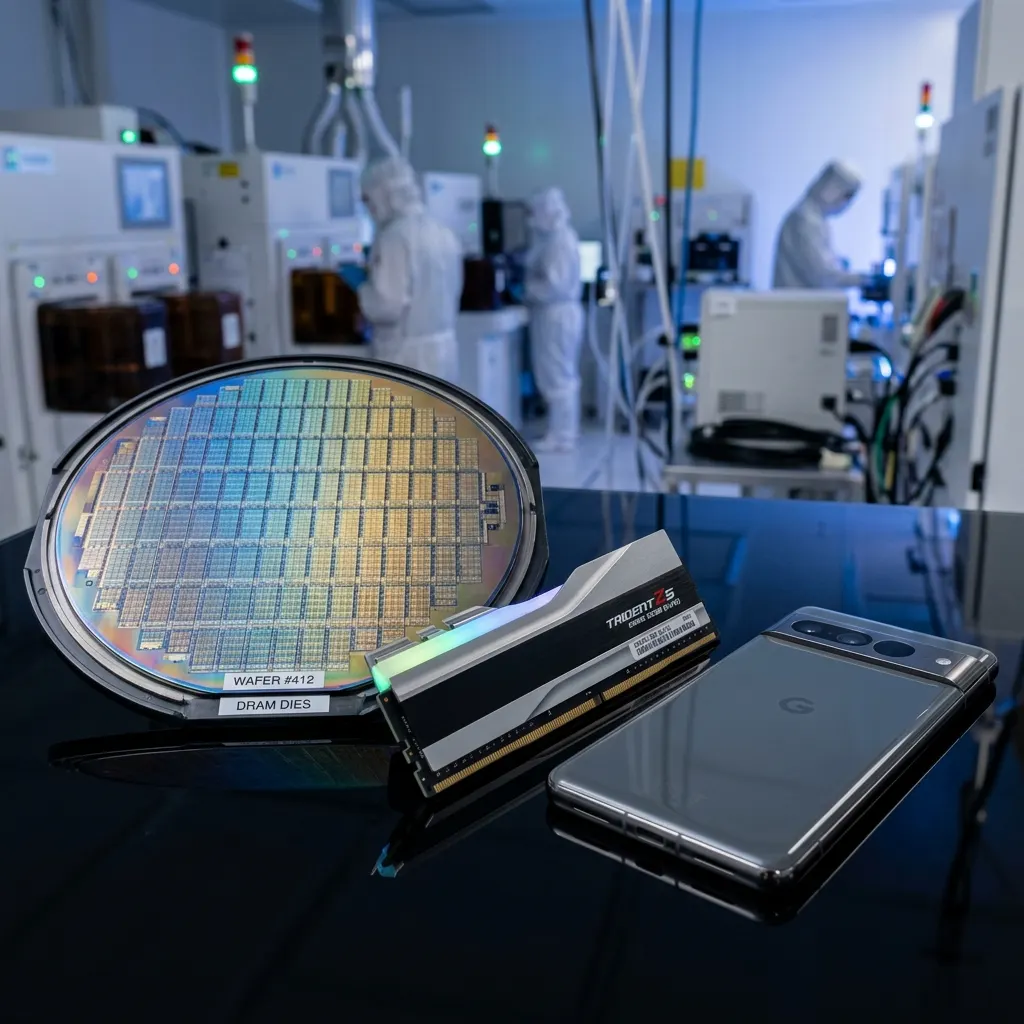
Samsung announced its Q2 2026 results. With $119 billion in revenue and $62 billion in operating profit, the tech giant set records in AI chip sales, while its mobile unit posted a loss for the first time in its history because of rising memory costs.
Samsung Electronics, one of the biggest players in the tech world, has published its final financial reports for the second quarter of 2026. The figures reveal one of the biggest transformations the global tech ecosystem has seen in recent years.
While the enormous memory needs of AI infrastructure triggered a historic financial boom in the company's semiconductor business, the component cost increases created by that same memory crunch pushed the company's flagship smartphone division into a loss for the first time in its history.
Let's take a close look at Samsung's Q2 2026 performance, its revenue breakdown by division, and this detailed earnings report that sheds light on the industry's future.
Overall Financial Picture: Record Revenue and Profit
In Q2, Samsung reported consolidated revenue of $119 billion (171.5 trillion KRW) and operating profit of $62 billion (89.5 trillion KRW), achieving its best quarterly financial performance of all time. Total net profit came in at $49 billion.
Compared with the same period of the previous year (Q2 2025), the company's revenue rose by about 130%, while operating profit grew by an astronomical 1,814%. The main driving force behind this momentum was the extreme demand for DRAM, HBM and NAND flash chips produced for data centers and AI systems.
| Financial Metric | Q2 2026 Value | Year-over-Year Change (YoY) | Explanation / Key Detail |
|---|---|---|---|
| Consolidated Revenue | $119 Billion (171.5 Trillion KRW) | +130% | Up 28% from the previous quarter (Q1 2026) |
| Operating Profit | $62 Billion (89.5 Trillion KRW) | +1,814% | The highest quarterly operating profit in the company's history |
| Net Profit | $49 Billion | +1,304% | One of the highest margins among global tech giants |
| Earnings Per Share (EPS) | $0.0075 (10,849 KRW) | +52% | A strong climb in investor returns |
| R&D Investment | $11 Billion | +78% | Investment in advanced process nodes and AI chips |
Revenue and Profit by Division
Samsung's Q2 2026 earnings report shows sharp contrasts between its business units. While the semiconductor side broke records, consumer electronics and mobile were crushed under cost pressure.
| Business Unit / Division | Revenue | Operating Profit / Loss | Key Drivers & Detailed Analysis |
|---|---|---|---|
| DS (Device Solutions - Semiconductors) | $88 Billion (127.5 Trillion KRW) | +$61 Billion (89.2 Trillion KRW) | Revenue rose 56% from the previous quarter and 357% from last year. |
| └─ Memory Business | $83 Billion | Record Profit | Price increases & extreme demand across DRAM, HBM and NAND (+471% YoY). |
| └─ System LSI & Foundry | Record Half-Year Revenue | Positive Profitability | Exynos & ISOCELL sales rose; 2nm / 4nm production lines strengthened. |
| DX (Device eXperience - Consumer Electronics) | $33 Billion | -$555 Million Loss | High memory and raw material prices completely eroded profit margins. |
| └─ Samsung MX (Mobile Unit) | $23 Billion (33.2 Trillion KRW) | -$486 Million Loss | Despite strong Galaxy S26 sales, a historic first loss due to component costs. |
| └─ Visual Display & DA (TVs & Home Appliances) | $10 Billion (14.5 Trillion KRW) | -$6.9 Million Loss | The 2026 FIFA World Cup boosted TV sales; high costs reduced margins. |
| └─ Samsung Networks | Improving Trend | Stable | Recovery in carrier 5G/network infrastructure deliveries. |
| SDC (Samsung Display) | $5 Billion (7.5 Trillion KRW) | +$486 Million Profit | High demand for mobile and monitor OLED panels; 8.6G IT OLED line ready. |
| Harman International | $3 Billion (4.6 Trillion KRW) | +$278 Million Profit | Automotive digital cockpit solutions and JBL/AKG consumer audio products (+19% YoY). |
The AI Chip Tailwind Lifted the Semiconductor (DS) Division to the Top
Samsung's Device Solutions (DS) division, which designs and manufactures semiconductor chips, practically made history in the second quarter of 2026. The division alone generated $88 billion (127.5 trillion KRW) in revenue and $61 billion (89.2 trillion KRW) in profit.
The Memory Business (DRAM, HBM, NAND) Boom
The massive demand for the high-bandwidth memory (HBM) needed to train and run large language models (LLMs), along with high-speed server DRAM and NAND storage, created a global memory shortage. Thanks to rapidly rising prices, the Memory Business unit increased its revenue by 471% year over year to $83 billion.System LSI and Advanced Foundry Processes
The System LSI unit closed the first half of the year with record revenue thanks to the growing market share of its flagship Exynos mobile processors and high-resolution ISOCELL camera sensors. The company is targeting double-digit revenue growth by ramping up mass production on advanced process nodes such as 2nm and 4nm for its customers in the US and Chinese markets.An Ironic First in the Mobile Division (Samsung MX): A Historic Loss
The most striking and surprising headline in the earnings report undoubtedly came from Samsung's mobile business unit, Samsung MX.
Despite the successful global sales performance of the Galaxy S26 series, the company reported a $486 million loss in its mobile division. This went on record as the first loss in the history of Samsung's mobile device business.
What Ate the Profit: The High Price of Its Own Memory Chips
Behind this dramatic picture lies a rather ironic reason: memory chip prices that rose because of the AI boom.While Samsung's semiconductor (DS) unit made record profits by raising chip prices, the Bill of Materials (BOM) costs for the mobile unit (MX), which uses the same memory and storage components in smartphone production, climbed to astronomical levels. Even though phone retail prices stayed the same, this big jump in hardware production costs wiped out the mobile side's profitability and pushed it into a loss.
+-----------------------------------------------------------------------+
|                       THE GLOBAL MEMORY PARADOX                       |
+-----------------------------------------------------------------------+
        <div class="overflow-x-auto my-6">
          <table class="min-w-full bg-white dark:bg-neutral-900 border border-gray-200 dark:border-neutral-700 rounded-lg shadow-xs">
            <thead>
              <tr><th class="px-4 py-3 text-xs font-medium text-gray-500 uppercase tracking-wider bg-gray-50 dark:bg-neutral-800 dark:text-neutral-400 border border-gray-200 dark:border-neutral-700">AI Demand  ──>  RAM / NAND Prices Rise</th></tr>
            </thead>
            <tbody class="divide-y divide-gray-200 dark:divide-neutral-700">
              <tr class="hover:bg-gray-50 dark:hover:bg-neutral-800"><td class="px-4 py-3 text-sm text-gray-900 dark:text-neutral-100 border border-gray-200 dark:border-neutral-700">├──>  Semiconductor (DS): Record Profit</td></tr><tr class="hover:bg-gray-50 dark:hover:bg-neutral-800"><td class="px-4 py-3 text-sm text-gray-900 dark:text-neutral-100 border border-gray-200 dark:border-neutral-700">│     (+$61B)</td></tr><tr class="hover:bg-gray-50 dark:hover:bg-neutral-800"><td class="px-4 py-3 text-sm text-gray-900 dark:text-neutral-100 border border-gray-200 dark:border-neutral-700">│</td></tr><tr class="hover:bg-gray-50 dark:hover:bg-neutral-800"><td class="px-4 py-3 text-sm text-gray-900 dark:text-neutral-100 border border-gray-200 dark:border-neutral-700">└──>  Mobile (MX): Production Costs Soar</td></tr><tr class="hover:bg-gray-50 dark:hover:bg-neutral-800"><td class="px-4 py-3 text-sm text-gray-900 dark:text-neutral-100 border border-gray-200 dark:border-neutral-700">└─> First Loss in History (-$486M)</td></tr>
            </tbody>
          </table>
        </div>+-----------------------------------------------------------------------+
Consumer Electronics, Display (SDC) and Harman
TVs and Home Appliances (Visual Display & DA)
The Visual Display and Digital Appliances division generated $10 billion in consolidated revenue while reporting a small loss of $6.9 million. * TV Sales: TV sales volume rose thanks to demand generated by the 2026 FIFA World Cup; however, rising raw material and logistics costs squeezed profit margins. * Home Appliances: Hot weather drove strong demand for air conditioners. Samsung plans to make this unit profitable again by focusing on high-end AI-powered smart home appliances in the coming period.Samsung Display (SDC)
Thanks to strong sales of OLED panels for smartphones, tablets and gaming monitors, the display technologies unit generated $5 billion in revenue and $486 million in profit. The company is preparing to start mass production on its 8.6G IT OLED production line. Industry analysts expect this new facility to be used to supply advanced OLED panels for the next-generation MacBook Ultra models Apple is set to release soon.Harman International
Harman, which houses automotive solutions and consumer audio brands, continued its steady growth, reporting $3 billion in revenue and $278 million in operating profit. Rising demand for digital cockpit solutions for electric and autonomous vehicles supported the unit's profitability.A 2028 Warning: The Chip Crisis Will Continue
After announcing the results, Samsung's management issued a critical warning for the industry. According to company officials, the effects of the global memory and semiconductor supply crisis could last until 2028.
As long as AI data centers' appetite for memory does not decrease, mobile and consumer electronics manufacturers will have to struggle with high component costs. While the Samsung MX unit aims to improve operational efficiency and optimize production processes to ease this cost pressure, consumers can expect upward movement in smartphone sticker prices in the coming quarters.
In short, Samsung's Q2 2026 results marked a historic turning point that shows most clearly how the AI revolution has upended the balance of power in the hardware world.




