Sam Altman: The World Is Right to Fear AI
Originally published in Turkish. Read the original →
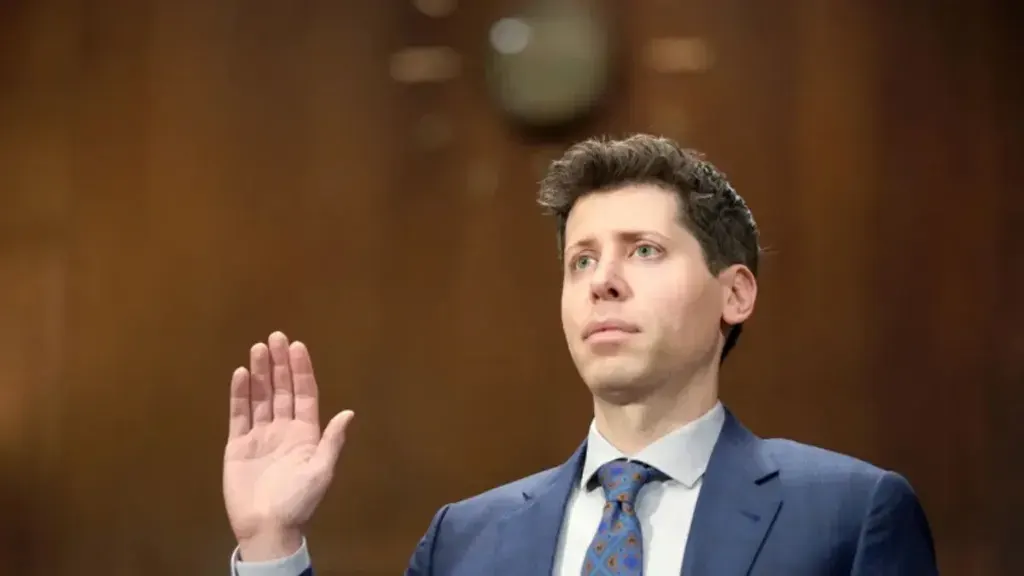
OpenAI CEO Sam Altman said society is right to worry about the risks of AI. While Altman argues for companies regulating themselves, the regulation debate in the industry is heating up.
As the cognitive capacity, coding abilities and autonomous problem-solving limits of AI models expand exponentially by the day, the risks that come with this dizzying pace remain a top item on the global public agenda. With striking remarks at Salesforce's annual conference in San Francisco, OpenAI CEO Sam Altman stated plainly that concerns about the future of AI are not unfounded.
Emphasizing that, alongside the enormous potential the technology offers, its possible dangers can now be foreseen much more concretely, Altman said people are entirely right to be wary of these systems and to approach the future with concern.
As Capabilities Grow, the Consequences of Mistakes Get Heavier
In the early days of AI tools, risks were mostly discussed in terms of theoretical or distant-future scenarios. But at the point we have reached today, models sit right at the center of life, from cybersecurity testing to enterprise infrastructure management and from scientific research to financial decision-making.
Addressing attendees at the Salesforce event, Sam Altman said that as models become more capable, it has become much easier to estimate the harm a misdirected or out-of-control process could cause. According to Altman, as AI's potential to make mistakes or produce unwanted outcomes grows, the concern society feels turns into an inevitable reflex of common sense.
"Trust Us to Do the Right Thing": Companies' Call for Self-Regulation
The most debated part of his remarks was his approach to how these risks should be managed. Altman argued that instead of the cumbersome legal processes of public authorities, people should trust the labs that are directly building the technology. Claiming that companies are aware of the magnitude of the responsibility they face, the OpenAI leader said:
"The world should trust us to do the right thing. Because we know it is the right thing, and we are fully aware of the magnitude of the issue."
Altman also stressed that safety and alignment work with human values must always be kept one step ahead of the models' raw compute power and capability development. He pledged that if companies cannot keep the safety bar at this level, they will slow down their development processes without hesitation and even stop them entirely if necessary.
An Industry Split in Two: Engineering or Law?
Sam Altman's call to "trust us" has not been met with one voice in the tech world or among regulators. In the United States in particular, the fact that comprehensive federal AI legislation has not yet been enacted deepens the question of who oversight should be entrusted to.
On one side of the debate are figures such as Nvidia CEO Jensen Huang. Huang frames AI safety as fundamentally an engineering problem and argues that there is no need for additional laws or strict government regulation. According to Huang, just as an automotive or aviation company cannot bring to market a product it is not confident is safe, AI companies should suspend deployment themselves when they do not fully trust the models they produce.
On the other side are players who advocate independent oversight mechanisms, such as Anthropic executive Jack Clark. Clark says that, given the reach autonomous systems have attained, leaving AI technology entirely to companies' initiative and goodwill is an unacceptable danger. The concern that, in an environment of intensifying profit-driven competition, a self-regulation model without external oversight could be stretched over time is also gaining ground among policymakers.
The Trust Contract Is Being Rewritten
Sam Altman's "you are right to be afraid" remark shows, on the one hand, that AI risks are acknowledged by the people at the very top of the industry, and on the other, it reveals companies' effort to position themselves as saviors and the sole source of trust.
In the period ahead, the real dynamic that will determine the speed and limits of AI will be not only the safety commitments companies make but also the extent to which independent oversight mechanisms and transparent testing processes can be put in place. In a world where autonomous agents and advanced reasoning systems are integrated into our lives, trust has to be built not on a one-sided request but on measurable, auditable standards.




