Three New Voice Models from OpenAI: AI Now Thinks, Translates and Transcribes While Talking
Originally published in Turkish. Read the original →
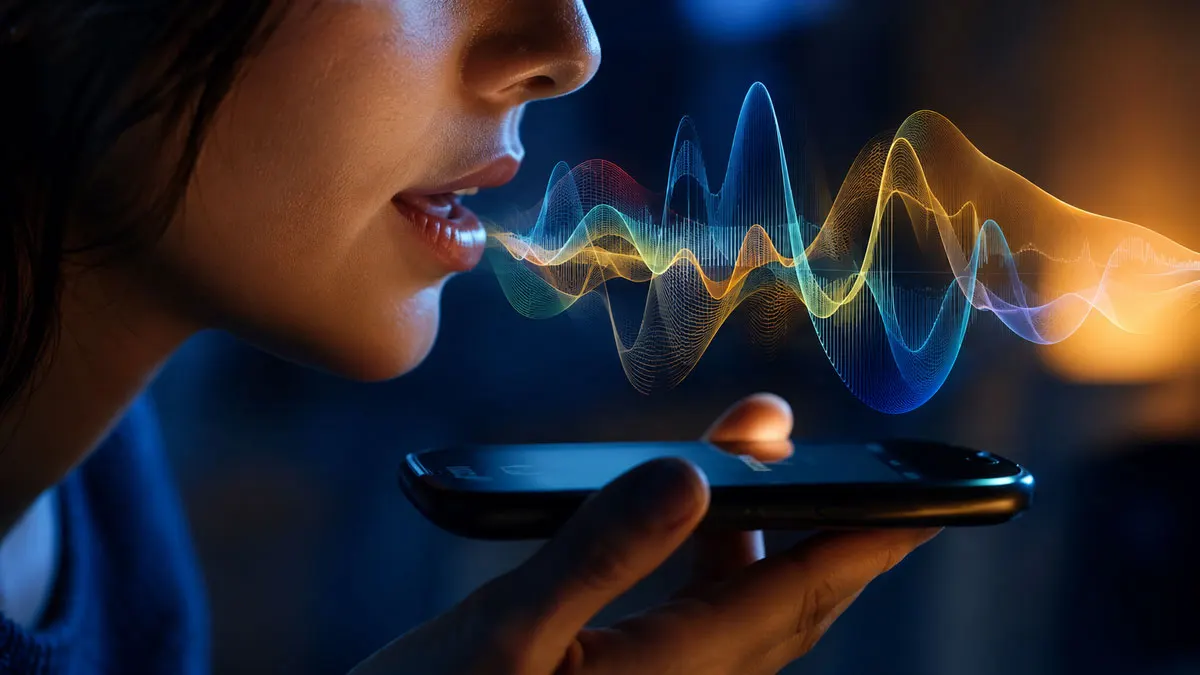
OpenAI's new generation of voice models turns AI from a passive listener into an active conversation partner. GPT-Realtime-2 performs tasks while talking, Translate offers instant translation across 70+ languages and Whisper provides live transcription.
Three New Voice Models from OpenAI: AI Now Thinks, Translates and Transcribes While Talking
For a long time, our interaction with AI consisted of typing something into a text box and waiting for a reply. ChatGPT, Gemini, Claude... They all basically worked in the same loop: type, send, read. But this picture is changing fast. Over the last two years, voice AI technologies have taken a major leap, and AIs have evolved into systems that don't just hear our voice but grasp the context of what we say, carry on a natural conversation and even do work in the background while the conversation continues. The three new voice models OpenAI announced this week are the most concrete reflection of exactly this evolution.
Three Models, Three Different Capabilities
With the models GPT-Realtime-2, GPT-Realtime-Translate and GPT-Realtime-Whisper, made available through its developer API, OpenAI has made its most comprehensive move in voice AI. Each model focuses on a different need: one can think and take action while talking, another performs instant language translation, and the third converts speech into text in real time. Considered together, the picture that emerges from this trio is quite striking: an AI architecture that listens, understands, translates, writes and takes action.
According to OpenAI's vision, these models aim to let users interact naturally with AI without touching a keyboard, whether they are behind the wheel in traffic, trying to find their way in an airport or contacting customer service.
GPT-Realtime-2: AI That Takes Action While Talking
The most ambitious member of the trio is undoubtedly GPT-Realtime-2. OpenAI describes this model as "the first voice model with GPT-5-level reasoning," and that phrase doesn't seem to be an empty marketing line. The model can follow long, multi-layered dialogues. When the user changes the subject, interrupts or returns to an earlier topic, it can keep the flow going naturally.
But the really striking part is the model's ability to actively perform tasks while the conversation is ongoing. Developers can give GPT-Realtime-2 access to external tools such as calendar apps, search engines or internal systems. And while carrying out a task, the model doesn't neglect to keep the user informed. For example, it produces natural feedback such as "I'm checking your calendar, one second" or "Let me check that information now." In other words, the AI doesn't just talk; it also gets work done while talking.
There is a serious capacity increase on the technical side as well. The model's context window has been raised from 32,000 tokens to 128,000 tokens. What does this mean in practice? Even in much longer conversations, the AI doesn't forget what was said at the beginning. In scenarios such as customer support lines, technical consulting calls or long healthcare consultations in particular, this expansion can make a big difference. OpenAI also says the model recovers from failed actions faster and understands domain-specific concepts such as medical terminology much more accurately than previous versions.
On performance, there are concrete numbers. According to the benchmark results OpenAI shared, GPT-Realtime-2 recorded an improvement of more than 15 percent on Big Bench Audio tests compared to its predecessor. This means a clear step forward in both understanding and response quality in voice interactions.
Comparison with Google Gemini Live
This move puts OpenAI directly in the same lane as Google's Gemini Live system. Both companies position voice AI as a priority, but the differences in approach are clear. While Google puts low latency and broad language support at the forefront with Gemini Live, OpenAI is investing more in conversational depth, context tracking and a natural dialogue experience.
These two different strategies actually offer important clues about the direction voice AI will evolve in. On one side, speed and accessibility; on the other, depth and task execution capacity. It is likely that a point where these two approaches converge will be reached in the future, but for now the competition is creating a very productive innovation cycle for users.
GPT-Realtime-Translate: Instant Translation in 70+ Languages
The second model, GPT-Realtime-Translate, focuses on real-time language translation. The model can detect more than 70 source languages and translate them simultaneously into 13 different target languages. What's more, it manages to preserve the speaker's natural pace and tone during translation. This means offering a fluid and natural communication environment instead of a robotic translation experience.
OpenAI positions this model especially for customer service, travel apps and multilingual enterprise communication platforms. Deutsche Telekom, one of the companies already using the model, has started building support lines where customers can speak in their native language and the AI translates the conversation instantly. As applications like this become widespread, the need for human interpreters is expected to decrease significantly, especially in international customer service.
GPT-Realtime-Whisper: Speech Turns into Text Instantly
The third model, GPT-Realtime-Whisper, focuses on live transcription. As the most advanced version of the Whisper infrastructure OpenAI has been developing for a long time, this model can transcribe speech in real time. It addresses a wide range of uses such as meeting notes, call center recordings, live broadcast captions, podcast transcriptions and voice note apps.
Previous versions of Whisper were already widely used in the industry, but this new generation model's real-time capability and improvements in accuracy take it to a different level. In particular, the ability to distinguish who said what in environments with multiple speakers is considered a critical development for the business world. Think of a board meeting: everyone is talking, the notes get mixed up, and who said what remains unclear. The new version of Whisper aims to solve exactly this chaos.
An Important Step on the Road to AI Agents
When we consider OpenAI's three models together, the picture that emerges is quite clear: the company wants to take voice AI out of a simple command-response mechanism and move it toward a full-fledged AI agent architecture. A system that can listen, think, translate, transcribe and take action at the same time while doing all of this... Although this vision hasn't been fully realized yet, the steps taken show how close it is getting to this goal.
These developments in voice AI carry transformative potential not just for tech enthusiasts but for many fields, from customer service to healthcare, from education to international trade.
From a developer's perspective, having these three models available through the API makes it much easier to add a voice interaction layer to existing applications. Think of an e-commerce app: the user asks about a product by voice, and the AI both answers, adds it to the cart and, when needed, communicates in a different language. Integrated experiences like this are now technically possible, and the development cost is falling every day.
An era in which we can collaborate with AI just by talking, without touching a keyboard, is no longer a promise of the future; it is starting to become the reality of the present. And one of the keys opening the door to this reality seems to be the three models OpenAI put on the table this week. In the coming months, we will all see which applications these models get integrated into and how they transform the user experience.




