OpenAI and Jony Ive’s First Hardware: Is an AI-Powered Pen Coming?
Originally published in Turkish. Read the original →
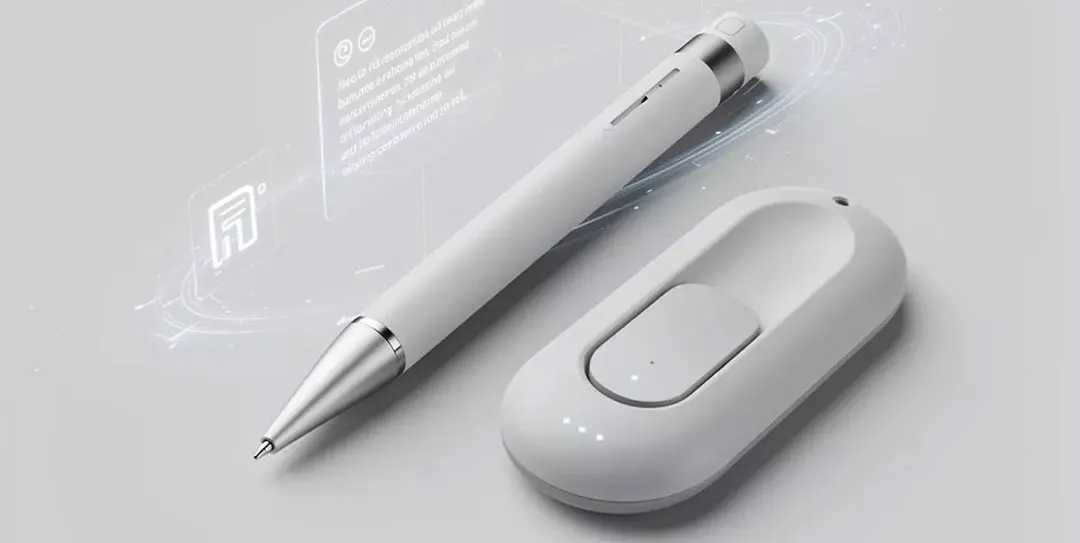
After OpenAI’s acquisition of io, the startup that came out of Jony Ive’s LoveFrom team, there is talk that its first hardware product could be a “context-aware” AI-powered pen. So what could such a product promise, what risks does it carry and why is the “third core device” idea back on the agenda?
OpenAI and Jony Ive’s First Hardware: Is an AI-Powered Pen Coming?
OpenAI’s move into hardware is no longer just an “intention”; it is turning into a concrete roadmap. In May, the acquisition of io, the startup connected to Jony Ive’s design firm LoveFrom, was one of the strongest signs of this shift. For a long time after the acquisition, the product io was working on remained “secret”; but the latest rumors suggest the first device could be an AI-powered, context-aware pen.
On its own, this claim may look like “a new accessory.” But if we consider that OpenAI wants to position AI not just as a software service but as an interface that changes behavior, the pen idea takes on a more strategic meaning. A pen isn’t as noisy as a phone, it doesn’t require the “sitting arrangement” of a laptop, and it can slip into everyday life from a very natural place.
Why does the “pen” idea attract attention?
Historically, the pen is one of the lowest-friction tools of production: taking notes, drawing, marking up, signing, sketching… Most of these actions happen without opening “a full computer session.” If OpenAI can embed a ChatGPT-like intelligence inside this behavior, the product could carry this promise: AI thinks along with you; it captures the context as you write and draw.
The phrase “context-aware” that appears in the leaks fits right here. Capturing context requires understanding not just the words but the intent, the layout, the emphasis and even the rhythm of a drawing. That goes beyond an ordinary stylus; it means a kind of “writing/drawing assistant.”
OpenAI + Jony Ive: what could the hardware goal be?
Jony Ive’s name usually brings aesthetics to mind; but his real strength is combining aesthetics with behavior design. The iPhone’s success came not just from looking good but from changing the way people interact with technology. On OpenAI’s side, the core goal is to make users’ interaction with AI more frequent, faster and more natural.
When these two approaches come together, a question arises: “How do you carry talking to AI into everyday life, and with which object, without trapping it inside a screen?” The pen is a strong candidate here. Because for students, creative professionals, meeting-heavy workers and designers in particular, the pen is still an indispensable tool.
What could such a “smart pen” do?
At this point it isn’t possible to talk about definite features; but technically, the “AI + pen” combination could be shaped around a few core capabilities:
1) Instant note summarizing and structuring
Notes that look like scribbles in a meeting actually carry lots of clues: headings, sub-items, arrows, stars, question marks. A smart pen could digitize what you write instantly and turn it into an itemized action plan. It could automatically pull out answers to questions like “Who will do what, and when?”
2) Context-based suggestions: “did you mean this here?”
When the pen detects ambiguity in a sentence you’re writing, it could offer alternative suggestions, especially in technical notes, workflows or draft texts. The critical difference here is that this isn’t “keyboard autocorrect”: a system that captures context understands the goal better.
3) From sketch to draft: “cleaning up” diagrams and charts
Many people draw boxes, arrows and flowcharts, then redraw them to make them shareable. An AI-powered pen could turn rough sketches into a cleaner diagram, and even offer different style options on request (minimal, corporate, technical, presentation-ready and so on).
4) Education and learning scenarios
For students, the pen is still the main tool. A smart pen could create “study cards” from notes, generate summaries, detect the topics you struggle with and suggest reviews. The biggest advantage here is that it fits into existing habits without changing the student’s behavior.
5) Signatures, forms, documents: automation based on “understanding”
Pens are also used in processes like signing, filling out forms and marking up contracts. A context-aware system could not only convert the written information into text but also answer the question “what does each field represent?” However, this area would be the most sensitive part in terms of data security and legal risks.
Why is the “third core device” idea coming back?
Another concept mentioned in the rumors is positioning these devices as a “third core”: that is, additional devices that complement the laptop and the smartphone. This idea has been tried many times in the past. Most of the time it failed for two reasons:
- Behavior cost: People have to carry a new device with them every day, charge it and learn it.
- Value-to-gadget ratio: There is no clear answer to the question “Why do I need this when I have my phone?”
The AI wave is trying to change this equation again. Because the value emerges not in a single feature but in the trio of speed, intuitiveness and context. OpenAI’s goal is probably to create an interaction that goes beyond the “phone app” experience.
Not just a pen: the portable audio device claim
The same rumors claim that OpenAI isn’t settling for just a pen and is working on other hardware too. One of these could be a portable audio device. This could strengthen a “conversation”-centric interaction with AI: an assistant that isn’t listening all the time but kicks in quickly when needed and gets things done with short commands.
The pen + audio device pair creates an interesting combination: one for production (writing/drawing), the other for feedback (voice guidance/summaries). This could serve the idea of “reducing the screen.”
Manufacturing, supply chain and a geopolitical choice
According to the leaks, Foxconn stands out on the manufacturing side, and production will most likely be based in Vietnam. It is claimed that a manufacturer option like Luxshare was initially on the table, but that this plan may have been dropped because OpenAI didn’t want its hardware made in China. Even a US manufacturing option with Foxconn could come to the table, though it’s unlikely.
These details don’t necessarily mean the product “is coming soon”; but they show the company isn’t looking at the hardware business only at the concept level. Because manufacturer selection, certification and logistics planning are among the earliest processes to start in hardware.
The real question: where will the AI run?
The critical issue that will decide the fate of an AI-powered pen is where the intelligence runs:
- Cloud-heavy approach: A more powerful model, better results; but latency, connection dependency and privacy concerns.
- On-device approach: Faster response and better privacy; but limited model capacity and high cost.
- Hybrid approach: Simple operations on the device, heavy work in the cloud; the most likely scenario in practice.
“Note” and “drawing” data are among the most personal data there are. So the product’s adoption will depend on giving users a very clear sense of security and control.
Privacy and usage flow: the real “fine line”
The appeal of the smart pen idea comes from how almost invisibly it attaches itself to the note-taking process. But that same invisibility raises the expectation of transparency on the privacy side. The basic question on users’ minds is: “While I’m writing, where does this data go, who sees it, and how long is it kept?”
That’s why the success of such a product can be measured, before its technical specs, by clarity on the following:
- Default off / on control: Does voice/drawing/data capture kick in without the user’s permission?
- Local storage option: Is there a mode where notes can stay on the device without being sent to the cloud?
- Shareable output: When producing a meeting summary, can the user make choices like “which parts should be summarized?”
If the pen becomes “smart” but can’t give the feeling that control stays with the user, even the most creative scenarios may not find a place in daily use.
The biggest risk to success: “Pin” syndrome
In recent years there have been attempts at an “AI-focused third device,” and some of them fell short of expectations. These examples showed that a good idea alone isn’t enough: the device has to make the user say “I’m glad I have it with me” every day, again and again.
OpenAI’s advantage is a strong model ecosystem and software experience. Jony Ive’s side brings the skill of “naturalness” and “settling into habits” in hardware design. Still, success largely depends on one thing: can the pen feel more effortless than an ordinary pen?
Conclusion: If it comes, it will be an interface, not an “accessory”
For now, the available information is at the rumor level. But if the claim is true, OpenAI’s first hardware will mean less “a new gadget” and more an attempt at a new interface to AI. The pen is one of the rare objects that can settle into user behavior with the least intervention. And that makes the “third core device” idea worth trying again.
The real test of the OpenAI + Jony Ive partnership will be convincing not tech enthusiasts but everyday users. Because this category is won by products that make people say “it’s useful every day” rather than “it’s very impressive.”
New leaks and official announcements in the coming months will make this picture even clearer.
> Note: This content was originally rewritten and expanded based on publicly available news and rumor reports.




