OpenAI Is Integrating Its Video Generation Tool Sora Directly Into ChatGPT
Originally published in Turkish. Read the original →
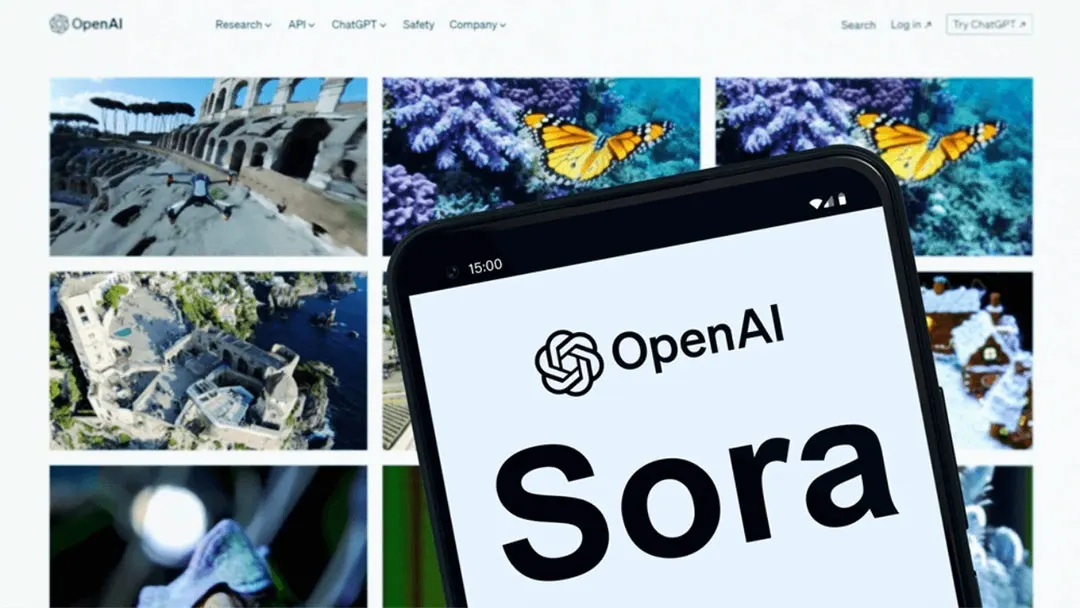
OpenAI is preparing to take its revolutionary AI video generation model Sora out of its standalone app and integrate it directly into the ChatGPT platform. The goal is to give millions of users a seamless experience from a single interface.
OpenAI, undoubtedly the most powerful player in the generative AI race, keeps pushing ahead with moves to bring the user experience into a single hub. ChatGPT, which sets the standard for text and image generation, will very soon be powered by Sora, the company's text-to-video marvel.
According to leaks reported by The Information and attributed to sources close to the company's internal workings, OpenAI's leadership has decided to end Sora's standalone adventure and make it part of the ChatGPT chat interface (UI) directly. This strategic step will turn video generation from "a tool used by experts" into a format where anyone with an internet connection can produce cinematic videos within seconds in their everyday chat.
Why Was the Standalone App Abandoned?
When Sora was first announced to the public, it stunned the whole world with its realistic physics, complex camera angles and extraordinary consistency of detail. However, the standalone Sora app, released in the mobile stores in September 2025 amid high expectations, struggled to gain the desired "viral" momentum.
The social-media-style video feed the app initially offered was designed for users to show off the videos they generated. To make the platform more attractive, OpenAI even signed a special content deal with entertainment giant The Walt Disney Company, allowing licensed Disney characters to be generated through Sora.
Despite all these aggressive marketing moves, Sora's downloads and active usage did not follow the targeted curve. According to data from independent analytics firms, app engagement had dropped sharply by 45% as of January. Users' attention, already split between apps like ChatGPT, Instagram and TikTok, made it hard for them to move to a new and isolated platform "just to generate videos."
One Platform, Endless Creation: The Evolution of ChatGPT
Reading this downward trend, OpenAI made a very quick change of vision. It became clear that people do not need a new social media app; they need powerful "multimodal" assistants that can serve them within their existing workflows and habits.
With Sora embedded in ChatGPT, an entirely different era will begin for users: * Fluid Experience: While asking the chatbot to prepare text for a presentation, you will be able to say in the same conversation window, "Now create a 5-second opening video that fits this text, with a mountain landscape in the background." * Contextual Coherence: Because ChatGPT knows the history of the current conversation, it will interpret your video requests in much greater detail, taking the burden of prompt engineering off the user. * An Explosion in Access: Through ChatGPT, with its hundreds of millions of monthly active users, Sora will be opened up to the whole world instantly. Generating a video will become as ordinary as writing an email.
Technical and Cost Challenges
This exciting integration also brings huge problems to overcome behind the scenes. The biggest handicap, of course, is cost and server infrastructure.
Video generation (rendering) consumes an astronomical amount of GPU (graphics processor) compute compared with generating only text or a still image (for example, DALL-E 3). Sora's enormous compute requirements could paralyze the server infrastructure in a scenario where millions of ChatGPT users request videos at the same time.
This makes OpenAI's already very intense server traffic negotiations with its cloud partner Microsoft Azure even more critical. Industry experts predict that the Sora feature will initially be offered only to premium "ChatGPT Plus", "Team" or "Enterprise" subscribers with a set quota, and that a very careful rollout policy will be followed to balance the costs in the background.
Competition With Google and Meta Heats Up
Of course, OpenAI is not alone in this field. Meta is weaving its long-developed Emu Video model deep into WhatsApp and Instagram. Google, for its part, is trying to perfect both video and music generation with new versions of Gemini and its model called Lumiere. Meta's recent acquisition of the autonomous agent network Moltbook is also proof that AI is evolving from being merely "generative" into "multitasking" systems.
Merging Sora with ChatGPT means OpenAI is sending its heaviest weapon straight to the front line in this massive multimodal war. This new era, in which users hire the world's best writer, coder, illustrator and now "film director" on a single web page or app for a single subscription fee, will completely redefine what content creation means.




