OpenAI Dime AI Earbuds: What Does a Screenless AI Device Offer?
Originally published in Turkish. Read the original →
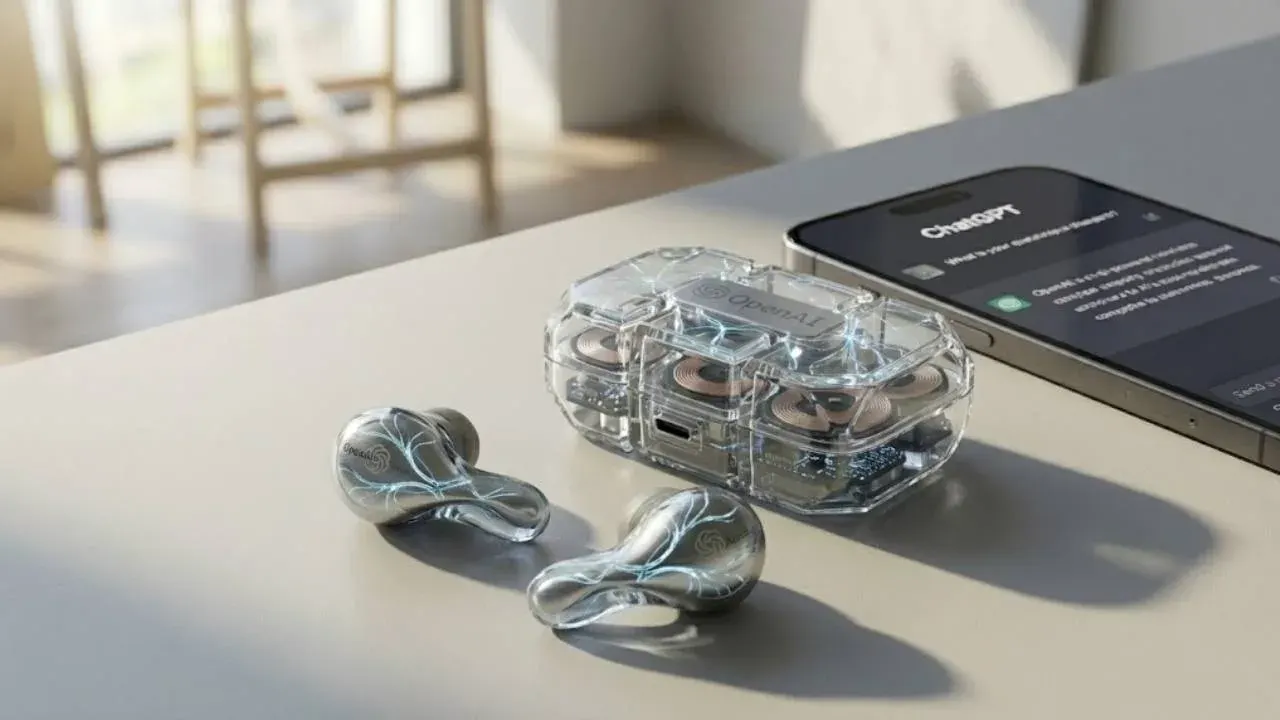
OpenAI’s Dime earbuds, expected in 2026, aim for a voice-first AI experience instead of a screen. We look at why the smartphone plans were shelved and where the product stands in the market.
OpenAI, the undisputed leader of the AI world, has so far always remained the "invisible intelligence" behind our screens. The company that entered our lives with ChatGPT and pushed its capabilities sky-high with GPT-4 and the newly announced GPT-5.3-Codex is now getting ready to come out of its shell. However, the excitement we expected around an "OpenAI Phone" has given way to a more strategic, more minimalist and perhaps more revolutionary product: Dime.
According to leaks, OpenAI will take its first step into the consumer hardware market in 2026 with a screenless, fully AI-focused pair of earbuds. This move isn't just a tech giant expanding its product line; it's a sign that our physical interaction with technology is about to change fundamentally.
Why Was the Smartphone Abandoned?
For a while, the word in tech circles was that Sam Altman and legendary designer Jony Ive were designing "the iPhone of AI." There was even strong evidence that OpenAI was working on a high-performance mobile device with its own processing power. However, the latest information shows that this ambitious plan has been shelved for now.
The main reason behind this is entirely rational: hardware costs and supply chain bottlenecks. Building a mobile device powerful enough to run AI models locally requires an enormous amount of HBM (High Bandwidth Memory). The current global shortage in HBM supply and production costs reaching astronomical levels pushed even a "software giant" like OpenAI to take a step back. Instead of colliding head-on in a market dominated by Apple and Samsung, the company decided to focus on a less crowded area with more room to grow: the "wearable AI" market.
"Dime": An Intelligence Experience Without a Screen
This new earbuds project, code-named "Dime," is a product of OpenAI’s "start simple" philosophy. When describing the device, Sam Altman uses a rather interesting phrase: "A calmer, more peaceful experience than smartphones."
So what can a device without a screen promise us? Today’s smartphones are devices that constantly trap our attention in screens and bombard us with notifications. "Dime," on the contrary, aims to strengthen our connection with the world through AI rather than distracting us. Purely voice-driven interaction will offer an assistant experience that is free of visual noise and aimed directly at what you need.
The earbuds will draw on the advanced capabilities of GPT-5.3-Codex, which OpenAI introduced recently. They are being designed not just for listening to music or making calls, but as an "in-ear superintelligence" that can translate in real time, analyze the sounds around it, take meeting notes and chat with you in natural language.
Major Partnerships on the Production Line
OpenAI knows it is a newcomer on the hardware side, and to minimize this risk it has shaken hands with the manufacturing giants of the tech world. Leaks highlight Foxconn, which also manufactures the iPhone, and Luxshare, which has increased its share in Apple products in recent years, on the production side. These partnerships clearly show that OpenAI doesn’t want to leave hardware quality and supply chain management to chance.
This professionalism in hardware production proves that OpenAI isn’t just running an "experiment" but intends to build a long-term ecosystem. As Chris Lehane also confirmed, the company aims to use this product to improve AI-based interactions with real user data and to gain critical experience on the hardware side.
The AI Wearables Market: Competition Heats Up
With "Dime," OpenAI is actually entering a pretty tough arena. Meta’s highly acclaimed smart glasses, born from its partnership with Ray-Ban, and attempts by smaller startups such as the Humane AI Pin and Rabbit R1 have shown how hungry the market is. But OpenAI’s biggest trump card is that it owns the world’s most advanced AI models.
The success of wearable devices depends less on how stylish the hardware is and more on how useful the intelligence inside it is. Users don’t only look at the sound quality of a device they put in their ears; they look at the answers it gives to complex questions and how well it understands context. This is exactly where OpenAI aims to get miles ahead of its rivals with the power of its software.
The Future Takes Shape in 2026
2026 could be the year AI fully moves from the digital world into the physical world. OpenAI’s "Dime" move opens the door to a new era that will reduce our screen addiction and integrate technology into our lives in a more organic, less intrusive way.
If Sam Altman’s vision comes true, instead of those constantly glowing pieces of glass in our pockets, we will start to trust an intelligence that whispers quietly in our ear and helps us understand the world better. Doesn’t a "calm and peaceful" technology future sound (quite literally) great?
---
What do you think about this? Could earbuds without a screen, which we interact with only by voice, replace the smartphone? Let’s meet in the comments.




