Meta Is Building Its Own 'Nano Banana': Image and Video Generation Arrives with Mango
Originally published in Turkish. Read the original →
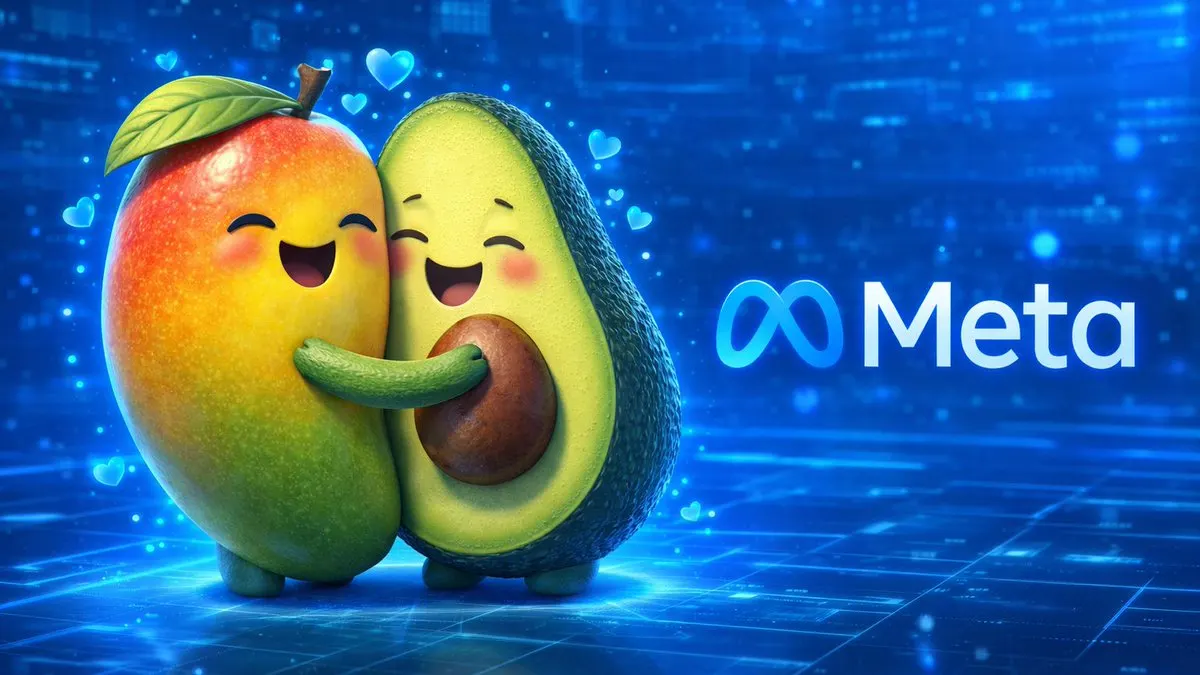
Meta is working on a new AI project codenamed 'Mango' that will rival Google's Nano Banana model. Due in 2026, the model aims to revolutionize both image and video generation.
Competition in the AI world is no longer limited to text-based chatbots; it has spread to image and video generation as well. These tools, which push users' creativity beyond its limits, have become the new battlefield for tech giants. In particular, Google taking image generation to new heights with its Nano Banana model and bringing millions of new users to Gemini set off alarm bells at Meta. To avoid losing market share in this space and to strengthen their own ecosystem, Mark Zuckerberg and his team have started work on an ambitious project codenamed "Mango".
According to reports based on information leaked to the Wall Street Journal and internal company sources, Meta is preparing to release this new model, which can generate both images and video, in the first half of 2026. And the company is not stopping there: it also aims to take the lead in the AI race by overhauling its language models with the "Avocado" project.
Here is everything you need to know about Meta's secret weapon, Mango, and the big shift expected in the AI world.
The Visual AI Revolution and the "Nano Banana" Effect
One of the biggest factors driving interest in AI platforms lately has undoubtedly been image generation. ChatGPT's DALL-E 3 integration and the success of independent tools like Midjourney proved how hungry users are for AI that doesn't just write text but "sees and draws".
The latest big leap in this field came from Google. Google's next-generation image model called "Nano Banana" (or the name it became popular under in the community) won wide acclaim for its photorealistic results and its speed and consistency in turning text into images. Integrating Nano Banana into the Gemini ecosystem brought Google a significant increase in AI traffic. Users now flock to these platforms not just to ask questions but to create visuals for presentations, produce social media content or simply test their imagination.
As the owner of visually driven platforms like Facebook, Instagram and WhatsApp, Meta cannot afford to fall behind this trend. Users going to other platforms to create content could put Meta's title of "social media giant" at risk. Project Mango was born precisely to answer this need.
Project Mango: Image and Video Under One Roof
The Mango project Meta is working on is designed not only as an image generation tool but also as a powerful video generation engine. According to the leaked information, Mango will be more integrated and capable than many models currently on the market.
1. Hybrid Generation Capability
Mango's most striking feature is that it does not separate image and video generation. With a single prompt, users will be able to create a high-resolution image and turn it into a moving video within seconds. For example, with the prompt "A couple walking on the beach at sunset", you could first get a perfect photo and then say "Turn this into a 10-second cinematic video" to create smooth footage.
2. Instagram and Facebook Integration
Mango's biggest advantage over its rivals is Meta's enormous distribution network. The model is expected to be integrated directly into Instagram Reels and Stories creation tools, the Facebook post composer and even WhatsApp statuses. This means billions of users will be able to produce professional-quality content in just a few clicks, without having to learn complex prompt engineering.
3. Editing and Manipulation
There is talk that Mango will not only generate from scratch but also offer advanced editing capabilities on existing images and videos. Commands such as "Change the background in the video", "Update the outfit of the person in the image" or "Convert the video to this art style" will be part of Mango's skill set.
Meta Movie Gen vs. Mango: What's the Difference?
Those who follow the tech world closely will remember that Meta had already announced a video generation model called Movie Gen. So how is Mango different?
Movie Gen appeared more as a research project, a technology demo aimed at professional use and focused on "high-end" video production. Not yet fully opened to general users, Movie Gen was more of a tool for filmmakers and content creators.
Mango, on the other hand, is positioned as an end-user-focused product. It is expected to run faster, be more efficient on mobile devices and directly serve the social media feed. Mango can be thought of as a version built on Movie Gen's powerful engine and optimized enough to fit in billions of people's pockets. In other words, Movie Gen will be the "studio" and Mango the "director in your pocket".
Timeline: The First Half of 2026
According to information in the Wall Street Journal based on internal presentations at Meta, the targeted release date for the Mango project is the first half of 2026. This date shows that Meta is giving itself roughly 6-12 months to mature the technology, complete safety testing and resolve possible copyright and ethical issues.
Since 2026 will also be the year AI hardware (phones and computers with NPUs) becomes widespread, it would not be surprising if Mango also had on-device capabilities. That could give Meta a big advantage in terms of privacy and speed.
Project Avocado: A New Chapter in Large Language Models
Mango is not the only fruit on Meta's agenda. The company is also working on a new large language model (LLM) codenamed "Avocado".
Meta, which took the open-source world by storm with the Llama series (Llama 2, Llama 3), aims to take that success to the next level with Avocado. Avocado is believed to be the next iteration of the current Llama models (probably the foundation of Llama 4 or 5).
The areas Avocado is said to focus on are:
* Advanced Reasoning: A model that doesn't just provide information but can solve complex problems step by step, with a minimized margin of error in coding and mathematical operations. * A More Natural Chat Experience: A chatbot that is more empathetic and context-aware, far from robotic answers (the new brain of the "Meta AI" assistant). * Multimodal Architecture: Working together with Mango, a structure that can "understand" images and video just as it understands text. So if you show Avocado a video and ask "What's happening here?", it will be able to give you a detailed analysis.
Competition Heats Up: The Google, OpenAI and Meta Triangle
As 2026 approaches, the picture is becoming clear: big tech companies want full dominance in every area of AI (text, audio, image, video).
* Google: With Gemini and Nano Banana, it is trying to protect its search engine dominance and strengthen the Android ecosystem with AI. * OpenAI: With Sora (video), GPT-5 (text/reasoning) and DALL-E (images), it wants to maintain its lead on the road to Artificial General Intelligence (AGI). * Meta: With Mango and Avocado, it aims to turn its social media empire into the world's largest AI content platform. Meta's biggest trump cards are its "open-source" (or semi-open-source) strategy and its platforms with billions of active users.
What Does This Mean for Content Creators and Brands?
The arrival of Mango and Avocado will shake things up in the world of digital marketing and content creation.
1. Costs Will Fall: Instead of shooting commercials, buying stock video or working with expensive designers, brands will be able to create their own campaigns with AI in seconds. For small businesses, this means a huge leveling of the playing field. 2. Personalized Content: Meta could offer ads and content generated on the fly according to users' interests. Imagine a video ad produced specifically for you, designed to catch your interest; Mango could make this possible. 3. The Limits on Creativity Disappear: Content creators will be able to produce "Hollywood-quality" content using only their imagination, without technical equipment or budget constraints.
Ethical and Safety Concerns
Of course, the spread of AI that generates images and video also brings "deepfake" (fake content) concerns. In earlier statements, Meta said that a "Made with AI" label would be automatically added to AI-generated content. These safety measures are expected to be kept at the highest level in the Mango project as well. Especially given the political and social events of 2026, fighting disinformation will be a critical factor in Mango's success.
Conclusion: Meta Wants Its Rematch
The momentum Google gained on the visual side with its Nano Banana move seems to have woken Meta from its slumber. Just as Mark Zuckerberg once took the "Stories" format from Snapchat and short videos (Reels) from TikTok and dominated with them on his own platforms, he now wants to dominate the generative AI trend with Mango and Avocado.
2026 is shaping up to be the year in which the AI wars are fiercest, but also the most productive year for users. Let's see who will come out on top of the "Fruit Basket" (Mango, Avocado, Banana). We'll wait and see.




