Kimi K3 Demand Pushes Infrastructure to Its Limits: Moonshot Pauses New Subscriptions
Originally published in Turkish. Read the original →
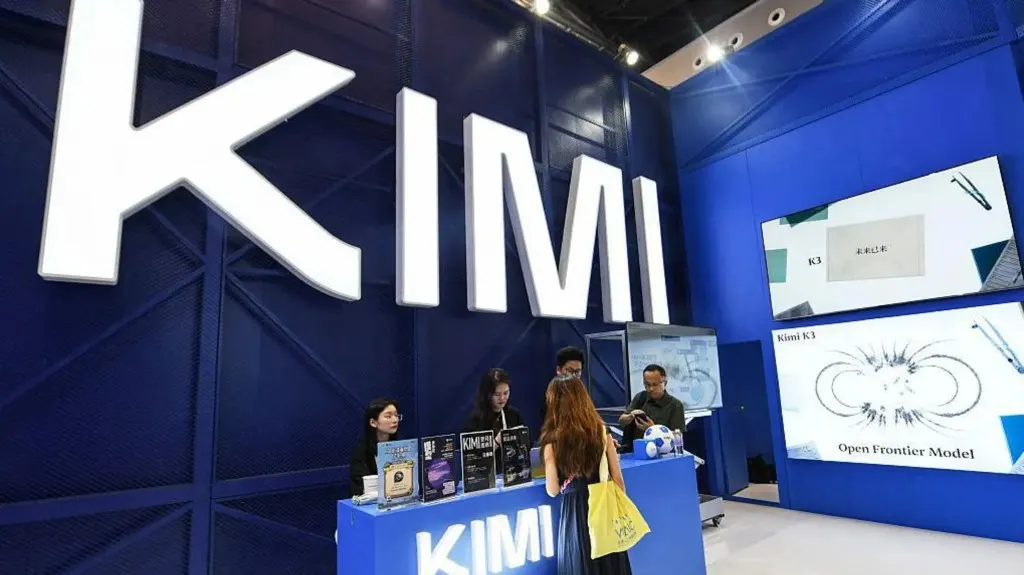
Massive demand for Kimi K3 exceeded Moonshot AI's infrastructure capacity. The company temporarily suspended new subscriptions to protect service quality for existing subscribers.
The cards in the AI world are being shuffled faster every day. Kimi K3, the Chinese model that competes directly with the most advanced closed-source models of Western tech giants OpenAI and Anthropic, met with unprecedented global interest right after its release. Developed by Moonshot AI and offered as a fully open-source (open-weights) model, it drew a rush of developers thanks to its top-tier performance and low cost.
However, this huge interest caused a serious bottleneck in Moonshot AI's own server infrastructure. The company announced that it had reached the limits of its compute capacity within the first 48 hours after Kimi K3's release and had temporarily stopped new paid subscriptions to protect the quality of service for existing subscribers.
The Power Behind the Record Demand: Kimi K3's Features
It is no accident that Kimi K3 created such a huge demand explosion. The model represents the latest point open-source solutions have reached in the AI world:
* A Giant 2.8 Trillion Parameter Architecture: Parameter count is one of the clearest measures of how much data depth and architectural flexibility an AI model was trained with. With 2.8 trillion parameters, Kimi K3 ranks clearly among the largest open-source models. * 1 Million Token Context Window: In a single prompt, the model can analyze hundreds of pages of technical documentation, huge codebases or thick books while keeping them entirely in memory. * Top-Tier Reasoning and Coding: Kimi K3 has been specifically optimized for complex problem solving, long-running software engineering tasks and knowledge-intensive professional work (financial analysis, academic research, law). * Open Weights: Unlike OpenAI or Anthropic, it lets developers download the model to their own servers, inspect it, fine-tune it and run it while preserving data privacy.
Why Did the Infrastructure Lock Up? The Reality of the AI "Compute Crunch"
In a statement on X, Moonshot AI said the intense demand over the past 48 hours had pushed the limits of the company's compute infrastructure. So why does a 2.8 trillion parameter model create such a large computing load?
1. Inference Costs: Training is a one-time investment that costs billions of dollars, but generating a response to every user query (inference) requires continuous GPU power. Serving a 2.8 trillion parameter model to millions of users without latency requires thousands of NVIDIA H100 or next-generation Rubin GPU clusters running simultaneously. 2. Memory and Bandwidth Bottleneck: The huge 1 million token context window consumes an enormous amount of VRAM (graphics card memory) during a query. As the context window grows, the data transfer speed between GPUs and memory bandwidth become the weakest link in the system. 3. Cost Pressure: By stopping new customer sign-ups to protect subscription quality, Moonshot is in a sense applying a "controlled growth" strategy. Keeping latency low for existing members until infrastructure capacity is increased is among its top priorities.
Are Chinese Models Threatening Silicon Valley?
Kimi K3's success and the demand that was strong enough to lock up its infrastructure are among the freshest proof that the balance of power in the AI market is shifting East. Recently, Chinese models such as DeepSeek, Qwen (Alibaba) and GLM outperforming their Western rivals in both performance and price-performance have pushed US AI giants into a serious pricing dilemma.
Without these open-source, low-cost alternatives, OpenAI (ChatGPT) and Anthropic (Claude) could set much higher API prices for their closed models. But the "almost free or very cheap" alternatives offered by models like Kimi K3 are breaking Silicon Valley's monopoly and accelerating the democratization of AI.
The Hidden Cost of Running It Locally
The model being "open source" doesn't mean everyone can run it at home or in a small office. According to experts, running Kimi K3 entirely on a local (on-premise) server without depending on the cloud requires an investment of millions of dollars in GPU infrastructure. Because of this huge hardware barrier, even though it is open source, the overwhelming majority of developers and companies prefer to use the model through the cloud APIs of Moonshot or other providers. This also explains why the infrastructure quality of providers like Moonshot is so critical.
Future Outlook
Moonshot AI announced that it plans to increase its infrastructure capacity as soon as possible and gradually reopen new subscriptions. Kimi K3's sweet crisis showed once again that the AI revolution is hitting hardware and physical limits (GPU supply, energy consumption and data center capacity) rather than software limits.
In 2026, a year in which open-source models are standing up to closed giants, the companies that best master hardware optimization and infrastructure scaling look set to be the ultimate winners of the race.




