A 'Google' Revolution in DDR5 Memory Prices: TurboQuant Technology Reshuffles the Deck
Originally published in Turkish. Read the original →
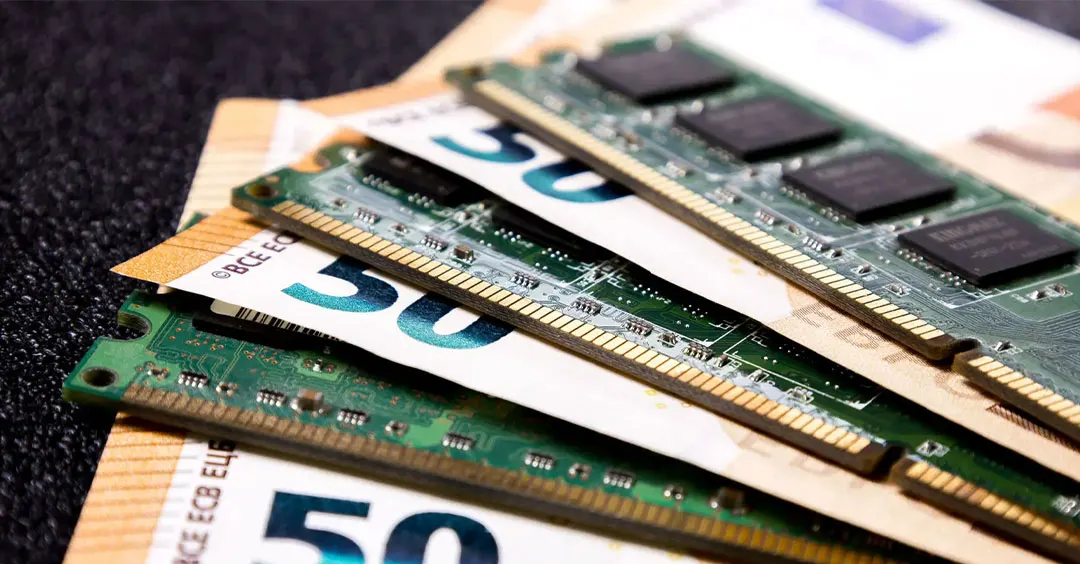
Google's new TurboQuant technology, which cuts memory consumption in AI systems, has sent shockwaves through the hardware market. We lift the veil on the secret behind the sudden drop in DDR5 RAM prices.
A 'Google' Revolution in DDR5 Memory Prices: TurboQuant Technology Reshuffles the Deck
For the past year, one of the phrases we have heard most often in the tech world has been "AI hunger." The need of giant data centers for thousands of GPUs had effectively put under siege not just compute power but also the production of DRAM and NAND memory, the lifeblood of these systems. This had caused the prices of the DDR5 RAM that we end users put in our computers to rise uncontrollably as well.
But a development last week could fundamentally change the balance in the hardware market. TurboQuant, a technology Google introduced quietly, delivers a miraculous efficiency gain in the memory consumption of AI systems and has set off the expected (and even sharper than expected) drop in prices.
---
The AI Storm and the Memory Crisis: How Did We Get Here?
AI models (LLMs) by their nature need very high memory capacity. HBM (High Bandwidth Memory), produced so that billions of parameters can be processed quickly during training, took up a large share of manufacturers' capacity. When giants like SK Hynix, Samsung and Micron shifted all their energy to these high-margin products, a supply bottleneck began in the DDR5 memory produced for regular users.
Prices climbed to abnormal levels, stocks melted away, and many authorities predicted that this unsustainable growth would at some point turn into a "hardware crisis." It was right in this atmosphere of despair that Google's move came.
---
What Is Google TurboQuant? Are the Rules of the Game Changing?
The TurboQuant announced by Google is essentially a hybrid software-hardware optimization technology. By radically improving the "quantization" methods AI systems use while processing data, this technology can reduce the amount of memory models need by between 30% and 50%.
Normally, when an AI model runs, it stores data at 16-bit or 8-bit precision. TurboQuant manages to process this data in much smaller packages (for example, 4-bit or hybrid structures) without sacrificing performance. The result? Much less RAM capacity is now needed for the same compute power.
---
An Earthquake in the Markets: Memory Giants' Shares Plunge
For memory makers, Google's announcement effectively meant the threat of "falling demand." Right after the news, world markets saw serious losses in the shares of memory giants such as:
- SK Hynix
- Micron
- Samsung
Investors realized that the story of "unlimited capacity demand" in the AI market was over and that efficiency technologies would dominate the market. If memory needs can be reduced through software, dependence on new fabs and huge production lines will also decrease.
---
First Signs at Amazon and Newegg: RAM Prices Are Falling
The impact of the news was not limited to the stock market. According to data from Amazon and Newegg, leading retail channels in the US, discounts ranging from 60 to 100 dollars have started to appear on DDR5 RAM prices in the last few days.
Such a sudden decline in prices that had been on a constant upward trend for the past 6 months shows that the market accepts TurboQuant technology as a "permanent turning point." Industry analyses indicate that retailers want to clear their stock quickly (before the new efficiency era begins).
---
Putting the Brakes on Ever-Rising Costs: Is the AI Economy Sustainable?
Hardware authorities had long been issuing a warning: "The AI race cannot continue with these hardware costs." Computations costing thousands of dollars a day had started to strain companies' budgets. At this point, Google TurboQuant not only lowers costs but also opens the way to running bigger models on smaller hardware (for example, on mobile devices).
If TurboQuant succeeds, it is inevitable that giants like Apple and Microsoft will also take the stage with similar "efficiency technologies." This could be the start of the transition from hardware-driven growth to an era of software-driven optimization.
---
Conclusion: Will Memory Prices Fall Even Further?
The current picture shows that the bubble in DDR5 memory prices is slowly starting to deflate. But the speed of this decline depends on whether TurboQuant becomes an industry standard.
If you are also planning to upgrade your computer or build a new system:
- Follow price movements closely; the wave of discounts may only be in its early stages.
- Put next-generation hardware that offers software-level efficiency support on your radar, rather than focusing only on memory capacity.
- Watch what kind of competition Google's move pushes the other tech giants into.
The AI wave now demands not just more hardware but smarter use of hardware. Google's TurboQuant revolution may be one of the first big wins that shows up in our wallets.
--- Keep following us so you don't miss the latest developments in memory technologies and the hardware world!




