Google Releases Nano Banana 2 Image Generation Model
Originally published in Turkish. Read the original →
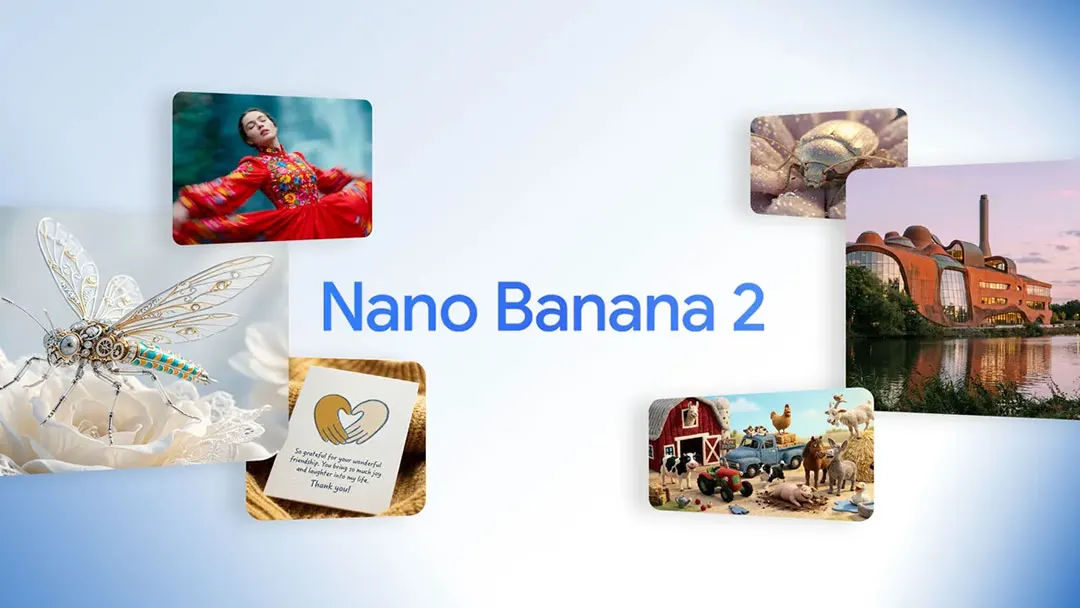
Google's eagerly awaited next-generation image generation model, Nano Banana 2, is now officially available. A detailed look at this groundbreaking Gemini 3.1 Flash Image based model, its 4K support, character consistency and more.
Google Releases Nano Banana 2 Image Generation Model
As the dizzying competition in AI takes on a new dimension every day, Google has delivered news that could shift the balance in image generation, one of the hottest fronts of the innovation war. Google's long-awaited announcement has finally arrived, and its next-generation image generation model Nano Banana 2 is now officially available. Equipped with extraordinary capabilities compared to its predecessor, Nano Banana 2 is now waiting for users, integrated into many Google services. Thanks to Google's visionary approach, this model, set to redraw the future of many fields from graphic design to digital content creation, is already making big waves across the tech and design ecosystems.
1. What Is Nano Banana 2 and What Does It Offer?
Announced by Google with a grand launch and known behind the scenes by the code name Gemini 3.1 Flash Image, Nano Banana 2 goes far beyond an ordinary update. Representing the highest level AI-powered image generation tools have reached today, this innovative system has a far more advanced understanding of the world and a much broader knowledge base than the old model.
Fed directly by Google's iconic Gemini knowledge infrastructure and its unmatched web search capacity, Nano Banana 2 can instantly reflect this powerful knowledge network in the images it creates. What does this mean? Unlike previous systems, it does not imagine the objects, places or historical moments given in a prompt through a kind of hallucination; it draws them "actually knowing" them, with the parameters closest to reality. By matching and blending even the finest details users enter with ground truths in its database, it delivers surprisingly consistent and realistic results. This feature is a true revolution for industries that demand high consistency, such as education, architecture, historical reconstruction and advertising.
2. Boundary-Pushing 4K Resolution Support
At the top of the innovations that have caused a storm in the tech market, and perhaps drawn the most applause, is 4K resolution support with flawless sharpness. Today, the most basic requirement image consumers and digital publishers look for in content is undoubtedly pixel density and clarity. With true 4K resolution, Nano Banana 2 not only raises image quality but also breaks down one of the barriers AI tools have struggled with most until now: advanced text rendering.
In earlier image generation models, placing a sign, logo, neon lettering or poster inside an image often resulted in garbled letters, meaningless symbols or tangled word errors. With Nano Banana 2, that era is over. Street signs, corporate logos and creative digital posters alike can be created extremely sharp, legible and completely error-free. For a marketing specialist, producing a professional poster bearing their brand's name with AI now takes seconds, and the results hold their own against professional designs made by human hands.
3. Character Consistency: 5 Different Characters in the Same Scene
Creating a character and keeping that face or design identity stable across different prompts or poses (Character Consistency) is considered the "Holy Grail" of the visual AI world. Filmmakers, comic creators and illustrators want a character they create to have the same physical features in every frame of its story. In this respect, Nano Banana 2 takes a truly historic step.
With previous-generation models, once a character was created, drift in its features in a different staging was an unavoidable problem. Nano Banana 2, thanks to its improved memory context, can preserve full physical resemblance for up to 5 different characters within the same scene and storyline! That means your lead actor, your supporting characters and even the detailed extras in the background can continue to exist consistently across an entire series of images without any deformation. This groundbreaking feature opens the doors to a whole new world, from graphic novels to storyboarding and digital storytelling.
4. Accessibility and the Integration Network
How Google would price such a powerful tool, or which audiences it would open it to, was of course one of the biggest questions. The good news is that Google decided to shape Nano Banana 2 around a highly accessible strategy and open it to a broad user base.
Starting today, Nano Banana 2 is integrated into the existing setup and seamlessly replaces the previous version, Nano Banana Pro, across the Gemini Fast, Thinking and Pro models. Meanwhile, the Nano Banana Pro version built for professionals will continue to be offered at full speed to Google AI Pro and Ultra subscribers looking for advanced cloud configuration.
Perhaps Google's biggest surprise was the full, seamless integration it brought to other tools in the ecosystem. So that ordinary users can also share in this unique AI experience, it is now possible to try the model freely at any time on Google AI Mode, Google Lens and Google Flow without spending any extra credits or paying anything extra. In the tech world, this is seen as a very important "democratization" step that will more than satisfy end users.
5. Impact on the Next-Generation Image Generation Race
In fields where competition has peaked with massive players such as OpenAI, Anthropic (for example, the recently much-talked-about Claude Code) and Midjourney, Google is saying with these integrations, "I'm not just the market leader, I also set the standards." Especially at a time when other platforms come to market with subscriptions or high licensing costs, free access, or access at no extra cost within the ecosystem, to a model of such enormous capacity with 4K capability is turning the tide in Google's favor.
Alongside Claude Code and similar next-generation coding/analysis assistants that recently shook the market and moved the pieces on the board, the arrival of a disruptive innovation like Nano Banana 2 in the visual world now clearly proves to us that 2026 is not just a year of AI, but that we have entered AI's era of "maturing" and "perfecting".
Expectations for the Future
In conclusion, in the era of next-generation hyper-model AIs sworn to unite our visual and textual worlds, the transparency, high resolution and deep knowledge matching Nano Banana 2 brings to the table have created an irreversible standard in the industry. Whether you are creating unique corporate visuals for your company's annual reports or bringing the cinematic story of your dreams to life with professional consistency, what you can do with Nano Banana 2 is limited only by the scale of your creativity.
Whether Google will crown the Nano Banana family in the coming period with additional functions such as "video capabilities" or "spatial modeling" that take this unique system even further remains one of the most exciting things whispered in the tech corridors. One thing is clear: the future is no longer just being written; it is also being drawn flawlessly.




