Google Gemini Gets Music Generation with Lyria 3
Originally published in Turkish. Read the original →
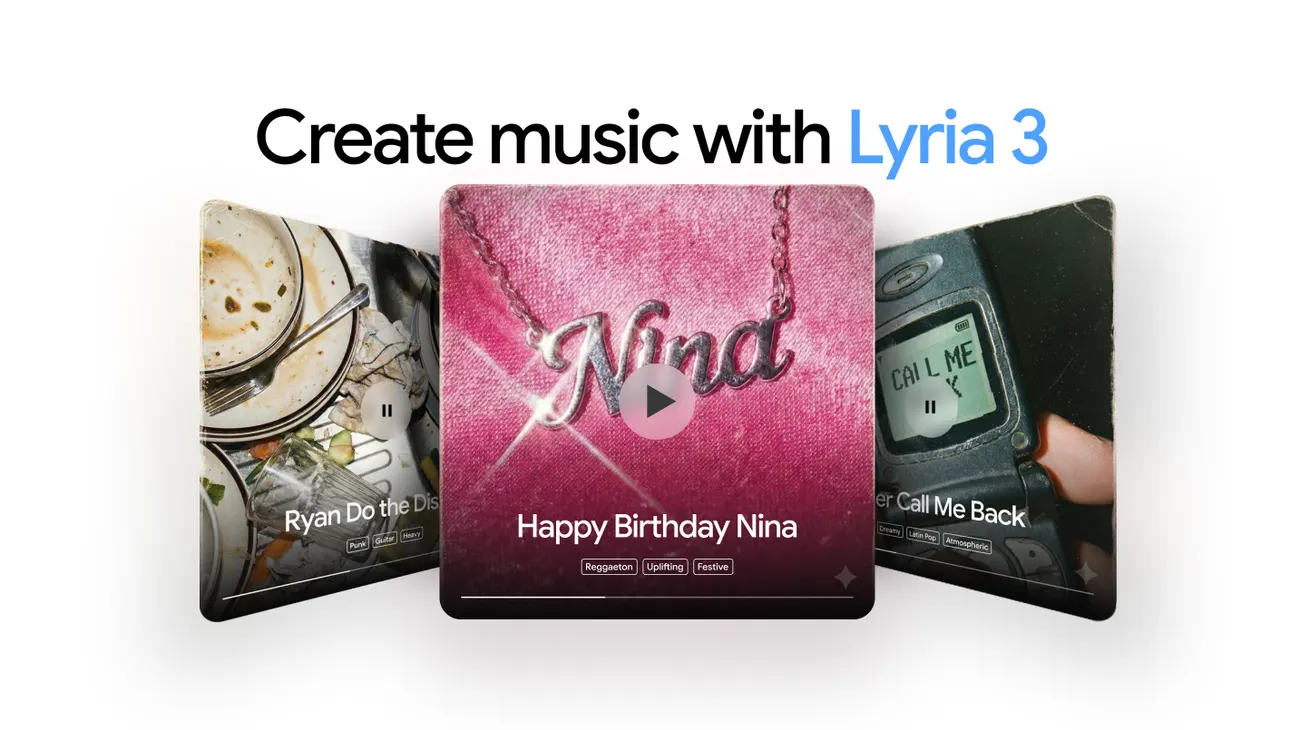
Google has integrated Lyria 3, its own text-to-music AI model, into the Gemini platform. Users can now create their own original 30-second tracks from written prompts in just a few seconds.
Google keeps expanding its range of capabilities with a move that has made waves in the tech world. The company announced that it has added text-to-music generation to Gemini, its advanced assistant that brings together its AI capabilities. The Lyria 3 model, developed entirely by the Google DeepMind team and currently running in beta, lets users step into the role of composer within seconds.
A Unique Melody for Every Prompt
With this new system integrated into Gemini, users can describe the song they imagine in text prompts and generate 30-second music clips in any concept they like. For example, requests like “rhythmic electronic music for an upbeat morning” or “a melancholic acoustic guitar solo for a rainy evening” can become reality within seconds.
Google also doesn't limit itself to text prompts; users can upload an image or video to the Gemini app and make contextual requests such as “compose a song that reflects the mood of this landscape.” According to DeepMind, the new Lyria 3 architecture sits at a far more advanced level than previous AI audio models when it comes to music quality and complex instrumental harmony.
The system also offers an impressive range of personalization across many aspects of musical structure. You can adjust the genre of sound, the rhythm, the instrument balance or the tempo you want. This creative tool is going live globally not only in standard Gemini but also in YouTube's Dream Track feature, which for some time had only been available to creators in the United States.
Copyright, Imitated Artists and Watermarking (SynthID)
The most controversial aspect of AI in the arts is undoubtedly copyright and the copying of real artists' personas (sometimes without their consent). To address concerns about cloning artists' voices, Google has built certain restrictions into the system. If a user directly uses the name of a famous existing musician in their prompt, instead of imitating the artist's voice one-to-one, the system creates a backing track that is very close to the “musical atmosphere they draw inspiration from” but strictly original and royalty-free.
On top of that, to prevent “who does this song belong to?” speculation arising from how natural the audio sounds, every audio file created with Lyria 3 carries a digital mark proving that it was generated by AI. Thanks to this invisible audio watermark called SynthID, Gemini users will be able to verify with a single click whether a different file they upload, or any track they listen to, was produced by AI.
A New Order and a Contested Future
The feature is already available to all users over 18 worldwide in 8 languages (English, French, Spanish, German, Japanese, Korean, Hindi and Portuguese).
On the other side of the coin, however, are serious voices from the music industry and legal battles. On one side are mainstream giants such as YouTube and Spotify, which are trying to protect their own revenue models and preparing to sit down with licensed music companies; on the other are countless labels and plaintiffs taking to court machine learning systems trained “without permission” on massive amounts of copyrighted music data. Platforms like Deezer in particular are building detection-focused AI to police “fake streaming” operations on their platforms and to rid themselves of this new era's invasion of fake artists. In the future, deciding who a piece of music belongs to may be harder than we think.




