Google Announces Antigravity 2.0: The Platform Gets a New Face
Originally published in Turkish. Read the original →
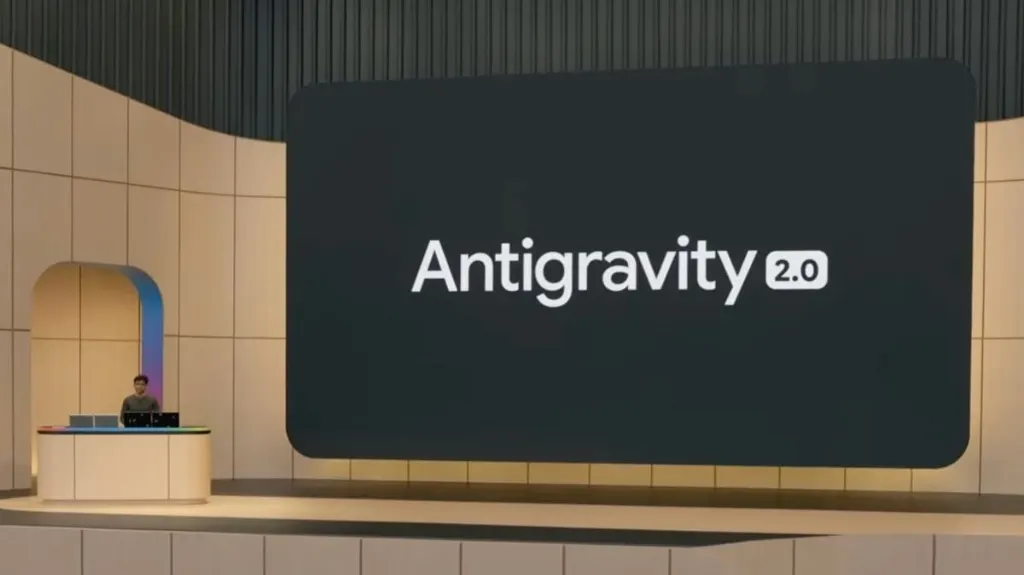
Google announced Antigravity 2.0 at I/O 2026. The new release offers multi-agent orchestration, a native desktop app, a new CLI tool, voice control support and an SDK for building custom agents.
The Google I/O 2026 event held in Mountain View opened the door to a new era in the software development world. Antigravity, which took the stage last year as an AI-powered coding and software development platform, has been redefined with Antigravity 2.0, a release packed with comprehensive updates. Positioned as a direct rival to giants such as Cursor, GitHub Copilot and Claude Code in the agentic coding market, the platform comes with an updated desktop app, a new command-line tool (CLI), voice command support for natural language control and a dedicated SDK that lets teams design their own autonomous assistants.
The vision Google shared shows AI moving beyond being a code-writing autocomplete to becoming an autonomous orchestration layer that manages the entire software lifecycle.
Multi-Agent Management and Parallel Task Orchestration
At the heart of Antigravity 2.0 is multi-agent management, which aims to simplify the complex, multi-step tasks developers struggle with most. This new architecture, which goes beyond the limits of linear, single-channel AI chats, lets multiple specialized agents work on a single project simultaneously and in coordination.
Software developers can now define dedicated sub-agents for different areas of responsibility in their projects. For example, while a database agent optimizes the project's database schema, a development agent writing code and a test agent preparing unit tests for that code can run concurrently in the background. Through Antigravity's desktop app, developers can visualize how tasks are distributed among these sub-agents, set priorities and schedule all of these processes as automated workflows. This autonomous orchestration minimizes the need for human intervention, especially in large-scale, complex refactoring work.
An Advanced Desktop App and Gemini 3.5 Flash Support
The revamped Antigravity desktop app was redesigned from the ground up to offer a cleaner, more modern user experience. Google announced that the company's next-generation AI model Gemini 3.5 Flash runs behind the platform. Playing the lead role in speeding up development processes, Gemini 3.5 Flash offers a huge leap in token generation speed and latency compared to the previous generation. This allows power-hungry tasks such as complex code analysis or refactoring large files to complete almost instantly.
Another strong point of the app is its deep integration with the Google ecosystem. Google AI Studio, Firebase cloud services and Android Studio tools can connect directly to the Antigravity platform. As a result, projects across a wide range, from mobile apps to cloud-based microservices, can be managed and tested directly from a single hub without needing external tools.
Voice Command Support and a Natural Language Interface
The voice interaction capabilities of AI assistants are now moving into professional coding workflows as well. By integrating voice control mechanisms into Antigravity 2.0, Google has made it possible for developers to drive the platform with natural language commands alone, without using a keyboard and mouse.
Developers can steer the system with voice commands such as "Improve the error handling of the function I just wrote" or "Update the project's dependencies and check for build errors". The voice assistant analyzes the instruction in the background, finds the relevant code files, prepares the necessary edits and presents them for the user's approval. This feature takes developer productivity to a new level, especially during code analysis or in situations where hands-free work is needed.
The Developer Toolkit: Antigravity CLI and SDK
For developers who work in the terminal and prefer the command line, Google has released the Antigravity CLI (Command Line Interface). The company announced that Antigravity CLI will fully replace the previously widely used Gemini CLI and recommended that users migrate to the new command-line tool. The tool lets you quickly query codebases, optimize git commit messages and run automatic error detection without leaving the terminal.
In addition, one of the most exciting new features for enterprise teams and independent developers is the Antigravity SDK. This software development kit opens the door for developers to build custom agents using the Antigravity infrastructure in their own local projects or on corporate servers. Through this SDK, companies can teach the AI their internal documentation, coding standards and API rules to create fully customized software assistants unique to them.
Google Cloud and Enterprise Integrations
Google Cloud customers will be able to connect to the Antigravity infrastructure directly from their own cloud environments. To help enterprise teams adapt quickly, Google will publish ready-made custom agent templates in AI Studio. Teams will be able to customize and deploy these templates for their own needs. In addition, thanks to the new "export" tool added to AI Studio, projects started in the cloud can easily be moved to a local environment so work can continue without interruption.
Antigravity 2.0's capabilities won't be limited to developer tools; its code generation and dynamic interface creation features have also started to be integrated directly into consumer products such as Google Search. This way, users will be able to generate the instant tools and micro-apps they need within search results in real time with the help of AI.




