Claude Opens Up to Daily Life with Uber and Spotify Integrations
Originally published in Turkish. Read the original →
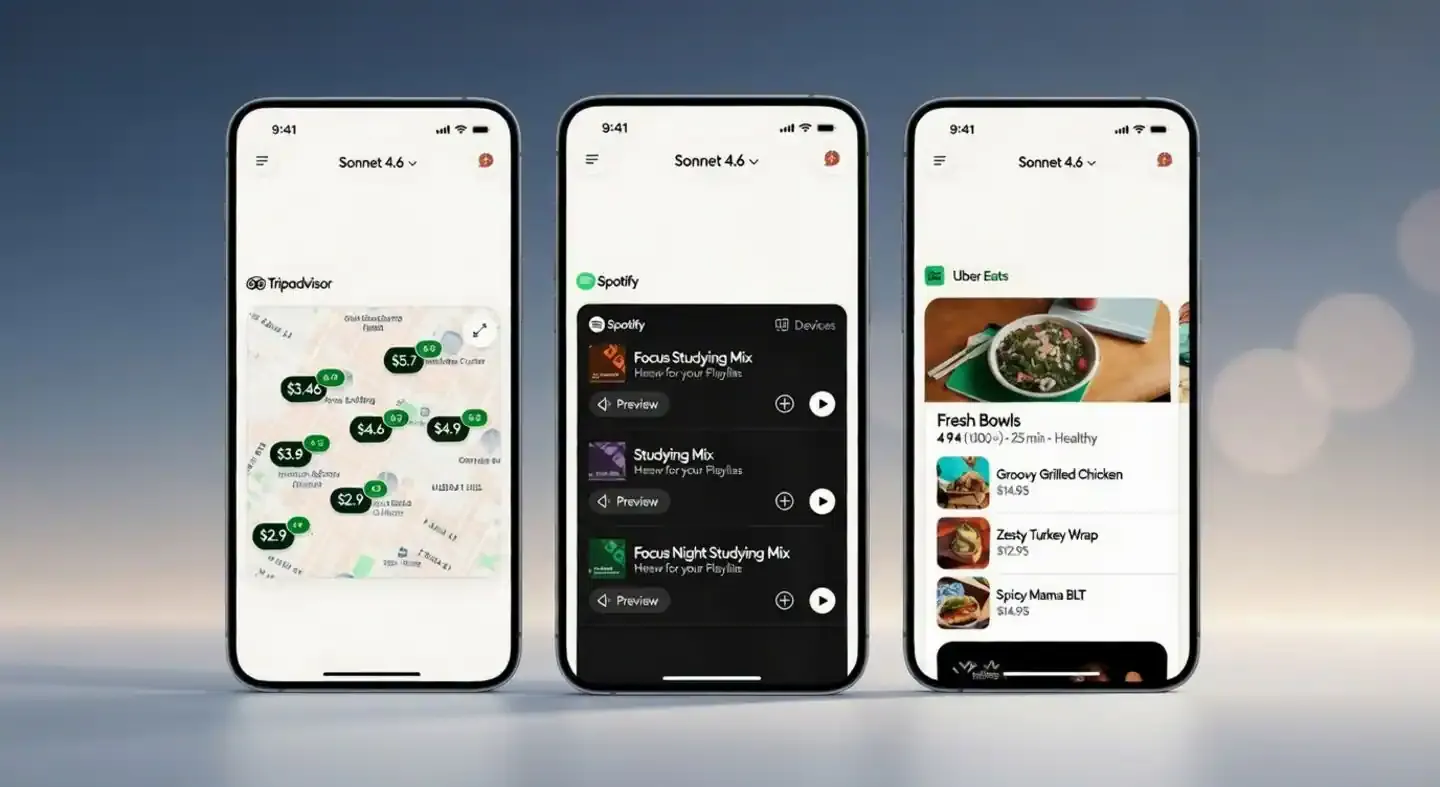
Claude has started building deeper connections with everyday apps like Uber, Spotify, Instacart, Booking.com and TripAdvisor. Anthropic's connector approach turns AI from a tool that only answers into an assistant that understands context on the user's behalf, makes suggestions and can initiate actions.
Anthropic isn't content with positioning Claude merely as an AI tool that generates text or writes code. The company's latest connector expansion is part of a bigger strategy aimed at placing Claude at the center of everyday digital life. Bringing services like Uber, Spotify, Instacart, Booking.com, TripAdvisor, Resy, AllTrails, Audible, StubHub, Taskrabbit, Thumbtack, Uber Eats and Viator into the Claude ecosystem shows that AI assistants are turning from tools that just provide information into tools that can build workflows across apps on the user's behalf.
What makes this development important is not only the length of the integration list but the variety of use cases. On one side Claude touches productivity workflows in the business world through tools like Asana, Canva or Amplitude; on the other, it opens up to everyday areas such as transportation, music, food, travel, reservations, events and personal finance. The AI experience is thus moving from a helper we ask questions in a separate tab toward a layer that manages the services we use within a single conversation.
What Does the Connector Move Change?
Until now, what we mostly expected from digital assistants was quick answers, summaries, suggestions or text generation. Claude's new connector approach widens that boundary. The user no longer just says "suggest a plan for the weekend"; within the same conversation they can find a hiking route, pick a restaurant for dinner, weigh a ride option for the way back and have a suitable playlist put together.
This looks like a small change, but it is a big one in terms of user habits. In the classic app experience, every service has its own interface, its own search logic and its own filtering system. When planning a trip you need to open one app for the hotel, another for the restaurant, another for the route and a separate one for transportation. Connected assistants like Claude try to pull this scattered flow together into a single conversational context.
The real difference here is that the AI doesn't just call tools; it also interprets the user's intent. A sentence like "let's plan a quiet evening with good food for my friends visiting from out of town" doesn't work well in traditional search boxes. Claude, however, can break this request down into sub-parts such as restaurant choice, timing, transportation preference and even the music to listen to afterward. The connector system links these sub-parts to the relevant apps and delivers a more holistic experience.
Why Do Uber and Spotify Stand Out?
The new list includes many strong brands, but Uber and Spotify stand out in particular. That's because these two services represent two very different yet frequently used areas of daily digital behavior. Uber is a gateway to the physical world: it solves the need to get from where you are to somewhere else. Spotify offers a more cultural layer representing mood, focus, entertainment and personal taste.
Claude being able to work between these two extremes shows that AI assistants won't stay "on-screen only." A user planning to meet friends before a concert might ask Claude for venue suggestions, ride alternatives and a pre-event playlist. Another user, after a long workday, might say "put on a calm playlist for my ride home and show me a suitable ride option too." In these scenarios the AI works not inside a single app but around the user's intent.
On the Spotify side, contextual recommendations could be especially valuable. There's a big difference between a generic phrase like "I need to focus" and a more detailed request like "for my evening walk I want Turkish and English songs with a slow tempo that still keep the energy up." Claude can produce more natural music recommendations by drawing on previous conversations, the user's preferences and the immediate context. Of course, the quality of the final experience will depend on the scope of permissions on Spotify's side and the depth of data the services provide.
On the Uber side, the critical issue is control and approval. An AI assistant being able to call a ride sounds handy, but such actions involve sensitive data like payment, location and timing. That's why it matters that Claude doesn't complete a booking or payment without the user's approval. For AI to become practical, being fast is not enough; it also needs a transaction flow that inspires trust.
From an Assistant That Suggests to One That Acts
The expansion of Claude's connector directory points to a more general trend in the evolution of AI products. In the early days, what we expected from models was to produce information. In the next phase, skills like reading files, analyzing images, writing code and interpreting data came to the fore. Now the value of assistants is starting to be measured by which services they can talk to and how intelligently they can combine those services toward the user's goal.
This approach also revives the "super app" idea in a different form. In the traditional super app model, the user does everything inside a single app. With AI assistants like Claude, things are a bit different: apps don't disappear, but the user no longer has to deal with each of them directly one by one. The assistant works as a layer of meaning between interfaces.
For this layer to be strong, two things are needed. First, the model has to understand the user's intent correctly. Second, the connected apps have to work with reliable, transparent and limited permissions. If this balance isn't struck, the user experience can quickly become messy. Because the idea of "act on my behalf," when not designed properly, creates both security risks and user anxiety.
Possible Everyday Use Cases
Claude's new connections could be particularly effective for multi-step planning tasks. Picture a weekend trip. When the user says "I want a short two-day getaway with a nature hike, somewhere I can take my dog, and let's find a table at a good restaurant in the evening," Claude can evaluate different services in the same context. AllTrails can come in for hiking routes, Booking.com for accommodation, Resy for restaurant reservations, TripAdvisor for local recommendations and Uber for getting around the city.
Similarly, there are use cases for household tasks. Creating a shopping list, finding suitable products on Instacart, suggesting recipes based on missing ingredients and putting on a Spotify playlist suited to cooking dinner can all be tied into a single conversational flow. The real gain here is that the user doesn't have to manage small decisions across different apps one by one.
Event planning is another strong example. When concert or game ticket options from StubHub, transportation via Uber, a pre-event playlist on Spotify and nearby venue suggestions from TripAdvisor come together, Claude turns into a helper that organizes the whole plan rather than one that only answers. Even if such scenarios still sound like a vision of the future today, the connector infrastructure makes this experience technically possible.
Privacy and the Ad-Free Experience
This many app connections naturally bring privacy questions with them. One of the most important messages from Anthropic is that data coming from connected services is not used to train Claude's underlying models. Also, the fact that an app cannot access the user's other conversations inside Claude draws a critical boundary. This distinction matters, because as AI assistants become more personalized they see more context, and users want to know which data flows where.
Another important point is sponsored recommendations and advertising. Claude not ranking connectors on an advertising basis when suggesting the right one could be decisive for user trust. As AI assistants become more involved in decision-making, the neutrality of recommendations will become a more visible issue. When an assistant recommends a restaurant, hotel, playlist or ride option, the user will want to know whether it really comes from their needs or from a commercial deal.
That's why transparent permissions, clear approval steps and the principle of ad-free recommendations are as important in Claude's connector strategy as the product's technical features. Because the idea of a personal assistant only becomes sustainable if user control is preserved. AI should focus not on making decisions instead of the user, but on making it easier for the user to decide.
The New Arena of Competition: From Model to Ecosystem
For a long time, AI competition was discussed in terms of model performance: longer context windows, better coding, stronger reasoning, faster responses. These still matter, but they're not enough on their own. From the user's perspective, how much a model reduces their daily workload is becoming as decisive as how smart it is.
OpenAI's ChatGPT app integrations, Google deepening the Gemini ecosystem with its own services and Anthropic growing Claude's connector directory all point in the same direction. The big race is shifting from "who gives the best answer?" to "who can get which job done at exactly the right moment?" This transition moves AI away from a search-engine-like information tool and closer to a personal operating layer.
Where Anthropic may be trying to make a difference is trust and controlled authorization. Claude is already a brand associated in the business world with security, enterprise use and careful response generation. If it can preserve this image as it opens up to everyday consumer apps, it can stand out not just on technical features but on a trustworthy assistant experience as well.
Conclusion: Claude Is Becoming a More Personal Interface
Claude's expanding connections with Uber, Spotify and other everyday services clearly show where AI assistants are headed. In the coming period, users won't expect AI to only write text, generate code or summarize information. They'll also want it to make plans, compare options, recommend the right app and initiate actions at the right point.
What will determine whether this transformation succeeds is not just the number of integrations. User control, clear permissions, trustworthy data use, ad-free recommendations and high-quality context management will be the core criteria of this new era. Claude's connector move can be seen as an important step in AI breaking out of a closed chat window and becoming a more personal interface that talks to the services of daily life.
In short, Claude is no longer just a model that answers "what do you know?"; it is turning into a helper that can give more concrete answers to "how would you organize this for me?" And that is probably where AI's real impact will show up: not in increasing the number of apps, but in reducing the chaos between those apps on the user's behalf.




