The Era of Virtual Try-On with ChatGPT: New Shopping and Favorites Features Announced
Originally published in Turkish. Read the original →
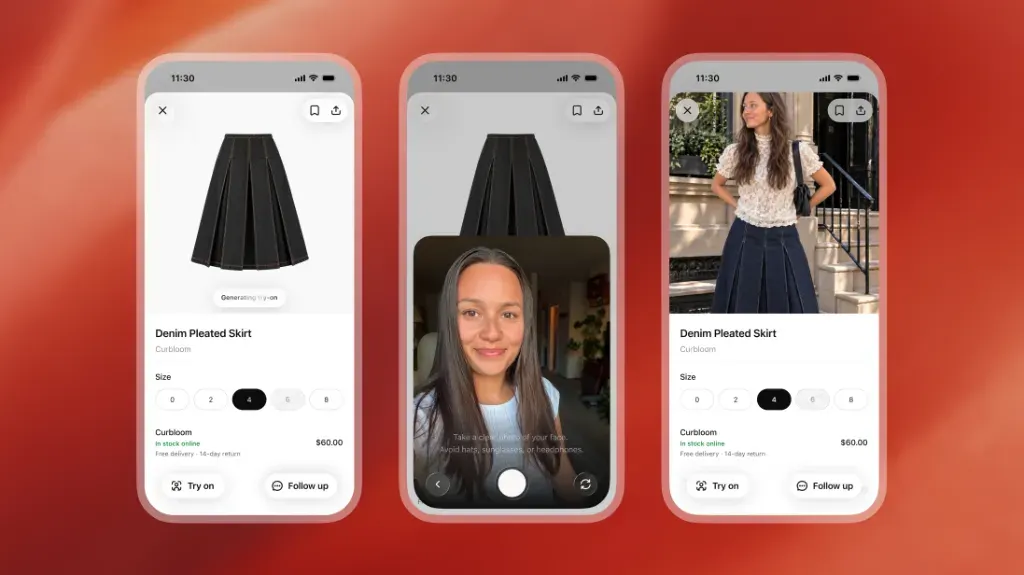
OpenAI announced new ChatGPT shopping features that let users upload their photos and virtually try on clothes and accessories.
While generative AI systems are transforming access to information, software development, data analysis and office productivity from top to bottom, tech giants are steering straight toward the center of consumer habits: e-commerce. OpenAI announced that it has rolled out two critical new features worldwide that will fundamentally transform the shopping experience in its popular AI assistant ChatGPT. Virtual Try-On, which lets users upload their own photos and see clothes and accessories on themselves virtually, and the Favorites library for archiving discovered products have been officially announced.
This update aims to break down one of the biggest indecision barriers in online shopping by letting users instantly simulate how a garment they see in a digital storefront would look on them.
How Does Virtual Clothing Try-On Work in ChatGPT?
The new virtual try-on feature was designed to eliminate the uncertainty about size, fit and style in online clothing shopping. When users search for a garment or accessory through ChatGPT, or review products suggested by the assistant, they see a new "Try On" button right below the product card.
The process starts with a very smooth and user-friendly step: The user uploads a selfie or a full-length photo to the system. ChatGPT analyzes the body proportions, shoulder structure and posture angle in the uploaded photo, and integrates the selected skirt, jacket or shirt, or accessories such as sunglasses, into the user's silhouette.
What's more, this capability is not limited to in-platform store search results. While browsing the internet, users can upload a screenshot of a garment they saw on any website into a ChatGPT chat and give the command "Try this piece on me" to get the same simulation instantly.
The Power Behind It: The ChatGPT Images 2.5 Model
Although virtual dressing technologies have been discussed in the e-commerce world for many years, until now they had not been adopted by the wider public because of fabrics looking artificial, lighting mismatches and anatomical errors. To solve this problem, OpenAI backs the process with ChatGPT Images 2.5, the image generation model it has just introduced.
- According to the technical data the company shared, the ChatGPT Images 2.5 model brings the following key improvements:
- Natural Lighting and Shading: The ambient light source in the original photo uploaded by the user is detected, and the shadows falling on the garment are calculated to match reality exactly.
- Rich Texture and Fabric Folds: The surface textures of different textile materials such as denim, silk, leather or linen, and their natural gravity-driven folds, are preserved intact.
- Fidelity to Fine Editing Instructions: Additional directions from the user such as "lengthen the skirt a little" or "roll up the sleeves" are processed consistently by the assistant.
- Low Latency: Thanks to the optimized inference architecture that was developed, try-on images reach the user within a few seconds.
The Favorites Library and Personal Style Advice
Alongside the virtual try-on function, the newly launched Favorites tool turns ChatGPT from a mere instant chat tool into a long-term shopping wardrobe. During their conversations with the assistant, users can save the products they like to their personal library with a single tap.
The library's biggest advantage is that saved products are stored side by side with the virtual try-on photos. This way users can review different outfit alternatives again later and share them with friends at the decision-making stage.
- In addition, ChatGPT also takes on advanced style advisor roles:
- By describing the style they are looking for for an event they want to attend (for example an autumn countryside wedding or a business dinner), users can have the assistant put together outfit pieces from head to toe.
- When a photo of a celebrity or a street style look that inspired them is uploaded to the system, directly purchasable equivalents of the pieces in the photo are searched for across the internet and listed.
Competition in E-Commerce and OpenAI's Consumer Moves
This move by OpenAI into shopping is not the company's first e-commerce attempt. The company had previously aimed to bring a direct instant checkout feature to the platform, but changed this plan because it could not meet user experience and performance expectations. Meanwhile, other autonomous AI agents on the market (for example Instinct) had drawn an "ad imposition" backlash from users by offering unsolicited product recommendations.
This time, instead of aggressive direct selling, OpenAI is following a roadmap focused on visual experience driven by user requests. This strategy positions ChatGPT as a direct competitor to giants such as Pinterest and Google, which have held the lead in visual fashion discovery and shopping inspiration for years. As is well known, Google also integrated its own virtual try-on tool into its search engine recently.
The Future of E-Commerce and Return Rates
One of the biggest operational burdens in online fashion retail is high return rates. Because ordered products do not meet expectations in terms of size or appearance, return rates can climb as high as 30 to 40 percent.
The photorealistic virtual try-on experience ChatGPT offers has the potential to significantly reduce both wrong orders and return costs by letting consumers see the product on themselves from the most accurate angle before buying it. These new features, which bring OpenAI's visual AI power together with shopping habits, are seen as the clearest evidence that personalized AI shopping assistants will become the standard in the future.




