ChatGPT Images 2.0 Is Live: OpenAI's Strong Answer to Nano Banana
Originally published in Turkish. Read the original →
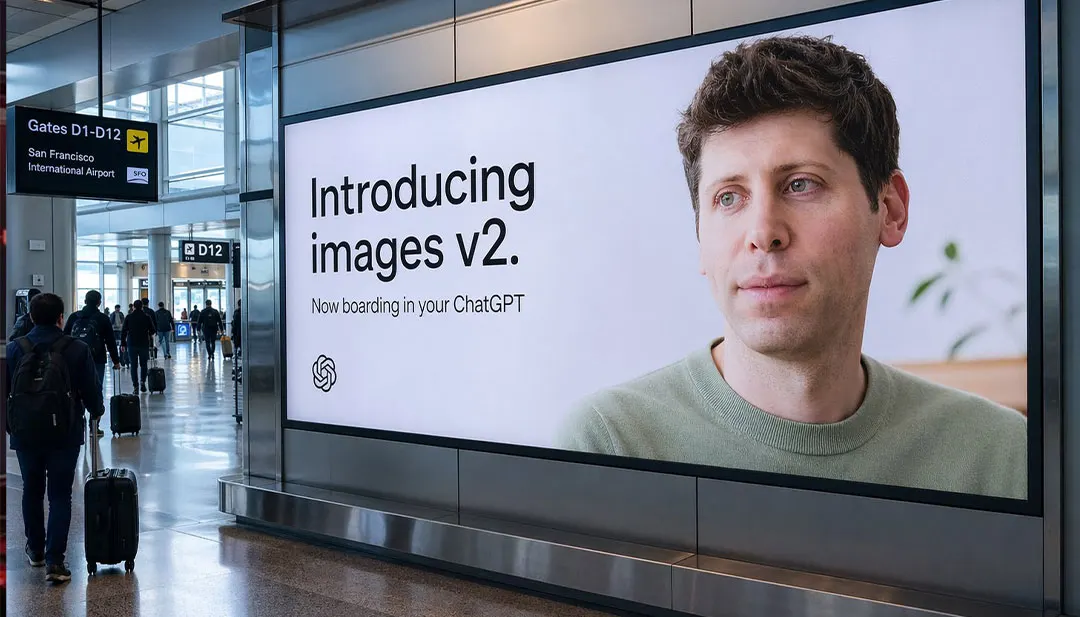
OpenAI introduced ChatGPT Images 2.0 and its API counterpart gpt-image-2. The model stands out for instruction fidelity, sharper small text and interface details, photorealistic textures, wide aspect ratio support and a ‘thinking model’ mode that researches and plans. In this post we summarize what the new features mean, who gets access to which feature and where the model still struggles.
OpenAI has officially introduced its next-generation image generation model ChatGPT Images 2.0 and its API counterpart gpt-image-2. The announcement is read as OpenAI's clearest answer to Google's Nano Banana Pro, which has stood out in the image generation race in recent months. The model comes with higher instruction fidelity, support for resolutions up to 2K, multilingual text generation and a "thinking model" mode that does planning.
Quick Summary
- The new model rewrites image generation inside ChatGPT; it's also open to developers in the API under the name gpt-image-2.
- There's a visible leap in tough areas like small text, icons and interface details.
- Text in images comes out natural and in harmony with the design in languages like Turkish, Japanese, Korean and Chinese.
- Aspect ratios from 3:1 to 1:3 open up a wide range of uses, from posters to vertical mobile screens.
- Thinking mode can produce a consistent series of up to 8 variations from a single prompt.
- Its knowledge is current up to December 2025, a clear advantage for educational content and infographics.
- Advanced thinking features are exclusive to Plus, Pro and Business subscribers; the base version is open to all ChatGPT and Codex users.
Not "Good Enough" but Ready-to-Use Output
Previous-generation image models often produced "close but not quite" results: meaningless letters instead of button labels, a blurry glyph instead of a logo, an overly flattened interface… ChatGPT Images 2.0's first promise is precisely to close this gap. OpenAI emphasizes that the model has improved significantly in the following areas:
- Small-point text and labels
- Symbol, icon and logo generation
- Interface mock-ups and screen compositions
- Short text layers on infographics
In parallel, 2K resolution support was rolled out on the API side. Outputs above 2K are currently kept in beta. This means it's becoming possible to take ad creatives, product presentations or near-print work directly as output and revise them.
A Model That Interprets and Completes the Instruction
The "smarter" side of ChatGPT Images 2.0 isn't limited to pixel quality. The model behaves in a way that analyzes the prompt it receives and fills in possible gaps. For example, when you just say "a dark theme screen of a SaaS dashboard," the model quietly tries to steer decisions like grid layout, typographic hierarchy and icon consistency in the right direction without you asking.
This approach seriously reduces the need for traditional "prompt engineering." Instead of writing pages of detailed instructions, it's enough to describe the result in a goal-oriented way: short briefs like "a 3-step onboarding screen," "a horizontal ad banner" or "a mobile app's settings screen" now actually work.
Turkish Text No Longer Looks "Artificial"
One of the fortresses image generation models couldn't take for a long time was text inside the image. Especially in non-Latin scripts and languages with special characters, the output often came out unreadable. ChatGPT Images 2.0 noticeably changes this picture:
- Turkish special characters ("ç", "ğ", "ı", "ş", "ü") are rendered correctly.
- Japanese, Korean and Chinese text looks typographically natural.
- Text is no longer pasted on top of the design; it now has a character integrated with the design.
This improvement is a practical threshold crossed for teams producing flyers, posters, infographics and social media visuals. Marketing teams no longer have to produce a visual in English first and then adapt it to Turkish; they can work directly with a Turkish brief.
Outputs That Make "Is This AI?" a Harder Question in Photorealism
The model's photorealistic output is in a different league compared with the 2024-2025 period. The improvements OpenAI highlights can be summarized as follows:
- Consistent natural light and shadow
- Realistic textures on surfaces like skin, fabric and metal
- Small "imperfections" that aren't flawless, which is exactly what makes them look real
- Depth perception and soft transitions in out-of-focus areas
Especially for advertising, e-commerce and social media content teams, this level is a threshold that will reduce dependence on stock photos and bring in-house production to the fore. The same advantage also amplifies the risks of deepfakes and manipulation on the misuse side; this topic will probably be on the agenda of both content policies and content provenance verification (C2PA-like) debates in the coming months.
Consistent Style from Pixel Art to Manga
ChatGPT Images 2.0 also arrives with a wider range of styles:
- Pixel art
- Manga / anime
- Isometric drawing
- Flat illustration
- 3D render-like compositions
More importantly, once the model settles on a style, it maintains style consistency in series production. Disconnects that look "as if a different model drew it" between different poses of the same character or different visual assets of the same brand are now noticeably reduced. For brand teams, this makes it easier to keep 20-30 visuals produced within a single project in the same visual language.
The Full Range of Aspect Ratios
One of the most frustrating practical limits of image generation models was the number of aspect ratios. The new model supports a full range from 3:1 to 1:3. In concrete terms:
- Horizontal banner (the top section of a site or presentation)
- Square (classic Instagram post)
- Vertical story / reels screen
- Wide-angle cover image
- Mobile screen drafts
This makes it possible to produce platform-specific visuals for an entire campaign in one go. In other words, when you give the model a content plan, it can derive the same concept consistently in different ratios.
Knowledge Current Up to December 2025
OpenAI states that the model's knowledge cutoff is December 2025. This detail may seem trivial at first glance, but it's critical for educational visuals, explanatory charts and corporate communication materials. When you ask the model for "an infographic on the GPU market over the last 12 months," the results no longer get stuck on 2023-2024 data.
"Thinking Model": The Agentic Step in Image Generation
One of the most striking new features is thinking mode. When you turn this mode on, instead of generating the image directly, the model first:
1. Does research (references, sources, structural examples) 2. Makes a plan (composition, palette, hierarchy) 3. Then moves on to generation
The practical effect is very clear: with a single prompt you can generate up to 8 variations of images that are consistent with each other. That means you can get the 6-8 frames needed for a "mini ad set" or a "storyboard" without having to describe each frame separately. This feature can be read as a signal that an agentic layer on top of the model has been carried over to the visual side too.
A Bridge from Design to Code with Codex
One of the most interesting aspects of ChatGPT Images 2.0 is its integration with Codex. Now:
- An interface concept can be generated visually
- Within the same session you can move to its HTML/CSS or React equivalent
- Prototyping, design and code generation can move forward in a single flow
This is a strong example of the classic "Figma → hand-written code" bridge between design and software evolving into an agent-assisted flow. The speed gain looks set to be serious, especially for small teams and solo developers.
For Developers: The gpt-image-2 API
The technology isn't confined to the ChatGPT interface. Through the gpt-image-2 API:
- Advertising platforms
- Education and e-learning products
- Design tools
- No-code / low-code apps
can integrate this image generation layer directly into their products. Pricing scales based on quality and resolution; outputs above 2K are currently in beta. This detail matters for cost modeling for teams that plan to scale the API.
Where the Model Still Struggles
As with every new-generation model, ChatGPT Images 2.0 has its limits. The weak areas that OpenAI openly acknowledges are:
- Physical world modeling (especially compositions that require precise measurements and proportions)
- Step-by-step folding diagrams like origami
- Rubik's cube and complex geometric structure diagrams
- High-density diagrams and multi-layered flowcharts
- Crowded scenes with many actors and interactions
For this reason, especially in sensitive areas like engineering, architecture and scientific diagram generation, human review before publishing the output is still indispensable.
Who Gets Access to What?
In short, the access picture looks like this:
- All ChatGPT and Codex users: Can access the base version of ChatGPT Images 2.0.
- Plus, Pro and Business subscribers: Get access to advanced features such as thinking mode, long research steps and consistent series image generation.
- Developers: Can integrate the
gpt-image-2API into their projects; resolutions above 2K are accessible as part of the beta.
Where Does It Stand Against Nano Banana Pro?
Google's Nano Banana Pro had stood out in recent months especially for photorealism and compositional consistency. ChatGPT Images 2.0 differentiates itself on three critical points:
1. Text generation: The quality of text inside images makes a difference, especially in non-Latin scripts and Turkish characters. 2. Thinking model mode: Reducing consistent series image generation to a single prompt is a concrete advantage in agent-oriented workflows. 3. A single pipeline with Codex: Building the design → prototype → code flow on the same platform hasn't reached this maturity on Google's side yet.
On the other hand, when judged by photorealism alone, the gap between the two models varies by use case. In advertising and e-commerce creatives the gap looks to have closed considerably; in infographics and multilingual text output, ChatGPT Images 2.0 pulls ahead.
Conclusion
ChatGPT Images 2.0 can be seen as the latest leg of the competition that has been going on in the image generation category for the last 18 months. With higher instruction fidelity, output up to 2K, strong multilingual text support, a wide range of aspect ratios and an agent-like thinking mode, the model is one of OpenAI's most serious moves on the visual side.
From the user's perspective, this picture leads to two important conclusions:
- Prompt engineering is gradually giving way to brief writing.
- Design, text, code and strategy steps are intertwining within the same AI session.
We should already be looking forward to the next move from the Nano Banana Pro camp; but as of now, the ball is back in ChatGPT's court.




