The 5 Best MCP Gateways for Production-Grade AI Agents (2026)
Originally published in Turkish. Read the original →
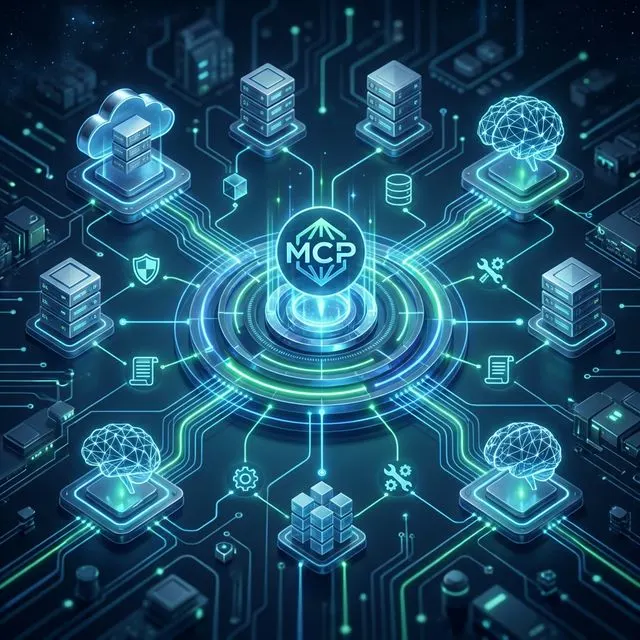
Model Context Protocol (MCP) lets AI agents discover tools dynamically. But security and management in production are complex. Here are the 5 best MCP Gateway solutions of 2026.
Model Context Protocol (MCP) lets AI agents dynamically discover and run external tools such as file systems, databases and APIs. This protocol, which turns static chat models into autonomous agents that interact with the real world, has become the backbone of modern AI architecture.
You can use the site's MCP configuration tool for this.
However, running MCP servers directly in production brings serious operational complexity: security gaps, a lack of centralized visibility and credentials scattered across dozens of tools.
MCP Gateways solve this by centralizing authentication, audit logs, rate control and policy enforcement in a single access point. In this guide, we evaluate the 5 best MCP gateway solutions of 2026 in terms of performance, security and enterprise capabilities.
What Do MCP Gateways Actually Do?
MCP gateways act as a middleware layer between AI models and external tool servers and provide:
- Centralized Routing: AI agent requests are routed to the appropriate MCP servers through a single access point.
- Policy Enforcement: Authentication, authorization, rate limiting and governance controls.
- Session Continuity: Context tracking across multi-step agent workflows.
- Unified Observability: Logging, monitoring and usage analytics across all tool execution.
Without a gateway, each MCP server runs independently, which leads to security gaps and operational overhead.
---
1. Bifrost (Maxim AI)
Architecture: A high-performance AI gateway written in Go, with built-in MCP integration.
Bifrost integrates MCP as a native feature of a comprehensive AI gateway. This design provides unified cost tracking, consolidated observability and seamless integration with semantic caching and automatic fallbacks.
Performance:
- Under 3ms latency (only 11µs of overhead at 5,000 RPS).
- 50x faster than Python-based alternatives.
- Can handle more than 5,000 requests per second per core.
Key Features:
- Stateless Security: Client-side control over tool execution.
- Multi-Protocol Support: STDIO, SSE and HTTP transport layers.
- Agent Mode: Configurable auto-execution for approved tools.
- Semantic Caching: 40-60% cost reduction.
---
2. MintMCP Gateway
Focus: Managed infrastructure and enterprise compliance.
MintMCP emphasizes its SOC 2 Type II certification and compliance-focused deployments, especially for regulated industries.
Key Features:
- SOC 2 Type II Certified: Simplifies audit processes.
- Virtual MCP Servers: Tool collections you curate, with role-based access control.
- Real-Time Security: PII (personal data) detection and masking, secret scanning.
- Full Audit Trails: Comprehensive logging of every MCP interaction.
---
3. TrueFoundry
Focus: Unified AI infrastructure with an integrated MCP gateway.
TrueFoundry consolidates both AI infrastructure and MCP tool access and is optimized for high-volume deployments.
Strengths:
- Scalability: Can handle millions of daily agent requests.
- Unified Management: Model serving and tool orchestration on a single platform.
- High Throughput: An architecture built with performance first.
---
4. IBM ContextForge
Focus: Federation and protocol translation for distributed teams.
Developed by IBM (and still in early beta), ContextForge sets up a federation in which multiple gateway instances automatically discover each other.
Capabilities:
- Federation Architecture: A distributed setup for teams in different regions.
- Protocol Bridging: Wrapping legacy services as virtual MCP endpoints.
- Open Source: Flexibility for teams that want to self-host.
---
5. Lasso
Focus: Observability and governance with structured logging.
Lasso provides structured JSON logs for all tool calls, prompt executions and resource reads, and integrates with your existing monitoring tools (ELK, Prometheus).
Core Features:
- Comprehensive Logging: Detailed data for debugging and auditing.
- Multi-Protocol Support: HTTP, WebSocket, SSE, STDIO.
- Flexible Integration: Easy data export to existing observability tools.
---
How to Choose the Right MCP Gateway
When choosing, you should keep these criteria in mind:
1. Performance: In user-facing applications, milliseconds matter. Bifrost removes infrastructure bottlenecks with its 11µs overhead. 2. Security Architecture: "Stateless" designs that give control on the client side prevent unauthorized tool use. 3. Compliance: If you are in a regulated industry, SOC 2 certified managed infrastructure like MintMCP lightens your audit burden. 4. Developer Experience: Setups that come up in 30 seconds and need no configuration speed up your deployments.
Conclusion and Recommendations
- Speed and Scale: Choose Bifrost for under-3ms latency and full observability.
- Regulation: MintMCP is ideal for SOC 2 requirements in areas such as healthcare or finance.
- Distributed Setup: If you have teams working in different regions, consider IBM ContextForge.
- Detailed Analysis: Lasso stands out for deep integration with your existing logging infrastructure.
As the MCP protocol becomes widespread, these gateways are becoming not just a "preference" but a "necessity" for secure and scalable production-grade AI agents.




