Apple Music and ChatGPT Integration: A New Era in AI-Powered Music Discovery
Originally published in Turkish. Read the original →
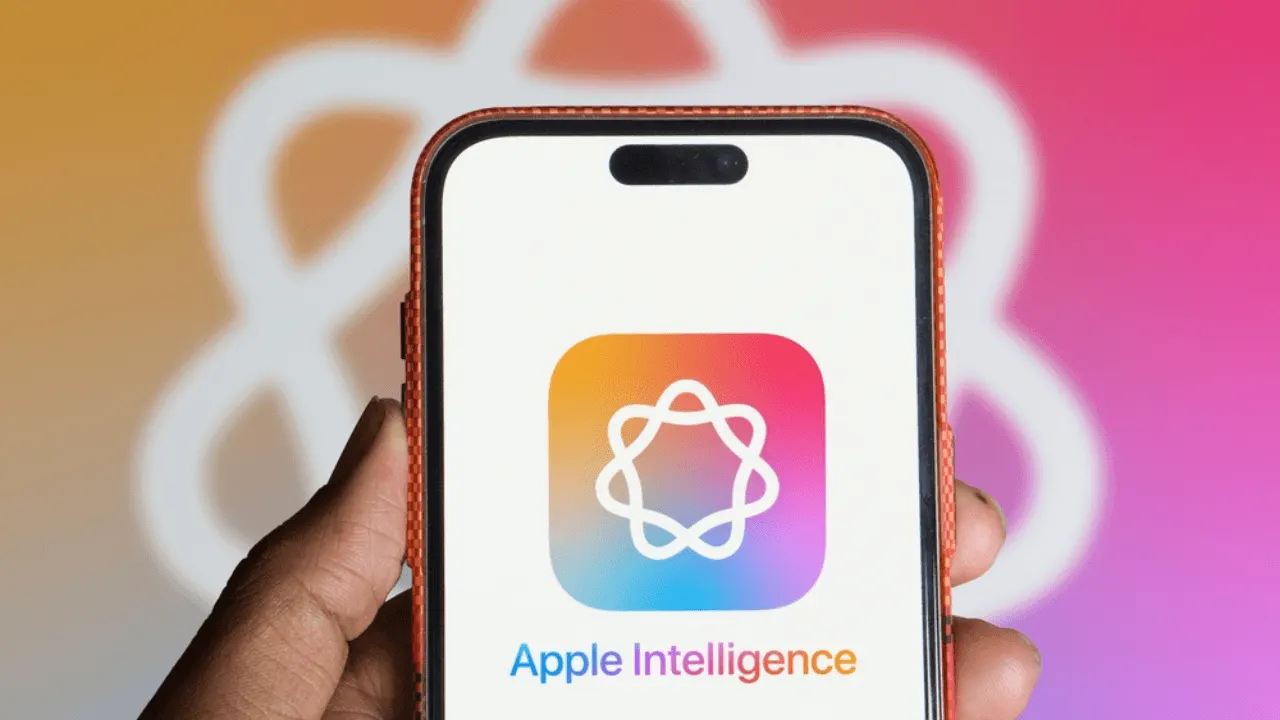
OpenAI announced that Apple Music will be integrated into ChatGPT. Soon you'll be able to build playlists in seconds just by talking to AI. This integration is set to fundamentally change our music listening habits.
Today, as AI technologies develop at a dizzying pace, digital assistants and chatbots are evolving from tools that just answer questions into personal assistants that manage every area of our lives. In this transformation, led by OpenAI, ChatGPT is no longer just a tool that generates text; it is on its way to becoming a massive ecosystem that connects different services. The latest and most exciting link in this vision is a partnership with music giant Apple Music.
OpenAI officially announced that Apple Music will be integrated into the ChatGPT platform very soon. This development opens a new chapter in how we interact with AI and how we discover music. Instead of wrestling with complex interfaces or keywords, we'll be able to have a natural conversation with AI and create playlists in seconds that match our mood, our activity or very specific memories.
The OpenAI and Apple Partnership: A Long-Awaited Meeting
OpenAI, the undisputed leader of the AI world, keeps expanding the capabilities of its popular chatbot ChatGPT without slowing down. A Substack post published today by Fidji Simo, OpenAI's CEO of Applications (VP of Product), made big waves in the tech world. According to Simo, Apple Music, one of the most powerful players in the music industry, will very soon join the partners integrating with ChatGPT ("Early Partners").
This move is actually part of the "platformization" strategy OpenAI has been pursuing for a long time. The company took its first step into the music world last October by announcing its Spotify integration. This process, which started with Spotify, is great news for Apple users as well. The Apple Music integration is seen not just as a feature update but as the point where the user-experience-focused visions of two tech giants (Apple and OpenAI) intersect.
Apps SDK: A New Playground for Developers
Fidji Simo's announcement was not limited to Apple Music. The company also gave important signals about the Apps SDK (Software Development Kit), which lets developers integrate their own applications into the ChatGPT ecosystem. Having already brought on giant platforms such as Spotify, Booking.com, Canva and Zillow, ChatGPT is now expanding this network even further.
In the new App Directory, which will be available soon, these major names will appear alongside Apple Music:
* Adobe: For creative processes and image editing. * Airtable: For database and project management integrations. * Clay: For personal relationship management (CRM). * Lovable: For software development processes. * OpenTable: For restaurant reservations. * Replit: For coding and development environments. * Salesforce: For enterprise customer management.
This list reveals ChatGPT's goal of moving beyond being just a "chatbot" to become a "Super App", or a next-generation operating system interface, where every kind of digital need is managed, from business to entertainment and from design to organization. The Apps SDK leaving preview and opening to everyone means thousands of different apps will soon be controllable through ChatGPT.
What Changes for Users? Conversation-Based Music Management
So what does this technical integration mean for end users, that is, for us music lovers? Put simply: Naturalness and Speed.
Until now, creating a playlist in a music app usually required manual work. We had to search for songs one by one, press "Start Radio" buttons or settle for ready-made lists prepared by editors ("Summer Hits", "Focus Music", etc.). The ChatGPT integration completely changes this process.
Just as with Spotify, you'll be able to manage your Apple Music account while in a natural conversation with ChatGPT. You won't need to switch between interfaces or close and open the app.
Example Scenarios
Once you let your imagination run free, the possibilities this integration offers become endless:
1. Party Planning: When you say, "I'm throwing a 90s-themed party at home this Friday. I want nostalgic Turkish pop, with international hits like the Spice Girls and Backstreet Boys mixed in. The energy should never drop, but it shouldn't be too loud while guests are chatting either. Make me a 3-hour playlist," the AI will understand this complex request and create a suitable list from your Apple Music library or catalog in seconds. 2. Music for Your Mood: "It's really rainy today and I feel a bit melancholic but hopeful. Make a list of indie and alternative rock tracks with lyrics that aren't too heavy, something I can listen to while looking out the window." 3. Activity-Based Requests: "I'm running 10 kilometers tomorrow morning. Make a list with a 'BPM' (beats per minute) flow: slow tempo for the first 15 minutes of warm-up, high tempo for the next 45 minutes, and slowing down again for the last 10 minutes of cool-down."
You can't type requests like these into the search bar of a traditional music app. But thanks to its "Natural Language Processing" (NLP) capability, ChatGPT can translate these abstract concepts into musical parameters (genre, tempo, mood, release year, etc.).
Contextual Memory: "You Know, That Song from the Movie..."
The most impressive and "magical" part has to do with the AI's contextual memory and broad knowledge. One of our biggest problems when searching for music is knowing what we're looking for but not being able to remember its name.
In those "it's on the tip of my tongue" moments, ChatGPT steps in. You'll be able to find music not just with simple commands but also through details you're struggling to remember.
For example, let's look at this example OpenAI gave: > "Play the soundtrack of the movie where the guy from Uncut Gems flirts with the woman from E.T."
This sentence is a nightmare for a search engine. But ChatGPT processes this indirect description like this:
1. Analysis: "The guy from Uncut Gems" -> Adam Sandler. 2. Analysis: "The woman from E.T." -> Drew Barrymore. 3. Association: The iconic film in which Adam Sandler and Drew Barrymore flirt/star together -> The Wedding Singer or 50 First Dates. 4. Context Check: Since the request says "play the soundtrack", The Wedding Singer (1980s-themed), with its strong musical side, is the more likely target. 5. Result: It offers you the soundtrack album of The Wedding Singer or similar songs from that era.
This feature will be a huge convenience in moments when you can't remember the song title, the artist or the album and only have scraps of information such as "There was a guy in a red hat in the music video" or "That sad song that played in the show's season finale." The AI will fill in the missing pieces with its general knowledge of the world and lead you to the right music.
Why Now? The AI Revolution in the Music Industry
For the last 10 years, the music industry was built on "algorithmic discovery". Spotify's "Discover Weekly" lists and Apple Music's "For You" recommendations worked by looking at your listening history with a "people who liked this also liked that" logic. Although this method was successful, it is a passive one.
The ChatGPT integration turns music discovery into an active and dialogue-based process. You no longer have to settle for what the algorithm offers you; you can talk to the algorithm, steer it and fine-tune it. Being able to say "I love this list, but there are too many guitar solos; make it more electronic" gives users a kind of control they never had before.
In addition, this move by Apple Music forms an interesting contrast with, or complement to, Apple's own AI strategy (Apple Intelligence). Although Apple is trying to strengthen Siri in its own ecosystem, its partnerships with OpenAI show that it is not afraid to open its doors to the outside to give its users the "best" experience. This can also be read as a loosening of Apple's strict "walled garden" approach.
Requirements and Access
Of course, there are some prerequisites for taking advantage of this feature. First, you will need an active Apple Music subscription for the integration to work. To play music on your behalf and access your library, ChatGPT will ask you to grant authorization to your Apple Music account.
On the security side, integrations like this are usually done through secure protocols such as OAuth. That means ChatGPT never sees your Apple ID password; it sends commands on your behalf using only an "access token" issued by Apple. Still, questions such as whether your listening data will be used to train AI models will remain an important question mark for privacy-conscious users.
Conclusion: The Future of Listening to Music
The Apple Music and ChatGPT integration is a symbolic development that shows how far technology has come. Apps are no longer isolated islands; they are becoming continents connected by AI bridges.
Music is the art form that speaks most directly to human emotions. AI is a technology that understands human language and context better every day. The combination of the two promises not just "finding songs" but "creating the right atmosphere for the feeling of the moment". As in the "party I'm throwing this Friday" example, technology now speaks our language; we don't have to learn its language (keywords, filters, menus).
OpenAI's move will also heat up competition among music streaming services. After Spotify and Apple Music, it seems inevitable that other giants like YouTube Music and Amazon Music will join this race with similar integrations. And the winners will undoubtedly be us, the users, who will reach music more easily and more intelligently.
In the near future, when we say "Hey ChatGPT, make me a playlist that reminds me of my childhood summer vacations", get ready to travel through time with the melodies rising from the speaker.




