Anthropic Is Testing Claude Fable 5.2 and Opus 5.5 Ahead of Release
Originally published in Turkish. Read the original →
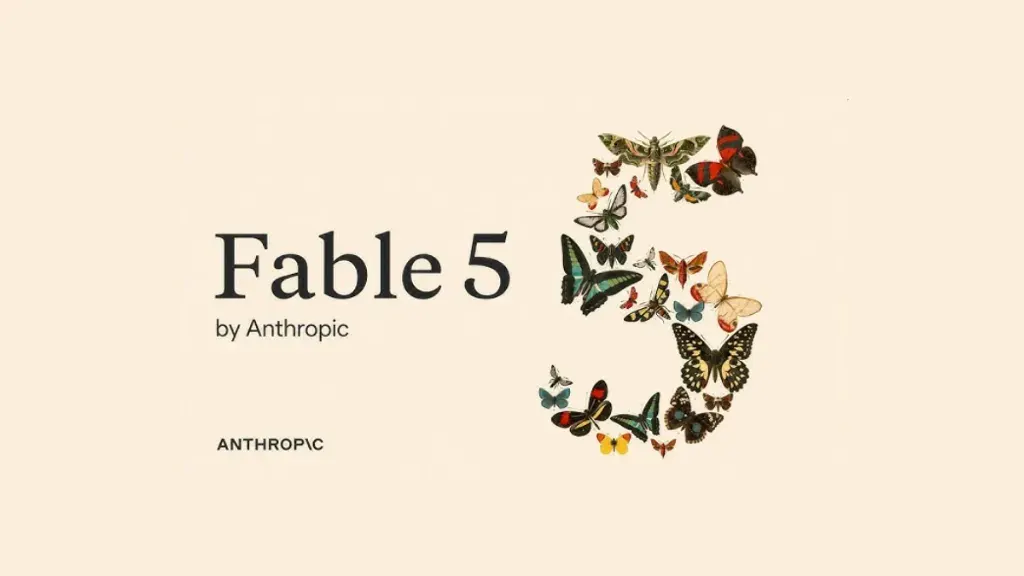
Anthropic has quietly started testing the next-generation Claude Fable 5.2 and the flagship Claude Opus 5.5 ahead of an official announcement. An analysis of the claude-wafer-eap codename, the version skipping strategy, leaked token costs and new capabilities in autonomous software agents.
As the pace of the model race in the frontier AI market accelerates, secret preparations going on behind the scenes at Anthropic have become the focus of the developer ecosystem. Having officially released Claude Fable 5.1 and Claude Mythos 5.1 in the first days of September, the company began testing the next generation behind closed doors just a few weeks later. Independent software developers, AI researchers and tech communities reported coming across traces of Claude Fable 5.2 and the not-yet-officially-announced flagship Claude Opus 5.5 in the Claude web interface, in third-party IDE integrations and in select enterprise API channels. This pre-launch validation process, common in the world of large language models, holds striking clues about Anthropic's next competitive move.
Leaked Details and the Opus 5.5 Puzzle
The development that stirred tech circles the most was Claude Opus 5.5, described as the next step for the Opus family. According to the information obtained and posts from developers in the early access program, the model sits in Anthropic's infrastructure under the internal codename "claude-wafer-eap." The "eap" suffix reportedly stands for Early Access Preview, while the jump in version numbering has become a separate topic of debate. Moving straight to the 5.5 label when Opus 5.2 was expected on the company's usual release schedule suggests the model contains a leap in capability far beyond a minor architectural revision.
Industry analysts interpret this version jump as a reflex to protect market dominance against OpenAI's next-generation flagship GPT-6 Astra. According to the first leaked technical data and pricing tables, Opus 5.5 aims to offer a much more aggressive cost profile than its predecessors. In the rumored scenario, the model's input token cost could drop to $4 per 1 million tokens and its output token cost to $20. If these figures are confirmed, the high-cost barrier, the biggest obstacle to a flagship model with top-tier reasoning becoming widespread in enterprise production environments, will have been largely overcome.
The Second Phase of Agent Capabilities with Claude Fable 5.2
The other important leg of the testing in the news is Claude Fable 5.2. The Fable series, which Anthropic trains specifically for autonomous software engineering and multi-step agentic workflows, had delivered big gains in cost and caching with version 5.1. Fable 5.2, which has surfaced in A/B tests and for select user groups, raises the bar mostly in reasoning depth and debugging consistency.
According to developers' first impressions, Fable 5.2 maintains context integrity much more stably while doing root cause analysis in complex codebases made up of thousands of lines. The tendencies to drift off task or get stuck in loops, occasionally seen in long task chains in earlier versions, are said to have been minimized with new optimizations. The model is also reported to show visible improvement in spatial reasoning, 3D modeling logic and interpreting system architecture diagrams.
What Will Change for Software Developers and Terminal Tools?
Anthropic advancing the Fable and Opus series in parallel signals a critical shift, especially for developers who use terminal-based AI tools and IDE assistants. Command-line agents such as Claude Code and AI-powered code editors such as Cursor need two key ingredients for complex refactoring: high context stability and fast, low-cost inference. Fable 5.2 will take on the role of the core engine running day-to-day operations in these workflows, while Opus 5.5 will cement its role as the higher mind called in for architectural decisions, complex algorithm design and multi-step system verification. This hierarchical modeling setup will let teams get the highest output while managing their token budgets efficiently.
The Labs' Gray Testing Strategy
Anthropic trying these models in live environments before publishing an official announcement relies on a common validation methodology in AI engineering called "gray testing" or shadow routing. Even if massive frontier-level models deliver excellent results in synthetic lab tests, they can behave unpredictably when faced with the chaotic, unexpected and multi-layered inputs real users provide.
By dynamically routing a small slice of queries, less than one in a thousand of global traffic, to these models in testing, Anthropic measures latency, the sensitivity of safety filters and robustness in edge-case scenarios under real production conditions. This way, enterprise security standards are verified and possible hallucination risks are minimized before the model is officially released.
Speculation and Expectations
Despite all these exciting findings, the tech world should stay cautious. Anthropic has not yet shared a public official model card, finalized API documentation or a verified price list. Even though the screenshots and user experiences circulating on social media strongly support that the models exist and are being tested, it should be kept in mind that names or parameters may change at the official launch.
Still, the picture that emerges proves that the AI wars will continue unabated in the last quarter of 2026. Anthropic's strategy of fortifying the autonomous agent market with Fable 5.2 while keeping its leadership in raw intelligence and reasoning with Opus 5.5 will find concrete form with official launch announcements in the coming weeks.




