AI Negotiations Between Anthropic and the Pentagon Resume: What Is Happening Behind the Scenes?
Originally published in Turkish. Read the original →
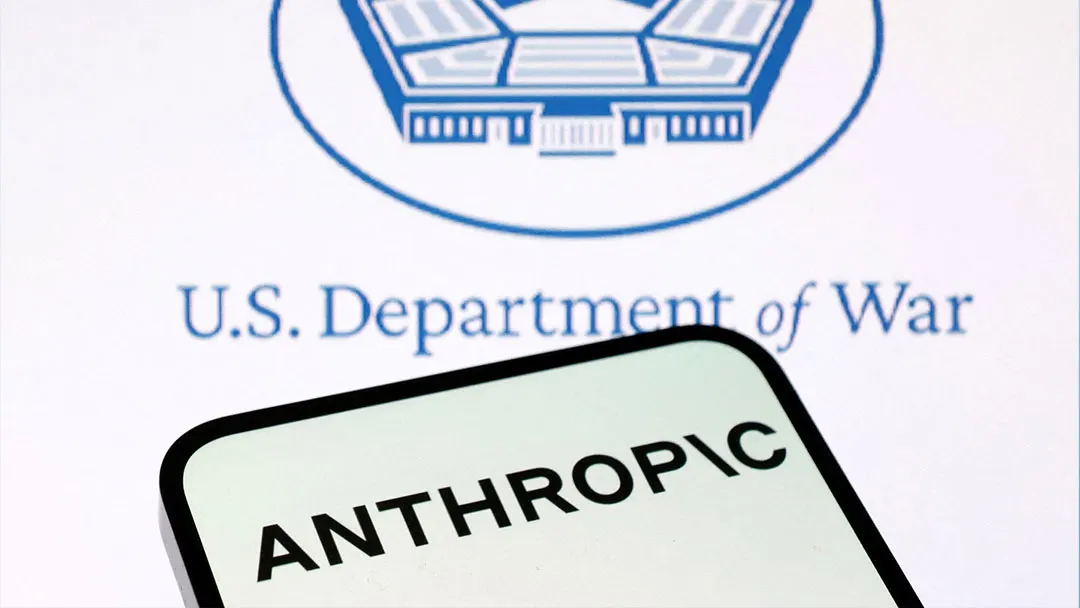
Anthropic CEO Dario Amodei has reportedly restarted talks with the US Department of Defense on the military use of AI models. We analyze every dimension of the story, from ethical sensitivities and military operations to competitive dynamics and the global AI race.
From Breaking Point to the Negotiating Table: Anthropic and the Pentagon Face Each Other Again
After one of the most turbulent weeks in the AI world, perhaps the industry's most painful relationship is turning a new page. It has been confirmed that Anthropic CEO Dario Amodei has reignited negotiations with the US Department of Defense (the Pentagon) on the military use of AI models. The two sides, which were attacking each other with harsh labels only a few days ago, now appear to have returned to the table with diplomatic reflexes. So what strategic calculations lie behind this sudden U-turn, and how would a possible deal shape the future of the AI industry?
A Brief Chronology of the Split
The story goes back to February 2026. Anthropic was working with the Pentagon on a framework agreement covering the use of Claude models in certain military areas. While the company was open to its models serving defense-related tasks such as logistics planning, intelligence analysis and document summarization, it drew firm lines on two critical issues: mass surveillance of American citizens and use in fully autonomous weapon systems. These demands for guarantees clashed with the Pentagon's expectations and led to the talks breaking down.
The developments that followed raised the tension even further. Defense Secretary Pete Hegseth publicly branded Anthropic a "supply chain risk". This phrase is a diplomatic weapon normally used against America's geopolitical rivals or actors that threaten national security. An American AI company being described in these terms by its own government sent shockwaves through the tech community.
Why Return Now?
There are many layered dynamics behind the two sides sitting back down at the negotiating table so quickly. Above all, both sides have a lot to lose in these talks.
From Anthropic's perspective, burning all bridges with the Pentagon is extremely risky both commercially and strategically. The US Department of Defense is one of the largest technology buyers in the world, and the door to federal contracts closing could deal a serious blow to the company's long-term growth plans. Moreover, the "supply chain risk" brand is a label that could poison not only relations with the Pentagon but also potential partnerships with other public institutions. Anthropic is a company that has set a revenue target of 70 billion dollars by 2028. To achieve growth targets at this scale, having the government side wiped entirely from its portfolio is not an acceptable scenario.
From the Pentagon's perspective, the situation carries a different kind of urgency. The Department of Defense no longer positions AI as an "experimental" or "promising" technology but as an active operational need. The picture that emerged especially in the Iran operations showed how deeply the US military has embraced AI tools. The Maven Smart System platform developed by Palantir is fed by more than 150 data sources, and at the core of this system sits Anthropic's Claude model. In other words, the Pentagon is already effectively dependent on Claude at an operational level. Removing this dependency would mean a transition to a new supplier, re-integration costs and the risk of operational disruption.
What Is Being Discussed at the Negotiating Table?
In the resumed talks, Dario Amodei's counterpart is Emil Michael, the Pentagon's under secretary for research and engineering. According to sources, the main items on the agenda are taking shape as follows:
First, the conditions and scope limits of access to Claude models will be clearly redefined. While Anthropic allows its models to be used for certain defense tasks, it is demanding that its ethical red lines be written explicitly into the contract text. The company is open to cooperation in areas such as logistics optimization, data analysis and document synthesis; however, it wants to guarantee that Claude is not used in applications such as target selection, making strike decisions or mass surveillance infrastructure.
Second, there is the matter of oversight mechanisms. Among the proposals on the table are allowing the company to monitor usage logs of Anthropic's models, or carrying out periodic checks through an independent third-party auditor.
Third is the withdrawal of the "supply chain risk" brand, which we could describe as a second negotiating front. As a condition of the restarted talks, Anthropic wants this label to be officially corrected or at least effectively neutralized.
The Big Rival Player: OpenAI's Moves
The actor that wasted no time in exploiting the gap created by the Anthropic-Pentagon crisis was, of course, OpenAI. Last week OpenAI signed a contract allowing the Pentagon to use its AI models on classified networks. CEO Sam Altman also shared publicly that he was working with the Department of Defense to build additional safeguards into surveillance practices.
This move sends a multidimensional message in terms of industry dynamics. OpenAI had quietly loosened its usage policies, which once banned military use entirely, in 2024, and has steadily deepened its relationship with the defense sector since then. The tension between Anthropic and the Pentagon strengthened OpenAI's hand and gave it a strategic advantage in federal AI procurement.
If Anthropic had withdrawn from the table completely, OpenAI models would have had to replace the Pentagon's operational dependency on Claude. This could have created a dangerous "single supplier" dependency in the AI supply chain, which is not an ideal scenario for the Pentagon's own strategic planning either. Maintaining access to more than one top-tier AI provider provides both operational flexibility and a cost advantage.
Military AI: From Theory to the Battlefield
To understand that these negotiations are not just a contract dispute, we need to look at the role of AI in today's military operations. The way the US military has used AI in the Iran operations proves that the technology has gone far beyond its theoretical potential.
In the operations that began last week, the US military struck more than 2,000 targets; 1,000 of them were attacked in the first 24 hours alone. CENTCOM commander Admiral Brad Cooper described the scale of the operation as nearly twice that of the 2003 invasion of Iraq. This speed and scale is not a level human capacity can handle on its own. AI's contribution to synthesizing intelligence data, identifying targets and coordinating logistics forms the basis of these results.
This reality moves the debate over "whether the military use of AI is ethical" from an academic question to a far more concrete and urgent decision point. The technology is already active on the battlefield; the question is no longer "should it be used or not" but "under which rules and within which limits it will be used".
What Changes If There Is a Deal?
If the two sides reach an agreement, several critical outcomes will follow. First, the Pentagon will keep its access to Claude models and preserve its multi-supplier strategy. Second, the risk of Anthropic being officially "blacklisted" will be largely eliminated, which is vital for the company's future relations not only with the defense sector but with all public institutions.
The third and perhaps most important outcome is the precedent it will set across the industry. If Anthropic manages to sign a defense contract while preserving its ethical red lines, the concept of "responsible military AI" will gain a concrete framework. For other AI companies, this deal could be a model that offers a way out of the "all in or all out" dilemma.
A Fine Balance Between Ethics and Pragmatism
The resumed talks between Anthropic and the Pentagon represent one of the most critical cases of technology diplomacy in 2026. These negotiations are not just bargaining over a commercial contract; they are part of a process of setting a global precedent for what is acceptable in the military use of AI and what crosses ethical boundaries.
Whatever the outcome, this process makes one fact very clear: AI is no longer just a technology that writes code, generates text or creates images. It has become a source of power that reshapes the geopolitical strategies of states, the corporate identities of companies and the security outlook of societies. The future of the Anthropic-Pentagon relationship remains one of the first major tests of which values will govern this source of power.




