AI in the spotlight for water consumption of up to 765 billion liters in 2025
Originally published in Turkish. Read the original →
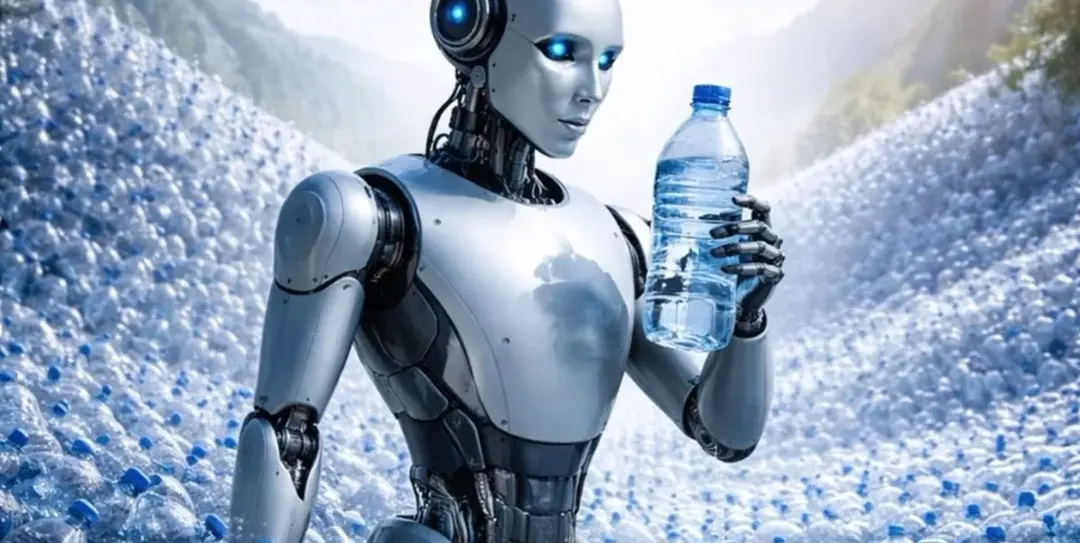
A new study suggests the water footprint of AI systems could reach up to 765 billion liters in 2025. The figures are not exact measurements; they are based on estimates covering both direct and indirect water use.
As generative AI spreads rapidly, the debate is no longer limited to electricity consumption: its water footprint is growing too. A study published by Dutch researcher Alex de Vries‑Gao suggests that the total water use of AI systems could reach up to 765 billion liters in 2025.
"Direct" and "indirect" water: this is where the real difference lies
Calculations like these include the cooling water used to keep servers cool in data centers (direct use), but they also cover the indirect water consumed while generating the electricity that runs AI. So the issue isn't just the data center taps; it's the entire energy chain.
The study also estimates that the carbon footprint of AI activities could reach around 80 million tons of CO₂. The critical point here: these are not "full measurements" but estimates based on companies' environmental reports and a number of assumptions.
The need for transparency and reporting
Even though big tech companies publish environmental reports, the AI-specific impact usually dissolves into the overall data center total. That makes it hard to build a comparable, auditable picture on both the water and the carbon side. This is why the solutions that stand out are more efficient hardware/software, cooling methods that use less water and, most importantly, separate reporting standards for AI workloads.
Why has "water" become such a critical metric?
Electricity consumption is more visible; it's easy to talk about through bills and grid capacity. Water consumption, on the other hand, often stays "in the background". Yet for data centers, water is:
- A risk multiplier during heat waves: Cooling load rises during the hours when demand peaks.
- A local resource: The impact is felt mostly in the local watershed, not globally.
- A permitting/reputation issue: Competition can arise with agriculture, households and industry in the same region.
That's why the "as AI grows, so does water use" debate is not just an environmental topic; it is also an operational sustainability topic.
Reading the estimates: what do we know, and what don't we?
Studies of this kind are generally not measurements "read off a single meter". Most of the time they use a modeling approach derived from:
- companies' overall data center reports,
- regional energy generation profiles,
- assumptions about cooling technology,
- workload/capacity estimates.
This means the figures provide a strong framework for starting the debate, but they should not be read as "absolute truth". Still, even with a margin of uncertainty, the direction is clear: as AI workloads grow, pressure on resources grows.
Practical ways to reduce "direct water"
On the technology side, the approaches that stand out for reducing direct water use are:
- More efficient hardware: Doing the same work with less energy also reduces cooling needs.
- Choice of cooling architecture: Which cooling method is chosen (and how well it suits the climate) makes a difference.
- Heat recovery: Using waste heat in another process can improve overall efficiency.
- Site selection: Locating in regions with a cooler climate and lower water stress.
None of these is a "miracle on its own"; but the total impact grows through the accumulation of small optimizations.
"Indirect water" actually depends on energy policy
Indirect water consumption is closely tied to how electricity is generated. So there are two important questions:
- What energy mix powers AI workloads?
- Do these workloads spike during the grid's most stressed hours, or are they run with load balancing?
On the corporate side, the questions "where do we put AI, and when do we run it?" now matter not only for performance but also for environmental impact and cost.
What should users and organizations demand?
Without more transparency, a meaningful comparison is hard. So a practical list of demands could look like this:
- Separate reporting for AI workloads: Making the "AI share" visible instead of only the data center total.
- Regional breakdown: Disclosing which watershed the impact is concentrated in.
- Time breakdown: At which hours of the day heavy consumption occurs (especially peak hours).
- Efficiency metrics: Not just total consumption, but consumption per unit of work (is it improving over time?).
The bottom line of this debate: AI may look "digital", but it relies on physical resources. Water is as much a part of this picture as electricity, and it becomes more visible as growth accelerates. The best approach is not panic, but measurement, transparent reporting and investment in efficiency.




